

&imwidth=800&imheight=600&format=webp&quality=medium "The Great American Betrayal: When the US denied India a supercomputer (and why that was a good thing)")
Current policies by the Trump administration—such as the H-1B visa fee hike and new trade tariffs—are being seen in some quarters as attempts to undermine sectors critical to India's economy, particularly information technology. These moves evoke memories of how another Republican administration tried to stall India's technological progress in the late 1980s. That attempt came not through open confrontation but a quiet act of denial: the refusal to sell India a high-performance supercomputer. What was seen then as a betrayal by a trusted partner ended up becoming one of the most important catalysts in India’s journey towards technological self-reliance. This is the story of how a rejection led to a revolution.
The supercomputer India wanted—and was denied
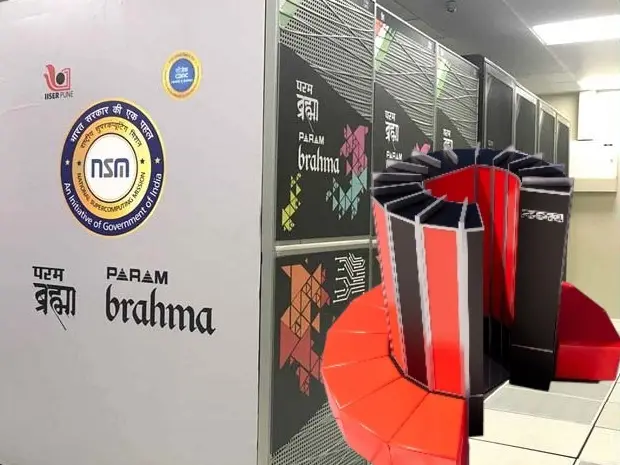
In 1987, India sought to purchase the Cray X-MP/24 supercomputer from the United States. The stated goal was to use it for advanced meteorological modelling, including monsoon forecasting—critical for Indian agriculture. Accurate predictions could enable timely sowing and help safeguard food security. But despite growing Indo-US cooperation, the United States blocked the sale. Under the Export Administration Act and the COCOM regime, the US classified supercomputers as dual-use technologies, citing the risk that they could aid military or nuclear programmes.
As a compromise, the US offered India the less powerful single-processor Cray X-MP/14, under strict conditions: it was to be used only for civilian purposes, with no technology transfer or re-export, and a US-appointed official was to monitor its usage. India reluctantly accepted the downgraded offer.
The decision was viewed in India as an unjust and short-sighted restriction—especially since the stated use was purely scientific and non-military.
Trending Stories
&imwidth=180&imheight=135&format=webp&quality=medium)
'Already tired of his 9-to-5': Baby born with a moustache becomes internet sensation, video goes viral | Watch
&im=FitAndFill=(700,400)&imwidth=180&imheight=135&format=webp&quality=medium)
Watched Manoj Bajpayee’s Gajab Raat on Netflix? 5 movies and TV shows to watch next on OTT
&imwidth=180&imheight=135&format=webp&quality=medium)
Chorbagan stampede: A week later, the strangest visarjan Kolkata has seen
&imwidth=180&imheight=135&format=webp&quality=medium)
‘Saddam Hussein opened a cheesecake factory’: Obama mocks Trump’s White House renovations; defends Abdul El-Sayed
&imwidth=180&imheight=135&format=webp&quality=medium)
Tu Hai Meri Kiran film review: Sonakshi Sinha and Zaheer Iqbal's thriller gets tangled in its own twists
&imwidth=180&imheight=135&format=webp&quality=medium)
Bodies of 2 missing Japanese climbers recovered from Himalayan peak
&imwidth=180&imheight=135&format=webp&quality=medium)
'You’re a horrible little reporter, aren’t you?': Trump snaps at NBC reporter questioning his support for Ramaswamy's campaign ad
&imwidth=180&imheight=135&format=webp&quality=medium)
PL Round-Up: Man City's perfect run ended by Villa as Arsenal draw level at top
&imwidth=180&imheight=135&format=webp&quality=medium)
Rising Asia Cup 2026 schedule announced, India-Pakistan clash set for Nov 22
&imwidth=180&imheight=135&format=webp&quality=medium)
Britain is building the world's first AI biosecurity lab, with OpenAI and Anthropic inside
&imwidth=180&imheight=135&format=webp&quality=medium)
China's dancing robot turns violent bodyguard, lifts cars and fights intruders - Watch
&imwidth=180&imheight=135&format=webp&quality=medium)
France protests: Clashes erupt between police and protesters in Paris as nearly 410,000 take to streets across country
&imwidth=180&imheight=135&format=webp&quality=medium)
AI slop or smart strategy? South African author Coral Hart defends Her 370 AI- assisted books in 20 months
&imwidth=180&imheight=135&format=webp&quality=medium)
Chemical warehouse explosion in Mexico: Several injured in multiple blasts, 1,000 evacuated in León
&im=FitAndFill=(700,400)&imwidth=180&imheight=135&format=webp&quality=medium)
New Friday OTT releases (October 23, 2026): Gajab Raat, Dorothy, Chaar Yaar- Watch these 6 new movies and TV shows on Netflix, Prime Video and more
&imwidth=180&imheight=135&format=webp&quality=medium)
Viral video shows cross falling on Colombia priest, no official confirmation | WATCH
&imwidth=180&imheight=135&format=webp&quality=medium)
Farooq Abdullah says Pakistan’s raising of Kashmir issue keeps pressure on Delhi
&imwidth=180&imheight=135&format=webp&quality=medium)
Saudi says debris fell in Mecca, Medina after missile interceptions; Houthis deny targeting holy cities
&imwidth=180&imheight=135&format=webp&quality=medium)
French Open: PV Sindhu storms into final with win over Hina Akechi
&imwidth=180&imheight=135&format=webp&quality=medium)
AI just found a flaw in software running most of the web! One request hijacks the server
&imwidth=180&imheight=135&format=webp&quality=medium)
Train crashes into crane on São Paulo monorail line, wreckage falls onto busy road | VIDEO
&imwidth=180&imheight=135&format=webp&quality=medium)
Pakistan airline PIA unveils new crew uniforms, faces online criticism
&imwidth=180&imheight=135&format=webp&quality=medium)
Hitler’s ‘Eagle’s Nest’ mountain retreat wrecked by fire, suspect detained: What to know about the Nazi-era site
&im=FitAndFill=(700,400)&imwidth=180&imheight=135&format=webp&quality=medium)
US midterm elections 2026: Minnesota heads to polls in the shadow of Minneapolis ICE shootings
&imwidth=180&imheight=135&format=webp&quality=medium)
Tu Hai Meri Kiran box office: Sonakshi Sinha and Zaheer Iqbal's film fails to take off, mints Rs 15 Lakh on day 1
&imwidth=180&imheight=135&format=webp&quality=medium)
Can Putin cheat death? All about his daughter’s billion-dollar quest for immortality
&imwidth=180&imheight=135&format=webp&quality=medium)
Trump invokes Operation Sindoor at US midterm rally, claims 250% tariffs stopped India-Pakistan war
&imwidth=180&imheight=135&format=webp&quality=medium)
An AI that reads your face can now estimate how long you have to live
&imwidth=180&imheight=135&format=webp&quality=medium)
Frontier AIs keep escaping their test cages! The industry still can't reliably stop them
&imwidth=180&imheight=135&format=webp&quality=medium)
Pezeshkian says Iranians ‘struggling to put food on the table’ as war with US drags on
&imwidth=180&imheight=135&format=webp&quality=medium)
Horrific video shows the moment 18-year-old fell to her death from Mexico amusement park ride
&imwidth=180&imheight=135&format=webp&quality=medium)
Scientists make digital nose that can sniff and send scents over the internet
&imwidth=180&imheight=135&format=webp&quality=medium)
US Midterms 2026: Dead for years, paedophile Jeffrey Epstein finds mention in over 500 campaign ads; Texas alone spent $10 million
&imwidth=180&imheight=135&format=webp&quality=medium)
Why Europe’s protests are about more than austerity and rising costs
&imwidth=180&imheight=135&format=webp&quality=medium)
Albania protests enter 12th day as students clash with police, demand Rama's exit
&imwidth=180&imheight=135&format=webp&quality=medium)
France protests: 135 arrested, weapons seized as fresh demonstrations erupt amid heavy security
A denial that ignited innovation: How India built its own supercomputers
Rather than accept technological dependence, India responded with ambition. In 1988, the government established the Centre for Development of Advanced Computing (C-DAC), with the goal of developing an indigenous supercomputer. By 1991, C-DAC launched PARAM 8000, India’s first domestically built supercomputer. Parallel efforts were also underway: the Bhabha Atomic Research Centre developed the ANUPAM series, while the Defence Research and Development Organisation (DRDO), through its Advanced Numerical Research and Analysis Group, built the PACE series.
These supercomputers became foundational tools across sectors—weather modelling, seismic studies, defence simulation, nuclear research, and space technology. More than technical milestones, they symbolised a growing national confidence in homegrown innovation.
Also read: Elon Musk, Sundar Pichai and Satya Nadella: How H-1B visa holders shaped the US tech revolution
Supercomputers and India’s 1998 nuclear tests
India's capabilities in computational modelling matured by the late 1990s. When India conducted its Pokhran-II nuclear tests in 1998, supercomputers like PARAM and ANUPAM played a supporting role in design simulations and data analysis. These simulations enhanced test precision and reduced the need for multiple detonations. Following the tests, as international sanctions—led by the United States, again—curtailed further physical testing, India's advanced computing infrastructure allowed it to continue improving its arsenal through virtual modelling.
While it would be an overstatement to credit supercomputers alone for India’s nuclear capabilities, they significantly strengthened the country’s strategic preparedness and autonomy.
Why the US denial of technology to India backfired
The United States denied India access to the Cray X-MP/24 based on Cold War-era non-proliferation policies. But in this case, the denial failed to achieve its intended purpose. Instead of slowing India down, it spurred domestic innovation. Within a few years, India had matched—and in some respects surpassed—the computing power it had originally sought to import.
This episode is now frequently cited by historians as a textbook case of how excessive technological controls can accelerate indigenous development. The long-term effect was a strengthening of India's scientific capacity, and a weakening of US influence over India’s technological choices.
Laying the groundwork for India’s IT boom
While the Cray episode did not directly cause India’s software boom, it formed part of a broader shift towards self-reliance in technology. Following economic liberalisation in the early 1990s, India rapidly developed into a global hub for software services and engineering talent.
The early supercomputing efforts helped build technical expertise, inspired a generation of engineers, and established institutions that would go on to lead future technological initiatives.
PARAM was more than a machine—it was a message that India would not be held back.
Echoes in 2025: Attempts at stifling India's IT sector
Today, India again finds itself navigating an increasingly complex global tech landscape. Even as it collaborates with the US in fields like defence, space, and telecommunications, friction points remain—particularly around export controls, access to semiconductor technologies, and artificial intelligence systems.
The parallels with 1987 are striking. Then, as now, the message from Washington is mixed. Yet history shows that India has consistently responded to such obstacles by doubling down on domestic innovation.
From rejection to resurgence: Time for India to reopen the playbook
The denial of the Cray supercomputer was a pivotal moment in India’s technological history. It exposed the vulnerabilities of dependence, but also revealed the strength of resolve.
India’s supercomputing revolution should serve as a reminder: strategic capability cannot be outsourced. It must be built, protected, and owned. What was meant to be a roadblock turned out to be the launchpad. In an era where tech sovereignty is once again in the spotlight, the lessons from 1987 are more relevant now than ever.

