
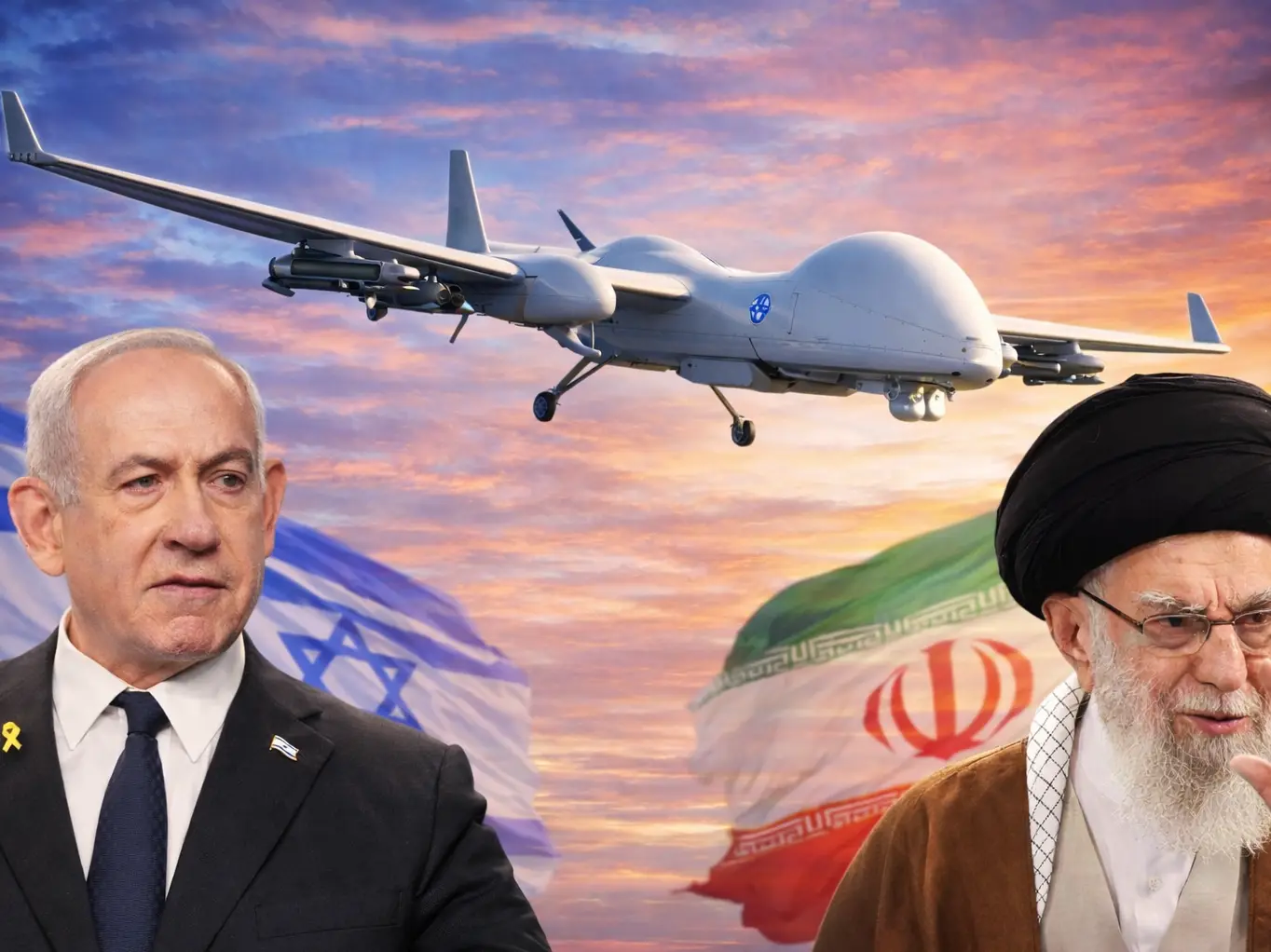
&imwidth=800&imheight=600&format=webp&quality=medium "The $35,000 drone vs $4 million missile: What the market thinks about Israel-Iran war and the surprising rally in Israel’s TA-125")
Even as security threats intensify, Israel’s financial markets are flashing confidence. On Monday at 4:58 pm local time, the TA-125 Index rose 4.2 per cent, after rising as much as 5 per cent during the session. For a country facing ongoing missile and drone risks, the rally appears surprising at first glance. Yet markets often respond to expected outcomes rather than immediate danger. Investors seem to be weighing probabilities, possibly concluding that Israel may gain the upper hand militarily, weaken Iran’s launch capabilities and reduce longer-term risks. The central uncertainty remains the duration of the confrontation. A brief campaign may justify optimism; a drawn-out conflict could shift the equation.
The drone equation: Volume over precision
Iran’s strategy appears centered on scale. Reports suggest Tehran possesses tens of thousands of drones, with steady monthly production. In a high-intensity scenario, this could translate into thousands of launches daily. This approach reflects “saturation warfare”, overwhelming air defenses through sheer quantity rather than pinpoint accuracy. In such a strategy, endurance matters more than precision. Sustained pressure can strain defensive systems over time.

The real cost battle: Interceptors vs drones
The financial imbalance is stark. A single Shahed-type drone reportedly costs around $35,000 to produce. Interceptor missiles used to neutralise them can cost hundreds of thousands, sometimes millions, of dollars per launch. This creates a dramatic cost asymmetry favoring the attacker. If drone salvos reach into the thousands, interception expenses could escalate rapidly. The battlefield dynamic would then extend beyond military tactics into industrial capacity and fiscal resilience. Modern conflicts are increasingly shaped by how quickly nations can replenish stockpiles, scale manufacturing and secure supply chains.
The promise, and limits, of Iron Beam
Trending Stories
)
China thinned Himalayan troop presence in 2025, India defence report says; terms border situation 'stable'
)
Israeli minister calls to strip Gaza film directors of citizenship
)
China discovers vast gold and silver 'mine' in the Pacific with unheard-of deposits
)
Crude oil prices jump more than $107 per barrel following Houthi attacks on Saudi
)
Ganesh Chaturthi 2026: Devotees throng the iconic Lalbaugcha Raja pandal in Mumbai
)
Did China give Iran intel before US base strike that killed 3 troops? Trump says, 'You’re right...'
)
Did India risk its US trade deal despite softer stance at BRICS?
)
Turkish Airlines plane flies through a storm three times, triggering severe turbulence
)
Trump says Canada eager to reach a deal, it could come ‘fairly soon’ if Ottawa treats US farmers better
)
Russian drone hits Warsaw-bound train near Polish border, Zelensky accuses Moscow of ‘deliberate’ targeting
)
First naval drone battle? Ukraine says Sargan 3000 sank Russian unmanned boat
)
Video of Pakistani lawmaker struggling to read English tribute to Jinnah goes viral - WATCH
&im=FitAndFill=(700,400))
New OTT releases this week (September 14-20, 2026): Lust Stories 3, Waiting Hai, Irumudi- 5 new titles coming on Netflix, Prime Video and more
)
‘Want to reset ties with India, have engagement based on mutual interests,’ says Bangladesh minister
&im=FitAndFill=(700,400))
Why Chinese PL-15 air-to-air missiles use dual-pulse motors compared to European interceptors
)
Iran, India agree to deepen humanitarian and political ties, President Pezeshkian says
)
Plane carrying prominent figure crashes at Libya’s Misrata airport: Report
)
Natural caffeine sources gain popularity; matcha & botanicals offer calm energy
)
Saudi Arabia discovers 110 million tonnes of Uranium-rich ore in Madinah region
)
Humans may lose control of AI: Anthropic CEO calls for slowdown, Altman, Musk back him
)
Practical Magic 2 breaks Spidey spell over North American box office
)
‘Let’s go’: Newly declassified videos show dramatic rescue of US Air Force officers downed in Iran
)
800 million years old - Scientists discover 'fingerprints' of supercontinent Gondwana in ancient rocks
)
Russia proposes to build 360 kmph Ivolga FG trains in India: What happened on sidelines of BRICS
)
Women's Asia Cup 2026: India denied trophy once again despite winning the title
)
'Huge destructive power': North Korea calls its latest missile launches 'live-fire drill' even as US dismisses 'immediate threat'
)
Pakistan puts Pak Rs 70 lakh bounty on UN terrorist Masood Azhar; move draws skepticism in Delhi
)
Indian importers urge Bangladesh to lift export ban on 'Hilsa' fish ahead of Durga Puja
)
Delhi’s balancing act: BRICS serves as a stage for West Asia diplomacy
)
Liam Neeson sparks romance rumours after holding hands with Stella Stocker at TIFF 2026
&im=FitAndFill=(700,400))
Why European Meteor missiles use ramjet engines compared to standard US solid rockets
)
Veteran Bollywood actress Nafisa Ali shares health update as Stage 4 cancer progresses, starts targeted therapy
)
Orlando Bloom addresses Pirates of the Caribbean comeback and reunion with Johnny Depp
Israel’s laser-based Iron Beam system represents a potential game-changer. With an estimated cost of just a few dollars per shot, it could dramatically shift the cost curve. However, deployment remains limited. Only a small number of units are operational, and broader scaling will take time. While technologically promising, it is not yet positioned to counter sustained mass-drone waves on its own.
Why investors remain optimistic?
Market participants appear to be operating on several assumptions:
- The conflict will stay geographically contained.
- Air defense capacity will remain sufficient.
- Western backing, particularly from key allies, will stay intact.
- If those pillars hold, advanced technology and coordinated alliances could outweigh the arithmetic disadvantage posed by low-cost drone warfare.
- Still, markets are quick to reverse course. Should the conflict extend, supply strains become visible or industrial bottlenecks emerge, sentiment could shift abruptly.
Ultimately, this confrontation is not merely about drones and missiles. It is about production lines, logistics networks and economic stamina. For now, traders seem to believe that innovation and alliances can outpace the numbers.

