

&imwidth=800&imheight=600&format=webp&quality=medium "Sharia law imposed in THIS Malaysian state - What happens if men skip Friday prayers")
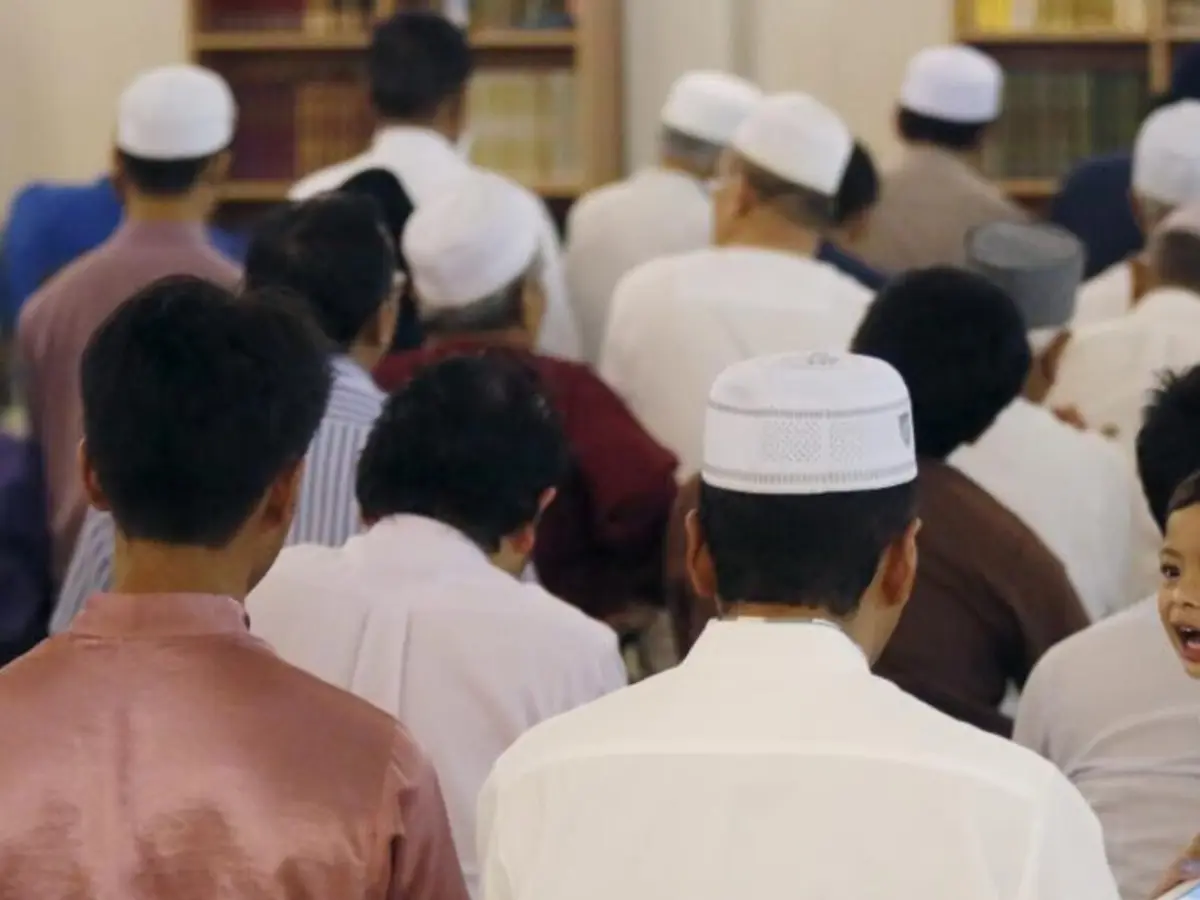
The Malaysian state of Terengganu has introduced strict new penalties under sharia law for Muslim men who miss Friday prayers without valid reasons. According to the revised law, first-time offenders could face up to two years in prison, a fine of 3,000 ringgit (about $709.89), or both. The regulations were announced by the ruling Pan-Malaysian Islamic Party (PAS), and they came into effect this week. Previously, missing three consecutive Friday prayers could result in up to six months in jail or a fine of 1,000 ringgit. The penalties will be imposed as per the Shariah Criminal Offences (Takzir) Enactment law. Enforcement of the law will rely on reports from the public and religious patrols, with reminders posted in mosques.
Read More | 'Sharia law over Indian constitution'? Why Jharkhand minister's remarks spark political debate
Critics condemn move but PAS lawmaker defend the new law
Critics have condemned the changes, calling them excessive and a violation of personal freedoms. Human rights advocate Phil Robertson argued that such laws damage the image of Islam and infringe on individual rights, urging Malaysian Prime Minister Anwar Ibrahim to revoke the penalties. PAS lawmaker Muhammad Khalil Abdul Hadi stated that punishments would be applied only in extreme cases, reported Malaysian newspaper Berita Harian. He also described the move as a necessary reminder of the importance of Friday prayers as a religious obligation.
Read More | Britain has 85operational Sharia courts. Has it become 'western capital' of Islamic councils?
Sharia law provisions in Terengganu
Trending Stories
&im=FitAndFill=(700,400)&imwidth=180&imheight=135&format=webp&quality=medium)
What is the real meaning behind Pete Hegseth's tattoos?
&imwidth=180&imheight=135&format=webp&quality=medium)
Katie Zacharia likely to succeed Karoline Leavitt as Trump's White House press secretary
&imwidth=180&imheight=135&format=webp&quality=medium)
‘Never-ending flow of cheap labour’: JD Vance hits back at Indian-origin Congresswoman over US green card curbs for major tech companies
&imwidth=180&imheight=135&format=webp&quality=medium)
Trump's naked 23-karat gold statue unveiled near European Parliament
&imwidth=180&imheight=135&format=webp&quality=medium)
‘Ruh Roh’: Top US official mocks ‘Indian market collapse’ claim after Trump’s IT curbs. But did it? | FACT CHECK
&imwidth=180&imheight=135&format=webp&quality=medium)
Nigeria govt rolls out 30-day NNPC petrol discount, insists it is not a subsidy
&imwidth=180&imheight=135&format=webp&quality=medium)
JK Rowling announces two new 'Harry Potter' books
&im=FitAndFill=(700,400)&imwidth=180&imheight=135&format=webp&quality=medium)
Fastest-growing Asian economies in 2026: Who tops the chart? Where does India rank?
&imwidth=180&imheight=135&format=webp&quality=medium)
Houthis continue direct hits on Saudi targets, Türkiye and Pakistan missing in action | Gravitas
&imwidth=180&imheight=135&format=webp&quality=medium)
Prince Harry opens up about loss, depression, and recovery: 'I felt guilty being happy'
&imwidth=180&imheight=135&format=webp&quality=medium)
Jewar airport in Noida to be renamed Narendra Modi International Airport: CM Yogi
&imwidth=180&imheight=135&format=webp&quality=medium)
'Deeply offensive': India hits back at US Vice-President JD Vance for 'indentured labour' remark
&imwidth=180&imheight=135&format=webp&quality=medium)
Russia president Putin promises to 'do everything' to help settle Middle East conflict as US-Iran negotiations stall
&imwidth=180&imheight=135&format=webp&quality=medium)
Powerful 7.7 magnitude earthquake strikes Panama, tsunami warning issued
&imwidth=180&imheight=135&format=webp&quality=medium)
BTS agency HYBE announces first-ever Weverse Con Festival in India
&imwidth=180&imheight=135&format=webp&quality=medium)
South Africa High Commissioner Anil Sooklal speaks to WION, calls Pillay an inspiration
&imwidth=180&imheight=135&format=webp&quality=medium)
Trump has a new 'enemy': Anyone who calls it 'artificial intelligence'. Here's what we wants instead
&im=FitAndFill=(700,400)&imwidth=180&imheight=135&format=webp&quality=medium)
New Friday OTT releases (October 9, 2026): Reporting Live, Animals, Take Charge of My Heart- 6 new titles coming on Netflix, JioHotstar and more
&imwidth=180&imheight=135&format=webp&quality=medium)
BTS' RM urges Peru fans not to gather outside hotel: 'We can't sleep', It's becoming a nuisance'
&imwidth=180&imheight=135&format=webp&quality=medium)
Is Trump playing a double game with Iran?
&imwidth=180&imheight=135&format=webp&quality=medium)
Scientists find highly radioactive nuclear particles at Chernobyl 40 years after the disaster
&imwidth=180&imheight=135&format=webp&quality=medium)
Pakistan denies reports of PAF jets being used in attacks against Iran-backed Houthis in Yemen
&imwidth=180&imheight=135&format=webp&quality=medium)
New York ICE shooting sparks protests as Mamdani to call on Trump to halt ICE operations
&imwidth=180&imheight=135&format=webp&quality=medium)
IND vs WI: West Indies set record for highest successful run chase in T20Is against India
&im=FitAndFill=(700,400)&imwidth=180&imheight=135&format=webp&quality=medium)
Meet top 5 Indian batters fastest to 7000 runs in ODIs
&imwidth=180&imheight=135&format=webp&quality=medium)
Fact check | Is Sydney Sweeney considering conversion to Judaism?
&imwidth=180&imheight=135&format=webp&quality=medium)
French students light European bonfire, protests erupt in Belgium, Italy & Greece | Gravitas
&im=FitAndFill=(700,400)&imwidth=180&imheight=135&format=webp&quality=medium)
Food shortages, suicide attempts and more: USS Abraham Lincoln returns to US after 321 day deployment supporting war on Iran — The whole row explained
&imwidth=180&imheight=135&format=webp&quality=medium)
OpenAI shuts down Russian, Iranian influence operations using ChatGPT to spread propaganda
&imwidth=180&imheight=135&format=webp&quality=medium)
SC questions closure of 57 Delhi Metro stations, asks Centre to resume services in regulated manner
&im=FitAndFill=(700,400)&imwidth=180&imheight=135&format=webp&quality=medium)
435 House seats, 35 Senate races: The numbers behind US midterms 2026
&imwidth=180&imheight=135&format=webp&quality=medium)
Bangladesh named as Pakistan’s replacement for Asian Hockey Champions Trophy
&imwidth=180&imheight=135&format=webp&quality=medium)
‘We will end ICC’: US sanctions International court, threatens to cripple hours after Navi Pillay wins Nobel Peace Prize
&imwidth=180&imheight=135&format=webp&quality=medium)
US midterm elections 2026: What a blue wave or blue tsunami could mean for Trump
&imwidth=180&imheight=135&format=webp&quality=medium)
SC asks Centre to frame mechanism against unethical pharma marketing practices
&imwidth=180&imheight=135&format=webp&quality=medium)
Sri Lankan Tamil worker gets death sentence in Saudi Arabia over blasphemy, calls for pardon intensify
&imwidth=180&imheight=135&format=webp&quality=medium)
‘Real boss of India’: Elon Musk escalates attack over Starlink’s India entry
Malaysia, a Muslim-majority nation with a population of 34 million, operates under a dual legal system where Islamic law coexists with civil law. Terengganu is a conservative Malaysian state governed by PAS that enforces sharia law apart from the country's civil legal system. The Sharia law provisions in Terengganu were originally enacted in 2001. The law is administered through state-level Islamic courts. The Sharia laws were expanded in the state in 2016 to include things like disrespecting Ramadan, harassment of women as offences. PAS controls all 32 seats in the Terengganu state assembly, allowing it to pass laws without opposition. However, in 2024, Malaysia's top court struck down expanded sharia criminal laws in Kelantan, ruling them unconstitutional. This raises questions about the future of similar laws in Terengganu.
Read More | Democracy dead and sharia in effect, we don’t need Western laws: Taliban leader Akhundzada
What happened in Kelantan in 2024?
In 2021, Kelantan enforced the Syariah Criminal Code (I) Enactment 2019, expanding the number of sharia offences from 35 to 68. However, in February 2024, the Federal Court ruled in the case Nik Elin v. Kelantan that 16 of the 18 challenged provisions were unconstitutional. The Court found that these laws encroached on matters under federal authority, exceeding the state’s legislative powers. In response, Kelantan’s State Assembly unanimously voted to reintroduce the struck-down provisions and set up a special committee to revise them. The move reflects the state's determination to retain stricter religious laws. Malaysian Prime Minister Anwar Ibrahim clarified that the court's ruling did not challenge Islam itself, but addressed jurisdictional limits. He stressed that only the federal Parliament can legislate on matters listed under federal authority, and state laws must remain within constitutional boundaries. The case highlights the tension between religious governance and Malaysia’s constitutional structure.

