Samsung just signed a $200 billion chip pact with Broadcom to take on TSMC

&imwidth=600&imheight=450&format=webp&quality=medium "Samsung just signed a $200 billion chip pact with Broadcom to take on TSMC")
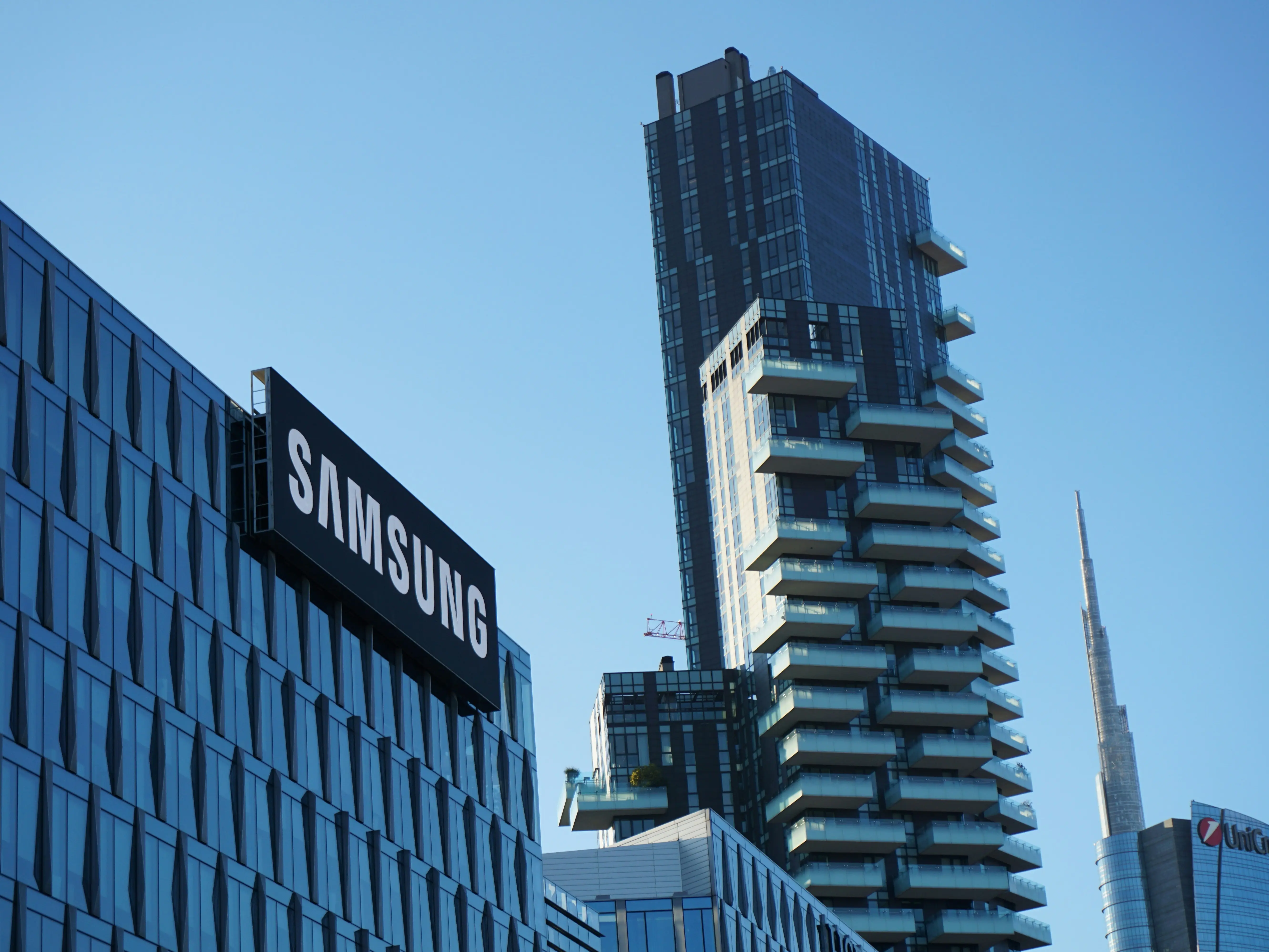
Samsung just signed a $200 billion chip pact with Broadcom to take on TSMC Photograph: (Unsplash)
Samsung Electronics and Broadcom have signed a $200 billion partnership running through 2030, covering 2-nanometre foundry manufacturing, high-bandwidth memory and advanced packaging for AI infrastructure. It is Samsung's most significant challenge yet to TSMC's dominance in custom AI processors — though the agreement is a memorandum of understanding rather than a binding contract.
Samsung Electronics has signed a $200 billion agreement with Broadcom that, if executed, would represent the most serious challenge TSMC has faced in the custom AI chip business.
The Agreement
Announced July 25 during an AI summit in San Francisco attended by South Korean government representatives and industry executives, the five-year partnership runs through 2030 and covers three of the most critical layers of the AI chip supply chain at once.
Samsung will manufacture Broadcom's next-generation communications chips on its sub-2-nanometre process technology. The two companies will jointly develop advanced high-bandwidth memory, including the HBM4E and HBM5 generations. And the agreement covers advanced 2.3D and 2.5D packaging — the increasingly decisive stage where processors and memory are assembled into a single functioning unit.
An Important Caveat
The agreement is a memorandum of understanding. In practical terms that means it is a statement of intent rather than a binding contract, and the $200 billion figure represents the value of business the two companies intend to conduct rather than an amount Broadcom is committed to spend.
Trending Stories
)
)
)
)
)
)
&im=FitAndFill=(700,400))
)
)
)
)
)
)
)
)
)
)
)
)
)
)
)
)
)
)
)
)
)
)
)
)
)
&im=FitAndFill=(700,400))
)
&im=FitAndFill=(700,400))
)
)
)
)
)
)
MOUs at this scale are common in semiconductor manufacturing, where capacity must be reserved years in advance, and they frequently do convert into real volume. But the distinction matters for anyone reading the headline number as guaranteed revenue.
Why It Threatens TSMC
TSMC's dominance in advanced foundry work has been close to absolute, particularly for the custom silicon that hyperscalers increasingly design in-house. Broadcom is the central player in that market — it co-designs custom AI accelerators for the largest technology companies, and where Broadcom manufactures is where a substantial share of the industry's custom silicon gets made.
Securing Broadcom's next-generation business gives Samsung two things it has struggled to obtain: a marquee customer validating its sub-2nm process, and the high factory utilisation that makes advanced foundry economics work. Leading-edge fabs cost tens of billions to build and are ruinous when underused; a five-year anchor customer changes that calculation entirely.
For Broadcom, the logic is supply security. Depending on a single foundry for chips this strategically important is a concentration risk, and the industry is heading into what Samsung has warned could be an AI chip shortage persisting into 2028.
The Memory Angle
The high-bandwidth memory component may matter as much as the foundry work. HBM has become the binding constraint on AI accelerator performance — the processor can only compute as fast as memory feeds it data. SK Hynix has led this market, with Samsung working to close the gap.
A joint development arrangement on HBM4E and HBM5 with Broadcom positions Samsung inside the design process for the next two generations, rather than competing for orders after the specifications have been set. Samsung has separately locked up to 70 per cent of its memory capacity in long-term agreements.
The Context
The announcement lands in a strange moment for the sector. Samsung's semiconductor division has seen profits grow more than 250-fold, even as its smartphone unit posted its first-ever operating loss — the clearest possible signal of where the company's centre of gravity has moved.
Days later, more than $1.3 trillion was erased from semiconductor market values in a handful of trading sessions, with Samsung alone shedding around $173 billion. That selloff was not driven by weakening demand — supply remains tight enough that Samsung is forecasting shortages into 2028 — but by investors questioning whether the enormous sums flowing into AI infrastructure will produce adequate returns.
Samsung is committing to five years of capacity for a customer building chips for that same infrastructure. The bet is that the demand outlasts the doubt.
