Russia ready to supply ‘as much energy as India wants’: Ambassador Denis Alipov

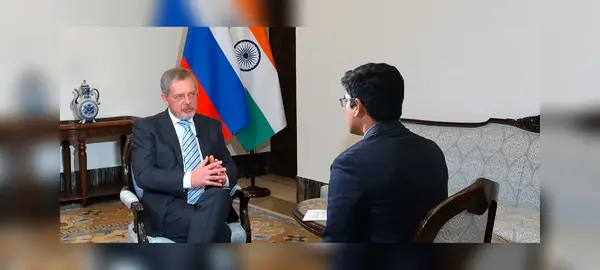
Ambassador Denis Alipov said Russia expects President Vladimir Putin to visit India for the BRICS Summit in September. Photograph: (WION)
Ambassador Denis Alipov said no one party should regard itself as the only one entitled for security and prosperity. Certainly the security concerns of Israel should be taken into account, but also the position of Iran, the right of its civil nuclear energy should be maintained.
Russian Ambassador Denis Alipov has expressed strong optimism about the enduring India-Russia strategic partnership, highlighting expectations of high-level visits and deepened cooperation in energy, defence, and multilateral forums.
Speaking to WION’s Sidhant Sibal, Alipov stated that Russia expects President Vladimir Putin to visit India for the BRICS Summit in September 2026. “We expect the Russian President to be in India for the BRICS summit in September,” the Ambassador affirmed, underscoring close coordination between the two nations on the platform. India’s 2026 BRICS chairship, themed around resilience, innovation, cooperation, and sustainability, is seen as an opportunity to advance discussions on global governance reforms, counter-terrorism, trade, and investment.
Alipov also noted that President Putin visited India last year, and Moscow is preparing to welcome Prime Minister Narendra Modi for a reciprocal visit to Russia this year. “We are looking forward to welcoming him. Discussions are ongoing for the month,” he said, referring to the established annual summit mechanism that keeps bilateral ties on a steady trajectory.
Full interview:
Sidhant Sibal: What is your vision about this relationship?
Ambassador Denis Alipov: We have a very comprehensive, very special and very privileged strategic partnership between us. Last year, you may remember, we marked the 25 years of this relationship, and it's going from strength to strength. We are very satisfied with the momentum. We have a comprehensive plan in action covering the economic development, the political coordination, the people to people, cultural ties. We have a clear vision for the future, and this relationship has been strategic for both of the countries, a long term strategic vision which has been maintained by the leadership of our countries, endorsed by the people of both our nations. This is a very important relationship for Russia, and we feel and see that the same attitude from India. Last December, President Putin visited India, and we expect the honorable Prime Minister Modi to visit Russia this year. The invitation was extended, and we're looking forward to welcoming him in Russia this year for for the bilateral interaction, bilateral summit, as we have agreed way back into 2000 to have the annual exchanges of such of such visits and summits
Trending Stories
&imwidth=280&imheight=210&format=webp&quality=medium)
&imwidth=280&imheight=210&format=webp&quality=medium)
&imwidth=280&imheight=210&format=webp&quality=medium)
&imwidth=280&imheight=210&format=webp&quality=medium)
&imwidth=280&imheight=210&format=webp&quality=medium)
&imwidth=280&imheight=210&format=webp&quality=medium)
&imwidth=280&imheight=210&format=webp&quality=medium)
&imwidth=280&imheight=210&format=webp&quality=medium)
&imwidth=280&imheight=210&format=webp&quality=medium)
&imwidth=280&imheight=210&format=webp&quality=medium)
&imwidth=280&imheight=210&format=webp&quality=medium)
&imwidth=280&imheight=210&format=webp&quality=medium)
&imwidth=280&imheight=210&format=webp&quality=medium)
&imwidth=280&imheight=210&format=webp&quality=medium)
&imwidth=280&imheight=210&format=webp&quality=medium)
&imwidth=280&imheight=210&format=webp&quality=medium)
&im=FitAndFill=(700,400)&imwidth=280&imheight=210&format=webp&quality=medium)
&imwidth=280&imheight=210&format=webp&quality=medium)
&imwidth=280&imheight=210&format=webp&quality=medium)
&imwidth=280&imheight=210&format=webp&quality=medium)
&imwidth=280&imheight=210&format=webp&quality=medium)
&imwidth=280&imheight=210&format=webp&quality=medium)
&imwidth=280&imheight=210&format=webp&quality=medium)
&imwidth=280&imheight=210&format=webp&quality=medium)
&imwidth=280&imheight=210&format=webp&quality=medium)
&imwidth=280&imheight=210&format=webp&quality=medium)
&imwidth=280&imheight=210&format=webp&quality=medium)
&imwidth=280&imheight=210&format=webp&quality=medium)

&imwidth=280&imheight=210&format=webp&quality=medium)
&imwidth=280&imheight=210&format=webp&quality=medium)
&imwidth=280&imheight=210&format=webp&quality=medium)
&im=FitAndFill=(700,400)&imwidth=280&imheight=210&format=webp&quality=medium)
&imwidth=280&imheight=210&format=webp&quality=medium)
&imwidth=280&imheight=210&format=webp&quality=medium)
Sidhant Sibal: Any month are we looking at, sir?
Ambassador Denis Alipov: We are in discussion on that. So I'm not in a position to share any dates, we are in discussion. Later this year, in September, there will be the BRICS summit in India, and we expect the Russian president to visit India for that summit. But on the bilateral track, we are looking forward to welcoming the Prime Minister of India in Russia as well.
Sidhant Sibal: The first week of this month was very busy. We saw high level visits from Russia. What was the conversation like? The focus being on issues like fertilizers, energy, agriculture, if you can perhaps sum up the key outcomes during that very busy week for India, Russia
Ambassador Denis Alipov: All these that you mentioned were discussed. The First Deputy Prime Minister of Russia, Denis Manturov was in India for the intersession meeting of the co-chairs of our intergovernmental commission, and there was a very substantial dialogue between him and External Affairs Minister Jaishankar, who is the co-chair from the Indian side. Fertilizers, cooperation in various sectors of manufacturing and industries, culture, agriculture, the strategic plans, the tactical plans for this year, we've had a very comprehensive discussion on all these aspects, and we are very optimistic about the prospects in the future and the ongoing cooperation on various tracks and various domains.
Sidhant Sibal: Energy cooperation has become one of the key pillars of the relationship. Today, India has been importing Russian energy. What is the status like currently, how much India has imported the Russian energy, especially in past one month, in the backdrop of the West Asia war
Ambassador Denis Alipov: I think the statistics have become available now. Later on, we will probably have a more detailed picture. As of now, from what I saw, there is a substantial increase of supplies. But I would like to stress that we have been very consistent in our position and commitment. We have always maintained that we are prepared to supply oil to India irrespective of geopolitical developments. This is our consistent approach. Basically, we are prepared to supply as much oil as India needs. We also discuss LPG supplies, so we are prepared to offer it to the extent to which India is prepared. The obstacles that we have, like the threats of tariffs, secondary sanctions, whatever you know, these obstacles only reveal the detrimental role the US plays as regards our bilateral relations and Europe. So from this point of view, I would put it like you know, we have been a reliable partner, which is a fact, with a consistent approach towards trade with India. The US and Europe, against this backdrop, have shown themselves as utterly unreliable partners.
Sidhant Sibal: What's your view about this ongoing West Asia war? It has a cease fire, but overall, Russian perspective on the war and cease fire as well?
Ambassador Denis Alipov: Well, we have gone public with our position. We have condemned the aggression. We regard it as an unprovoked aggression and a violation of international law and aggression against Iran by Israel and the US, which is obviously unacceptable. The ceasefire hopefully will last, but it should lead to a long standing solution. So a ceasefire per se is not enough. The stability in the Middle East will not come if one party would maintain the position that their approach should, should, be regarded as the only correct. Iran should have the right to exist, there should be a coexistence in the Middle East. No one party should regard itself as the only one entitled for security and prosperity. Certainly the security concerns of Israel should be taken into account, but also the position of Iran, the right of Iran for civil nuclear energy in particular should be maintained. So it is a matter for negotiations, the political - diplomatic approach, a peaceful solution is the only one. Hopefully the negotiations that I believe are going on would lead to a long standing solution. This is what we support and what we look forward to. The impact, as is evident, has been global. The energy markets were jeopardized. The region, the Middle East, is crucial for global stability. This is also very much clear to everyone, and Russia is very much concerned with the instability in the Middle East because it directly impacts the national interests of my country. The situation on our southern approaches is very, very crucial to us, Hopefully, hopefully there will be a way out in the contradictions there are now, but the means the US is using, Israel has used certainly are not acceptable. This should have been avoided, and the current developments have been endorsed. Efforts to start the negotiations, to start the peace process. These actions, these efforts, have been, have been supported by Russia.
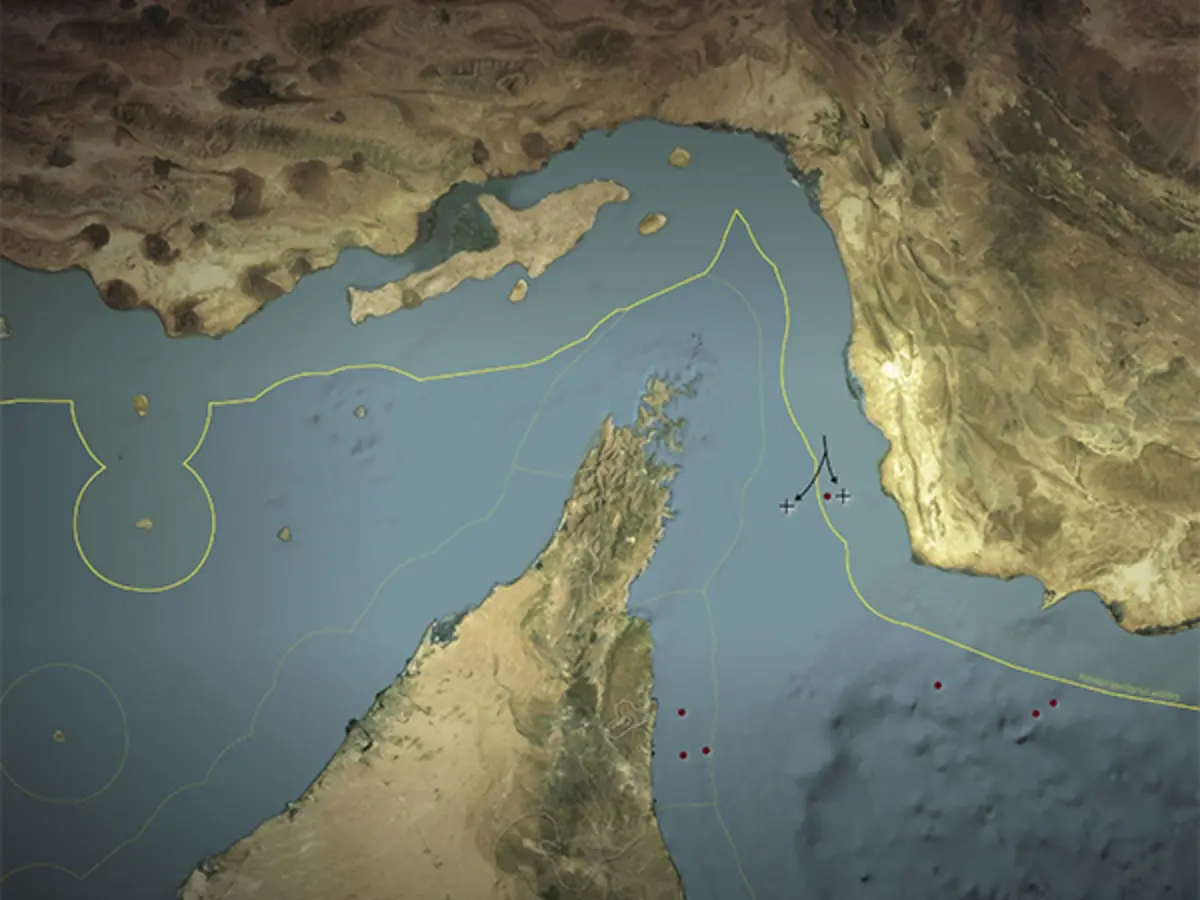
Sidhant Sibal: But how do you think that this West Asia war will change global geopolitics? Because it looks like there is a rise of multi polarity, and also a sense of the closure of Hormuz. We know that it's under Iranian control now in a major way, but we also know that the Americans have announced their own blockade as well. So overall picture
Ambassador Denis Alipov: The situation in the Gulf, the situation in the Middle East, there is also a Palestinian problem, which has not been resolved now. The situation in the Gulf has deteriorated. Many countries, including India, are dependent on oil supplies from the Gulf countries, and not only India, the whole of Asia. It has a decisive effect on the global energy markets. So we have acknowledged that the world acknowledges this. We believe that a solution to all these issues is necessary and hopefully to be found through negotiations.
Sidhant Sibal: A very old pillar of the relationship has been defence. So overall picture when it comes to defence, and S400, few units left, any time line when they can be delivered?
Ambassador Denis Alipov: There are some batches that are yet to be delivered. We have a mutually agreed timetable, schedule for these deliveries. They will be completed very soon, when it comes to S400. We have various plans as regards other types of military equipment and generally, a comprehensive plan in our defence cooperation. And I will not go into the details. The US and the Europeans should know nothing about it. I will be happy to share that with the Indian public. But since we're on air, this is a sensitive area, which we try to keep under wraps.
Sidhant Sibal: Additional one question on how both India and Russia are working together in co-production. I mean, BrahMos is a big example of that, and India is exporting it to Indonesia as well. And I know that the Russians have offered when it comes to fighter SU 57 as well, what and where this proposal is? Has there been any interest from the Indian side on
Ambassador Denis Alipov: India has shown interest in the SU S7. Brahmos has been a very successful example. AK 203 manufacturing and licensing to India is also a very prominent example of our mutually beneficial cooperation which is topical to India, which is of great interest to us. We plan to expand on many tracks, but again, I will not go into details.
Sidhant Sibal: There is a target of 100 billion dollars as well on the trade front. How hopeful you are that it will be achieved, given there is a certain time for that.
Ambassador Denis Alipov: We’re very optimistic about this target. We think it's realistic to achieve a $100 billion trade target. We have already increased our bilateral trade many fold, yes, through the oil supplies. We see it as a long standing strategic relationship as well. I think there is the same approach from the Indian side. It can become a long standing strategic area. But to avoid the imbalance in the trade, which is huge, and to have a sustainable solution, a sustainable vision, for the increased trade, the increase in Indian exports to Russia should be the area and the point be addressed as a priority. This is something we are addressing now. We have discussed this issue. When the First Deputy PM visited India, it was discussed, when President Putin was in India in December. It is a continuous discussion between us. In December, we also had a substantial dialog between the businesses on this and we are looking forward to continuing this process, to continue in this discussion between the business communities of both countries, so that the Indian exports increase. From household goods to high tech products, machinery, agriculture, food products, there is a substantial demand for those in Russia, and actually the Russian exports, apart from oil. Oil and gas share in Russian GDP is about 15 to 20%, the rest is with various products like digital solutions, like machinery, agriculture, and all this is in demand in both countries. So the mutual exports and imports, apart from oil and gas, should increase, and this is what we are now discussing.
Sidhant Sibal: How much trade in national currencies? And have the payments issued been resolved?
Ambassador Denis Alipov: There would have been no issues for us, had it not been for the you know, obstacles created by the US and the Europeans. They constantly do that to threaten the, you know, our bilateral relations, and they maintain that they should have nothing to do with that. That's absolutely not their business. Actually, it only shows that the US and Europe use non-market instruments and methods to influence our bilateral relations. But apart from that, we have generally totally switched to national currencies. 95% of transactions we execute in national currencies as of now, the mechanisms for such transactions are in place and should be utilized to the fullest, and there are various solutions, how to simplify, how to integrate our financial mechanisms more. We are in very substantial discussion on all these issues.
Sidhant Sibal: India is the chair of the BRICS grouping. The summit is going to happen in September. President Putin is looking forward to coming to India, if I can sum it up like that. But how does the Russian side plan to support India's public presidency?
Ambassador Denis Alipov: We have extended our fullest support to the Indian chair. The priorities have been publicized. We have supported all of them. There are various proposals we have extended to possibly they will also be discussed this year under the Indian chair. But the comprehensive plan there is for various engagements and meetings, high level meetings, ministerial meetings, all this has been supported by us. We are very optimistic about the outcomes and certainly the Indian presidency in BRICS this year is going to be, is going to be successful, by our assessments. We have already started interactions. So we were in very close engagement with India and with other BRICS members on the agenda, on the common agenda we have and the plan India has formulated.