Overseas Singaporeans casting vote by post can be game-changer in presidential election: Experts


President of Singapore Halimah Yacob
For the first time ever, Singaporeans who are 21 years of age or older, residing overseas, and who are eligible to vote will be able to register and cast ballots by mail. According to experts who spoke with Straits Times, this might truly be a game-changer in the upcoming presidential elections, which are expected to be in September 2023. A legislation was passed in March to permit Singaporeans living abroad to vote by mail. Earlier, they had to go to polling sites in certain locations to cast their ballots, which meant that some people were unable to do so in 2020, when Covid-related travel restrictions were effective worldwide.
Also Read | Thailand voting begins, will conservative military-backed PM maintain power?
What will be the implications of these election rules revisions for the 2023 Presidential Election?

Elections Department (ELD) revealed that 4,794 of the 6,570 overseas voters who were registered to vote at the most recent general election in Singapore in 2020 actually cast their ballots.
Only 10 overseas voting locations, in "countries or cities where there is a significant number of Singaporeans," were available for voters to cast ballots, according to ELD's website. Shanghai, Dubai, Canberra, London, Tokyo, Beijing, Washington, Hong Kong, San Francisco, and New York are among the cities where the stations are situated.
Also Read| In India's biggest drug bust, crystal meth worth $1.45bn seized from Kerala coast, Pakistani held
&imwidth=180&imheight=135&format=webp&quality=medium)
US sanctions Cuban state-owned bank BICSA over alleged financial links to Iran
&imwidth=180&imheight=135&format=webp&quality=medium)
Majid Majidi's new film Midday Meal takes top prize at Asia's biggest film festival
&imwidth=180&imheight=135&format=webp&quality=medium)
Broke Your iPhone Duo? Here’s how much screen repair could cost
&imwidth=180&imheight=135&format=webp&quality=medium)
Russian woman and Bihar boy's love story goes viral after she reaches India to marry him
&imwidth=180&imheight=135&format=webp&quality=medium)
Arijit Singh 9-city India stadium tour to start from January: Check venue and ticket prices
&imwidth=180&imheight=135&format=webp&quality=medium)
Leave India notice to Imran Khan explained: What are OCI rules and why can't foreigners protest in India?
&imwidth=180&imheight=135&format=webp&quality=medium)
Turkey Floods: Heavy rains flood homes and submerge vehicles in Istanbul
&imwidth=180&imheight=135&format=webp&quality=medium)
Katie Zacharia, White House Press Secretary admits she never passed bar exam amid credentials controversy
&imwidth=180&imheight=135&format=webp&quality=medium)
Ukraine blinded: Musk deflects blame on Trump, Putin sharpens attack | Gravitas
&imwidth=180&imheight=135&format=webp&quality=medium)
Oregon school shooting: 16-year-old identified as suspect after at least four killed, including three children
&imwidth=180&imheight=135&format=webp&quality=medium)
Who is Abu Dhabi royal Mahrah Al Nahyan, found unconscious on London street with toddler after cocaine use
&imwidth=180&imheight=135&format=webp&quality=medium)
US-Iran War: Trump eyes mother of all bombs; Iran in crosshairs
&imwidth=180&imheight=135&format=webp&quality=medium)
Ukraine running out of patriot missiles as Russian ballistic attacks intensify: Report
&imwidth=180&imheight=135&format=webp&quality=medium)
Russia-Ukraine War: Putin vows retaliation against Ukraine
&imwidth=180&imheight=135&format=webp&quality=medium)
'Turns out the future does have flying cars': Musk's Tesla unveils 'flying' sports car with SpaceX technology | Watch
&imwidth=180&imheight=135&format=webp&quality=medium)
'Turn approver, resign, we'll forgive you': Rahul Gandhi claims receiving messages from CEC Gyanesh Kumar
&imwidth=180&imheight=135&format=webp&quality=medium)
Australian woman charged for adding snail poison to lover's curry at work
&imwidth=180&imheight=135&format=webp&quality=medium)
Central Park in Delhi shut on October 16, 17 amid CJP's protest call
&im=FitAndFill=(700,400)&imwidth=180&imheight=135&format=webp&quality=medium)
Inside the Peshawar school tragedy: 34 dead, building's condition under scrutiny and owner arrested. Here's what all happened
&imwidth=180&imheight=135&format=webp&quality=medium)
‘My president, I mean my husband’: Trump's new press secretary Katie Zacharia's first briefing goes off the rails in 14 minutes
&im=FitAndFill=(700,400)&imwidth=180&imheight=135&format=webp&quality=medium)
World's 7 most innovative countries in 2026 REVEALED: Did India make the list? | In Pics
&imwidth=180&imheight=135&format=webp&quality=medium)
NASA captures strange structure with tentacle-like formation from space
&imwidth=180&imheight=135&format=webp&quality=medium)
Trump says Zelensky 'not a good guy' amid fresh Russia-Ukraine tensions | Watch video
&imwidth=180&imheight=135&format=webp&quality=medium)
Trump's tariff strategy faces new test: India wants preferential access and tariff stability
&imwidth=180&imheight=135&format=webp&quality=medium)
Earthquake measuring 7 magnitude strikes Russia’s Kamchatka Peninsula
&imwidth=180&imheight=135&format=webp&quality=medium)
Was Trump in danger at Alaska rally? Viral video shows Secret Service agents reacting
&imwidth=180&imheight=135&format=webp&quality=medium)
'Will stand with Pakistan in case of war with US': Rajasthan BJP chief's remark sparks row
&imwidth=180&imheight=135&format=webp&quality=medium)
Girl 'dead' for 8 hours wakes up at her own funeral, dad insists she wasn't breathing
&imwidth=180&imheight=135&format=webp&quality=medium)
US midterms 2026: FBI investigates suspicious mailings containing 'unknown substance' sent to election offices
&imwidth=180&imheight=135&format=webp&quality=medium)
Abhishek Sharma sets all-time record for most T20I sixes in a year
&im=FitAndFill=(700,400)&imwidth=180&imheight=135&format=webp&quality=medium)
Inside Tesla's Roadster: 10 features of Elon Musk's 'flying car' that push the limits of electric vehicles | In Pics
&imwidth=180&imheight=135&format=webp&quality=medium)
India’s naval priorities: Ex-Navy Chief calls for third aircraft carrier, more warships and submarines
&imwidth=180&imheight=135&format=webp&quality=medium)
Netanyahu defies Trump, blocks Gaza military base for Board of Peace | Gravitas
&imwidth=180&imheight=135&format=webp&quality=medium)
Saudi Arabia executes Two Bangladesh nationals over immoral act
&imwidth=180&imheight=135&format=webp&quality=medium)
Nine former FBI employees fired over investigation into Trump's classified records sue Kash Patel, DOJ over alleged unlawful dismissal
&imwidth=180&imheight=135&format=webp&quality=medium)
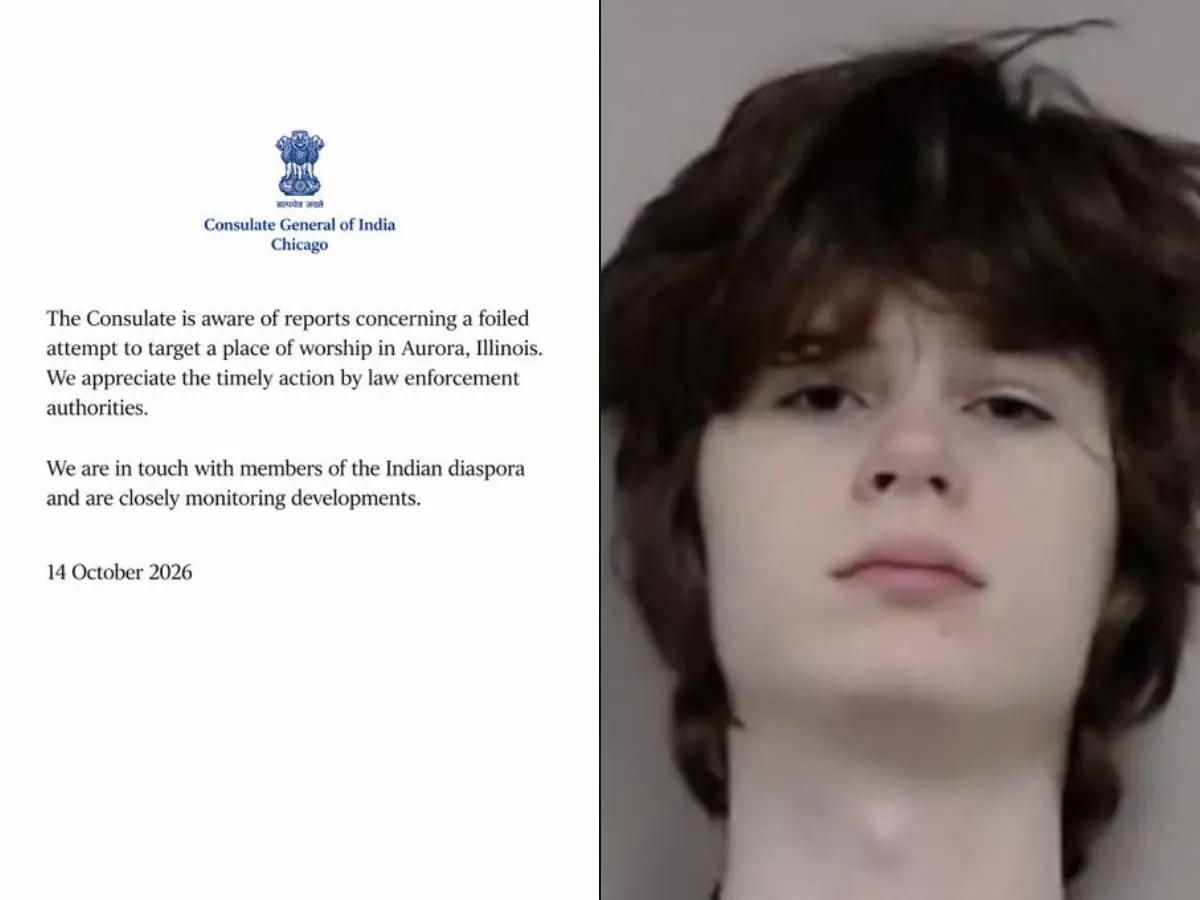
'Troubling pattern of threats': Hindu groups issue advisory after man arrested for alleged plot to target Illinois temple
&imwidth=180&imheight=135&format=webp&quality=medium)
'White supremacist' terror plot against Illinois Hindu temple foiled by jammed gun: Who is Alexandros Paporakis?
&imwidth=180&imheight=135&format=webp&quality=medium)
'Ukraine must get all it needs to protect civilians and infrastructure': Macron
&imwidth=180&imheight=135&format=webp&quality=medium)
Portland stabbing: Multiple people reportedly stabbed hours after deadly Bend school shooting
It is hard to predict precisely how much the turnout rate would rise because the great majority of overseas Singaporeans are not registered voters, according to assistant professor of constitutional law Benjamin Joshua Ong of Singapore Management University (SMU).
“The right to vote is a constitutional right, and we should welcome efforts that make it easier to exercise this right. Of course, democracy is much more than just putting a piece of paper into a box every few years. But voting is a solemn ritual that reinforces a citizen’s ties to the democratic system.”
Watch | Mother's Day Special: Sarah Todd shares easy cooking tips for busy parents
National University of Singapore adjunct law professor Kevin Tan said the postal votes from overseas voters could matter in an election like the 2011 Presidential Election, where Dr. Tony Tan Keng Yam edged out Dr. Tan Cheng Bock by 7,382 votes.
“Looking at it quantitatively, the overseas votes might have swung the election the other way because the margin was very, very slim,” he said. He also asserted that voting is a constitutional right and the modifications done by the ELD were long overdue.
The 56-year-old lawyer Benjamin Yap, a Singaporean living in Ho Chi Minh City will now be able to vote from overseas. “I have been away from Singapore for so long, but I still feel Singaporean at heart. I see my ability to exercise my right to vote as very much intrinsic to my status as a Singaporean,” said Mr Yap, who lives with his wife and their 15-year-old son. He is one of 185,800 Singaporeans living abroad.
Another first in the next election will be the establishment of special polling places on the nursing homes' grounds and the use of mobile polling teams to collect ballots from residents who are bedridden there.
The unique voting arrangements will be tested in nursing homes with more than 50 voters, according to the ELD. Over 2,000 voters will be reached, or roughly two-thirds of registered voters who are now living in nursing homes. This will involve 25 to 30 nursing facilities.
WATCH WION LIVE HERE You can now write for wionews.com and be a part of the community. Share your stories and opinions with us here.