Over 1.3mn Californians may be drinking water that can trigger cognitive issues, Parkinson-like symptoms

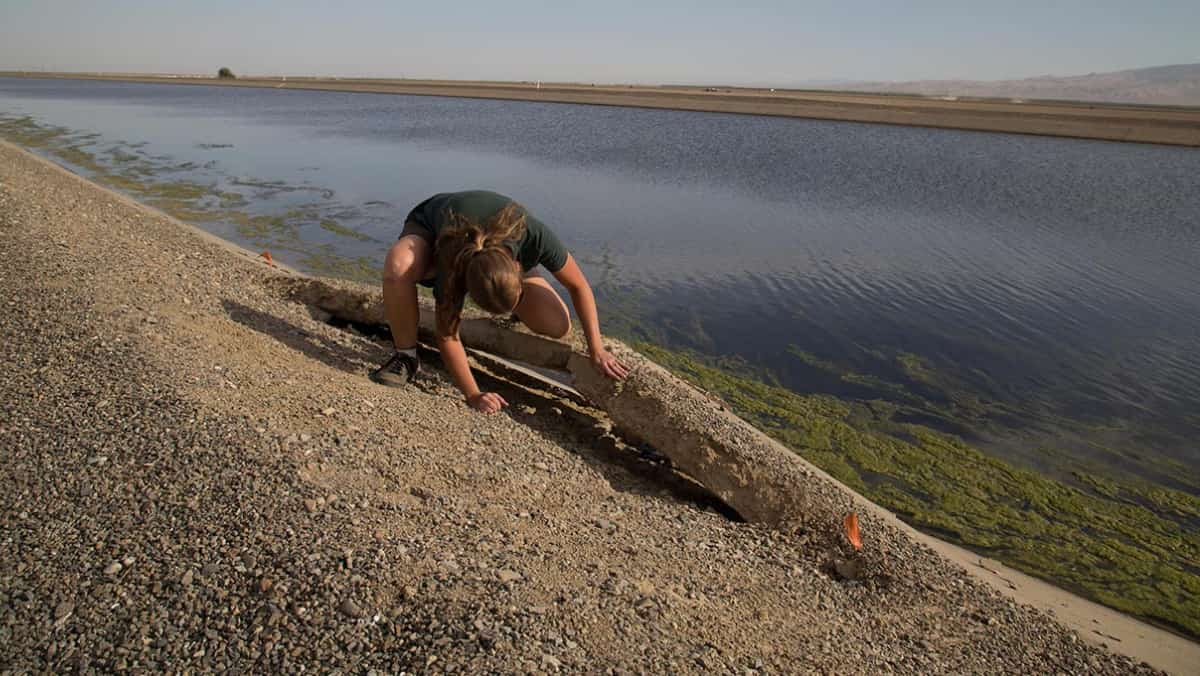
California's Central Valley (Representative Image)
Manganese (Mn) is a common metal found in soil and it can be leached into the groundwater. A research was recently conducted to find out about the levels of this chemical element in California’s Central Valley, a region recognised as one of the most productive and economically important agricultural regions in the United States and currently home to one-third of domestic well users in the state.
According to this research by UC Riverside, the Central Valley's private, untreated well water systems had the highest manganese amounts. The researchers found it in public water systems, but at amounts that were greater than those that have been linked to harmful health impacts in previous studies.
Also Read | ChatGPT can propel four-day work-week? Here's what Nobel Prize-winning economist says

As per the study, over 1.3 million Californians may be drinking tap water with high levels of this chemical element.In the Central Valley of California, the water is sufficiently high in manganese to impair children's cognitive function and motor coordination and to give adults Parkinson-like symptoms, as per reports citing the study.
Previous studies show that school-aged children consuming drinking water with naturally elevated concentrations of manganese have demonstrated lower academic achievement scores as well as poor memory attention, and increased risk of attention deficit hyperactivity disorder (ADHD).
Despite these studies, the research paper says that US Environmental Protection Agency (EPA) maintains a secondary contaminant status for manganese on the basis of adult cohort studies that did not observe neurotoxic endpoints.
)
US vs China over South China Sea: Washington backs Philippines, Beijing hits back
)
Outrage erupts after 3-year-old is married to 60-year-old man in Pakistan, link to her sister's murder being probed
)
UK police arrest several under explosives act near air base used by US forces
)
‘Anti-social elements spreading false rumours’: LPU issues statement amid massive unrest over alleged rape
)
LPU students go on rampage, vandalise campus amid widespread protest: What's happening
)
OpenAI AI Agents hacked 4 websites before Hugging Face, researchers reveal
)
US Treasury Secretary Scott Bessent hails global crackdown on Iranian banks and airlines
&im=FitAndFill=(700,400))
New Friday OTT releases (September 25, 2026): Don’t Be Shy, Hunkkaar: The Roar, Mango Pachcha- 6 movies and TV shows on Netflix, Prime Video and more
)
Asian Games 2026: India face Afghanistan in quarterfinal on Sep 28; Pakistan clash with Hong Kong
)
‘Attack on Mecca a red line for Pakistan’: Shehbaz Sharif warns Houthis at UN
)
'Countries far from conflict are penalised': Jaishankar calls for Gulf peace, seafarer safety at UN
)
Bigg Boss 20: Salman Khan schools Rhiti Tiwari over Qazi Touqeer clash, compares her to Dolly Bindra
&im=FitAndFill=(700,400))
Humanoid robots to virtual worlds! Korean sci-fi dramas to watch: Are You Human Too?, Memories of the Alhambra and more
)
IND vs WI 1st ODI: Naman Dhir debuts as India bowl first in Trivandrum; check playing XIs
)
Nations League: Spain sink England at Wembley; Modric shines for Croatia
)
Two men die of suspected chemical exposure inside public toilet in Mumbai
)
Trump-Xi summit wrap: Big pageantry, Iran talks, few major developments and more meetings planned
)
‘Could kill billions...’: Bill Gates backs calls to slow AI development amid fears of catastrophe
)
Bollywood x K-pop crossover! LE SSERAFIM’s Kazuha charms fans with Shah Rukh Khan’s ‘Chammak Challo’ steps
)
US-Iran war: Trump rejects Iran's Hormuz proposal, reports suggest talks expected next week
)
'What kind of confession is this?': Pakistan PM Shehbaz Sharif’s 'terrorists would be roaming New York' remark goes viral, raises alarm online. Watch
)
Jaishankar at UNGA: Goodwill and friendship can't coexist with terrorism
)
Sri Lankan Tamil migrant worker gets death sentence in Saudi Arabia, help sought from India
)
'FIRST LOOK from inside Noah’s Ark': Researchers share video from inside mysterious mound in Turkey
)
UNSC reform momentum grows: Russia, Portugal, Mauritius push for India's permanent seat bid
)
WATCH | As Shehbaz Sharif claims Pakistan’s ‘victory’ during 2025 conflict, Indian diplomat R Srinivas laughs at UN
)
Ceuta migrant crisis: Protesters take to streets as Spain grapples with migrant challenge
)
Ramayana: Yash’s Ravana gets first official poster from Nitesh Tiwari’s epic
)
'A terrorist country is asking me that question?': Jaishankar hits back at Pakistani journalist at UN; flags attacks on commercial shipping
)
Russia will achieve Ukraine war aims; Europe doing everything to block peace talks: Lavrov at UN
In several Southeast Asian nations, manganese is controlled as a primary contaminant. Nevertheless, it is only treated as a secondary contaminant in terms of regulation in the US. It means there is no set maximum limit for it.
Also Read | North Korea says US-South Korea drills driving tensions in Korean Peninsula to 'brink of nuclear war'
It said that some recent studies show that a disproportionate amount of domestic well-dependent communities in California are underprivileged populations that probably experience financial difficulties in groundwater testing and treatment. A growing body of evidence suggests that manganese concentrations previously considered safe may pose significant health threats to vulnerable populations such as children, the research noted.
"It is a relatively small number of people, compared to the total population of the state, who are getting the tainted water. But for them, the health risks are high," said Samantha Ying, UCR soil scientist and principal study investigator. "These people are particularly concentrated in disadvantaged communities, so if they wanted to monitor and treat the water, they would have a hard time doing so," Ying said.
Watch | Gravitas: Is India emerging as a space leader?
Even though there are options for point-of-use treatment, include water softeners, chlorination, reverse osmosis systems, etc. Yet, the expense of water quality monitoring equipment and the cost of treating manganese infused water are both up to $400 per year.
"It is possible to purchase filters for manganese, but a lot of people cannot afford them. We are hoping people in these communities can be subsidised to buy treatment options," Ying said.
It stated that community water system users may have access to municipal monitoring and treatment, but out-of-pocket costs for domestic well communities may be a considerable financial burden, particularly for those below the poverty line.
"Using existing groundwater model predictions of manganese concentrations at deeper depths did not change the number of wells likely to be contaminated," Ying said.
The study suggests that legislative changes to primary contaminant regulation may have co-benefits upon secondary contaminant remediation. As per the study, it has been reported that a decrease in arsenic concentrations was correlated with the implementation of stricter regulation of As.
Arsenic has long been regulated as a primary contaminant in the US and "wells are labeled unsafe if they contain arsenic, but not if they contain manganese," Ying said. "Thus, the number of wells considered safe may be greatly overestimated."
(With inputs from agencies)
WATCH WION LIVE HERE
You can now write for wionews.com and be a part of the community. Share your stories and opinions with us here.