Netanyahu corruption trial testimony cancelled indefinitely; THIS is the secret security threat that halted the court hearing

&imwidth=600&imheight=450&format=webp&quality=medium "Netanyahu corruption trial testimony cancelled indefinitely; THIS is the secret security threat that halted the court hearing")
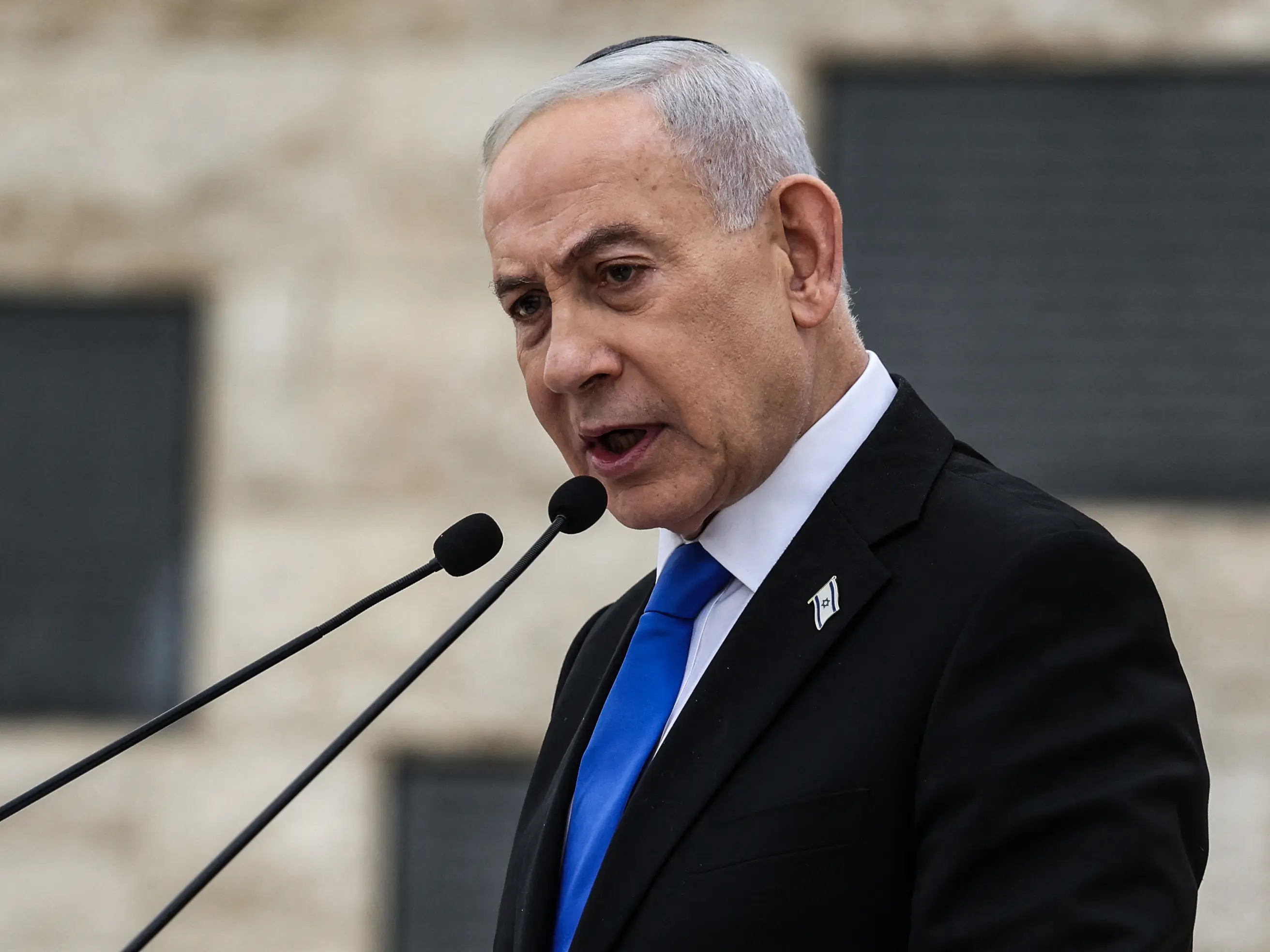
Israel’s Prime Minister Benjamin Netanyahu speaks during a ceremony commemorating Israel’s Remembrance Day for fallen soldiers, or Yom HaZikaron, at the Military Cemetery on Mount Herzl in Jerusalem on April 21, 2026. Photograph: (AFP)
Why did Benjamin Netanyahu’s long-awaited court testimony suddenly get cancelled at the last minute? What happened, and what are the cases really about? Scroll down to find out.
Israeli Prime Minister Benjamin Netanyahu was scheduled to take the stand in his criminal trial Monday (Apr 27) for the first time in roughly six weeks. However, less than two hours before it was due to start, the hearing was called off. Why? His attorney called the court's chief secretary and requested a cancellation, citing the prime minister's "security schedule." Here's all we know.
Why was Netanyahu's testimony cancelled?
In what was the latest postponement in a long string of delays, Israeli PM's testimony was put off indefinitely at the request of his lawyer, Amit Hadad. According to reports, Netanyahu's defence cited his "security schedule". However, the Israeli PM's defence team did not elaborate and instead said that further details would be provided to the court and the prosecution in a sealed submission. Notably, later in the day, Netanyahu attended a security briefing.
What was the hearing about?
The hearing was in connection with a case that has been stuck in Israel's court system since 2020. Netanyahu is the first sitting Israeli prime minister to face criminal charges, and his testimony, now underway but repeatedly stalled, has become one of the more drawn-out legal dramas in the country's history.
Trending Stories
)
)
)
)
)
)
)
)
)
)
)
)
)
)
)
)
)
)
)
)
)
)
)
)
)
)
)
&im=FitAndFill=(700,400))
)
)
)
)
)
)
)
)
&im=FitAndFill=(700,400))
)
)
The trial encompasses three separate cases, each involving a different alleged arrangement between Netanyahu and powerful figures in Israeli business and media.
Case 1000 centres on gifts, cigars, champagne and other expensive items, he allegedly received from wealthy businessmen Arnon Milchan and James Packer, in exchange for actions Netanyahu allegedly took to benefit Milchan. He is charged with fraud and breach of trust.
Also read | 'Weird stuff happens': Monkey temporarily derails Trump's 'shoot and kill' mission in Strait of Hormuz
Case 2000 involves recorded conversations between Netanyahu and Arnon "Noni" Mozes, publisher of Yediot Aharonot, in which prosecutors say the two men discussed a potential arrangement: favourable coverage of Netanyahu in exchange for steps that would weaken the rival newspaper Israel Hayom. In this case, Netanyahu faces fraud and breach of trust charges; Mozes faces bribery.
Case 4000, known as the Bezeq-Walla affair, is the most serious. Netanyahu is accused of advancing regulatory decisions that benefited Shaul Elovitch, then the controlling shareholder of telecom giant Bezeq, in exchange for favourable coverage on the Walla news site that Elovitch controlled. Netanyahu faces bribery, fraud and breach of trust in this case.
He has denied wrongdoing across all three, arguing the gifts were between friends, the Mozes conversations amounted to nothing criminal, and that no quid pro quo existed in the Walla matter.

