NASA overhauls Artemis moon mission after delays, aims to cut both risks and costs

&imwidth=600&imheight=450&format=webp&quality=medium "NASA overhauls Artemis moon mission after delays, aims to cut both risks and costs")
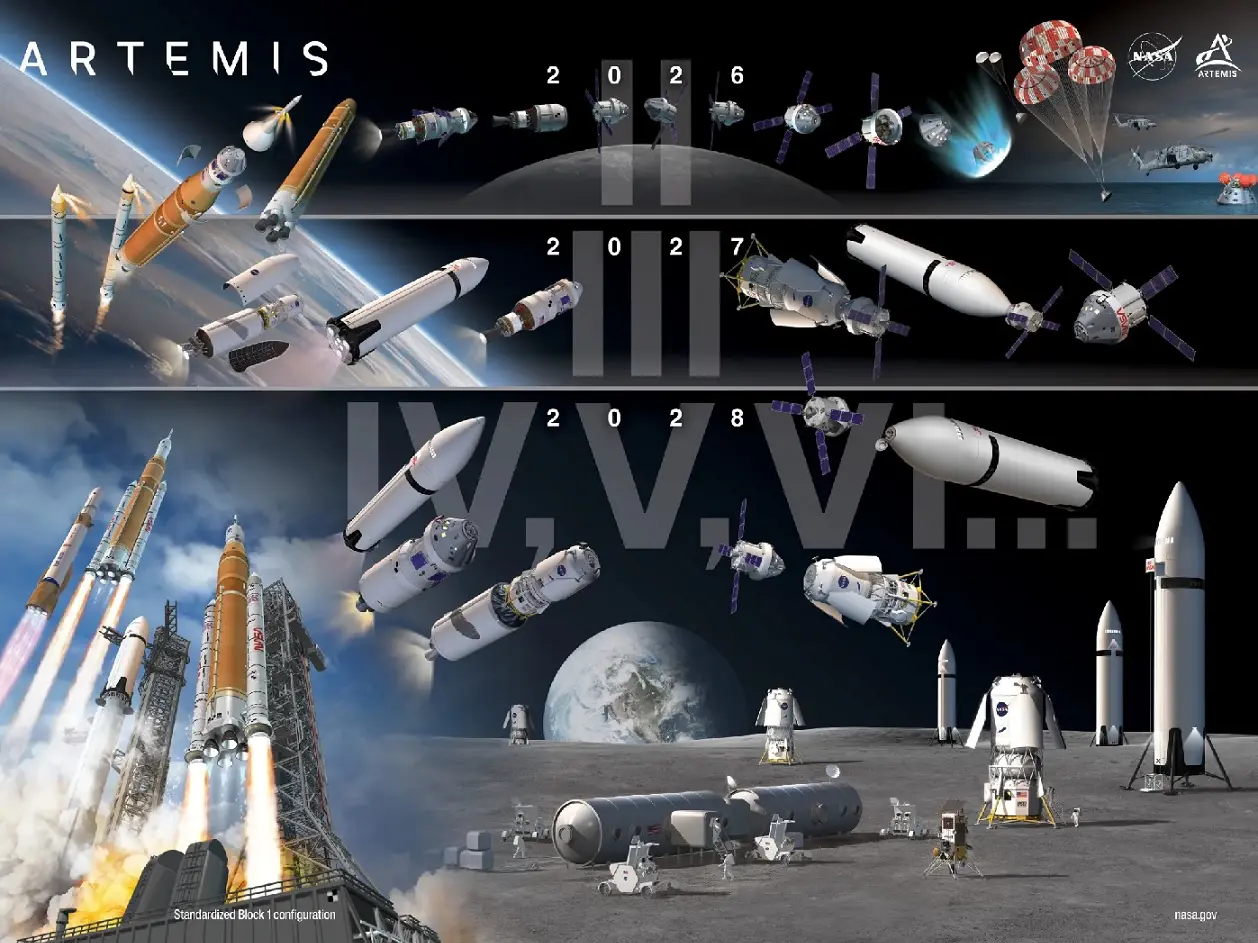
A NASA graphic illustrates its increased cadence of Artemis mission Photograph: (NASA)
NASA is essentially swapping the actual moon landing for an additional test mission staged closer to Earth while insisting that the 2028 deadline for a lunar touchdown remains unchanged. Artemis III was supposed to be the moon landing but has now been pushed to 2027.
NASA announced on Friday that it would revise its Artemis lunar programme, which has suffered multiple delays in recent years, to ensure Americans can return to the Moon’s surface by 2028. NASA will add missions between this spring’s Artemis 2 and the ultimate moonwalk, a strategic revision. NASA administrator Jared Isaacman told a briefing it would allow for improved launch “muscle memory”.
The shift in plans comes as Artemis 2, which will see the first flyby of the Moon in more than half a century, has been afflicted with delays and technical difficulties. The overhaul includes standardising vehicle configuration, adding an additional mission in 2027, and undertaking at least one surface landing every year thereafter.
As teams prepare to launch Artemis II in the weeks ahead, the Artemis III mission will be designed to test out systems and operational capabilities in low Earth orbit to prepare for an Artemis IV landing in 2028.
Also Read: ‘Our hand can reach their necks’: Afghanistan warns of ‘decisive’ action if Pakistan continues war
NASA is cancelling a multibillion-dollar Boeing Co. upgrade to the centrepiece SLS rocket and slotting in a test flight closer to Earth as the programme remains beset by delays and cost overruns. The changes mean that NASA is essentially swapping the actual moon landing for an additional test mission staged closer to Earth while insisting that the 2028 deadline for a lunar touchdown remains unchanged.
Artemis III was supposed to be the moon landing but has now been pushed to 2027. It will see Boeing’s Space Launch System rocket launch a crew aboard Lockheed Martin Corp.’s Orion capsule. Artemis IV will land a crew on the moon a year later.
Trending Stories
&imwidth=280&imheight=210&format=webp&quality=medium)
&imwidth=280&imheight=210&format=webp&quality=medium)
&imwidth=280&imheight=210&format=webp&quality=medium)
&imwidth=280&imheight=210&format=webp&quality=medium)
&imwidth=280&imheight=210&format=webp&quality=medium)
&imwidth=280&imheight=210&format=webp&quality=medium)
&imwidth=280&imheight=210&format=webp&quality=medium)
&imwidth=280&imheight=210&format=webp&quality=medium)
&imwidth=280&imheight=210&format=webp&quality=medium)
&imwidth=280&imheight=210&format=webp&quality=medium)
&im=FitAndFill=(700,400)&imwidth=280&imheight=210&format=webp&quality=medium)
&imwidth=280&imheight=210&format=webp&quality=medium)
&imwidth=280&imheight=210&format=webp&quality=medium)
&imwidth=280&imheight=210&format=webp&quality=medium)
&imwidth=280&imheight=210&format=webp&quality=medium)
&imwidth=280&imheight=210&format=webp&quality=medium)
&imwidth=280&imheight=210&format=webp&quality=medium)
&imwidth=280&imheight=210&format=webp&quality=medium)
&imwidth=280&imheight=210&format=webp&quality=medium)
&imwidth=280&imheight=210&format=webp&quality=medium)
&imwidth=280&imheight=210&format=webp&quality=medium)
&im=FitAndFill=(700,400)&imwidth=280&imheight=210&format=webp&quality=medium)
&imwidth=280&imheight=210&format=webp&quality=medium)
&imwidth=280&imheight=210&format=webp&quality=medium)
&imwidth=280&imheight=210&format=webp&quality=medium)
&imwidth=280&imheight=210&format=webp&quality=medium)
&imwidth=280&imheight=210&format=webp&quality=medium)
&imwidth=280&imheight=210&format=webp&quality=medium)
&im=FitAndFill=(700,400)&imwidth=280&imheight=210&format=webp&quality=medium)

&im=FitAndFill=(700,400)&imwidth=280&imheight=210&format=webp&quality=medium)
&imwidth=280&imheight=210&format=webp&quality=medium)
&imwidth=280&imheight=210&format=webp&quality=medium)
&imwidth=280&imheight=210&format=webp&quality=medium)
&imwidth=280&imheight=210&format=webp&quality=medium)
&imwidth=280&imheight=210&format=webp&quality=medium)
&imwidth=280&imheight=210&format=webp&quality=medium)
NASA said the goal of the changed sequence is to fly more frequently in order to counteract one of the biggest criticisms of Artemis: the slow development pace of its SLS rocket.
Boeing’s SLS rocket has been missing deadlines, and it’s not clear if the company will actually be able to meet this accelerated pace.
Artemis has witnessed delays, mismanagement, and cost overruns, and NASA’s watchdog estimates that the programme to put humans back on the moon for the first time in more than half a century has cost roughly $93 billion so far.
The setbacks and a complicated architecture comprising technology supplied by multiple companies has fuelled doubts that NASA will meet its 2028 target in a moon race against China which is inching closer to its 2030 crewed moon landing goal.
“With credible competition from our greatest geopolitical adversary increasing by the day, we need to move faster, eliminate delays, and achieve our objectives,” NASA Administrator Jared Isaacman said in a statement.
Boeing’s SLS rocket has a low launch rate, which creates more risk, as engineers and flight operators are unable to keep their launch skills sharp.
NASA plans to find an alternative to Boeing’s Exploration Upper Stage, or EUS, a much more powerful upper portion of the SLS slated to debut on the rockets’ fourth launch.
Besides being behind schedule, Boeing’s EUS also came under criticism for its ballooning cost, which NASA’s Inspector General says will hit nearly $2.8 billion through 2028.
The agency has tasked Elon Musk’s SpaceX and Jeff Bezos’ Blue Origin to build landers to ferry humans to and from the moon. With the addition of another mission, the repurposed Artemis III flight will test rival lunar landers built by SpaceX and Blue Origin in Earth orbit, thereby reducing risks.