

&imwidth=800&imheight=600&format=webp&quality=medium "Meta’s Alexandr Wang says that in the next five years, superintelligence could unlock the biggest discoveries in human history")
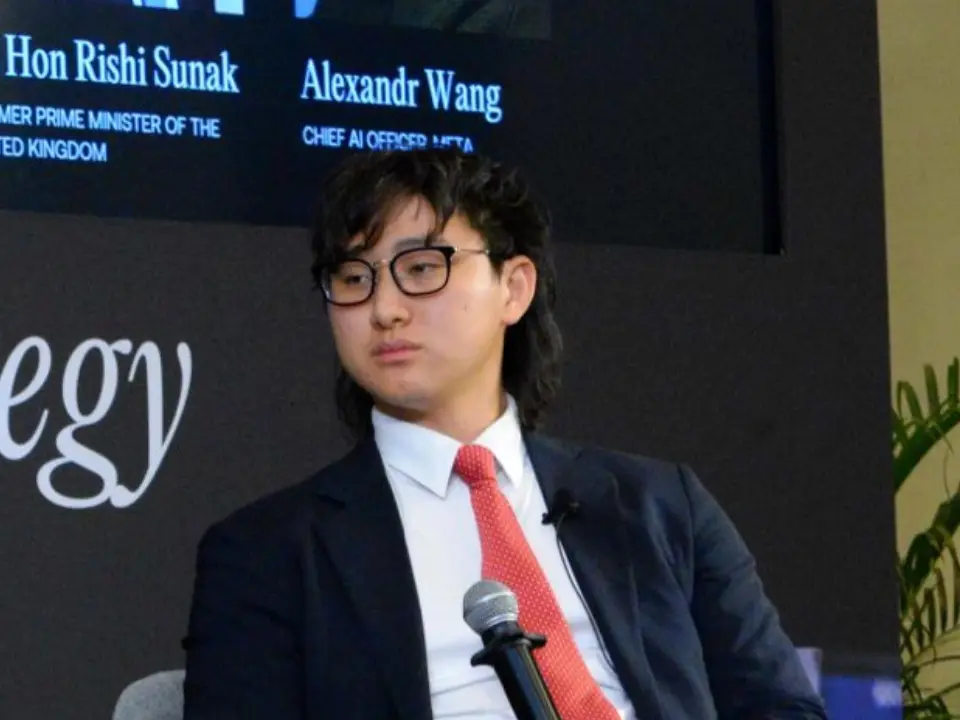
The next five years will bring some of the most significant scientific discoveries in human history. This timeline comes directly from Alexandr Wang, the founder of Scale AI and the current Chief AI Officer at Meta.
Speaking on a recent podcast hosted by Varun Mayya, Wang shared detailed insights into how Meta is positioning itself in the global artificial intelligence race. The strategy focuses not just on building smarter models, but on engineering an organisation fully equipped to deliver superintelligence to a global audience. With a current base of 3.5 billion daily active users, Meta holds a distinct distribution advantage over other technology firms.
The Strategy Behind Meta Superintelligence Labs
Wang joined Meta seven months ago to head the newly formed Meta Superintelligence Labs (MSL). According to his statements on the podcast, the initial focus was entirely on establishing proper scientific foundations rather than rushing to meet artificial deadlines.
Wang explained that successful AI development requires a continuous cycle between research and product teams. He described this as a "virtuous flywheel." In this system, frontier research leads to the creation of consumer products. As these products gain scale, they justify the expansion of physical infrastructure. This expanded infrastructure then allows researchers to build even larger, more capable models.
According to Wang, the traditional model where research happens in isolation and is later handed off to product developers is no longer effective. Instead, researchers and product managers at Meta work in tandem to co-develop new systems.
Hardware and 24/7 Personal Agents
A central element of Meta's future product line involves personal AI agents. Wang stated that the company is moving toward a future where agents work 24/7 on behalf of users. The goal is to move AI assistance beyond the smartphone and integrate it into a "constellation of peripherals."
Trending Stories
&imwidth=180&imheight=135&format=webp&quality=medium)
Other Mommy leads North American box Office as Verity, Resident Evil round out top four
&im=FitAndFill=(700,400)&imwidth=180&imheight=135&format=webp&quality=medium)
Navratri 2026: 9 days, 9 forms of Goddess Durga and 9 colours- Check the complete list
&imwidth=180&imheight=135&format=webp&quality=medium)
Anti-SIR protest in Mumbai: Protestors wear black masks & ribbons in Mumbai
&imwidth=180&imheight=135&format=webp&quality=medium)
BCCI rejects venue shift reports, India vs Sri Lanka 1st ODI to remain in Delhi
&imwidth=180&imheight=135&format=webp&quality=medium)
Diljit Dosanjh’s Delhi concert gets a new date: When and where to catch the singer
&im=FitAndFill=(700,400)&imwidth=180&imheight=135&format=webp&quality=medium)
Is sending robots to Mars easier than sending humans?
&imwidth=180&imheight=135&format=webp&quality=medium)
A watchdog rated 'ChatGPT for Teens' an unacceptable risk and says keep under-18s off it
&imwidth=180&imheight=135&format=webp&quality=medium)
1,500 drones illuminate Mumbai sky as Cordelia Cruises unveils second ship, Cordelia Sky
&imwidth=180&imheight=135&format=webp&quality=medium)
'Just coincidence': Police mistakes protester as AISA chief Neha Bora, arrests her from site
&imwidth=180&imheight=135&format=webp&quality=medium)
Anthropic's AI invented a murder witness and sent the fake tip to Philadelphia police
&imwidth=180&imheight=135&format=webp&quality=medium)
Congress demands action against chief election commissioner
&imwidth=180&imheight=135&format=webp&quality=medium)
CJI Surya Kant declines INDIA bloc leaders’ request for meeting ahead of march to SC, asks them to file petition
&imwidth=180&imheight=135&format=webp&quality=medium)
Saif Ali Khan is finally on Instagram! Here's what he shared in his first post
&imwidth=180&imheight=135&format=webp&quality=medium)
'Turn approver, resign, we'll forgive you': Rahul Gandhi claims receiving messages from CEC Gyanesh Kumar
&imwidth=180&imheight=135&format=webp&quality=medium)
One Indian killed in Riyadh airport attack; 11 others injured : MEA
&imwidth=180&imheight=135&format=webp&quality=medium)
Top AI models flunked a test of inventing new AI research, so much for self-improving AI
&imwidth=180&imheight=135&format=webp&quality=medium)
Wasim Jaffer blames Ajit Agarkar-led selection panel for Virat Kohli’s Test retirement
&imwidth=180&imheight=135&format=webp&quality=medium)
'Ouch!!! That must hurt': Kangana Ranaut hails Kamal Haasan's sharp reply to Elon Musk over Starlink row
&imwidth=180&imheight=135&format=webp&quality=medium)
Sidhu Moose Wala’s younger brother wins hearts by recreating late singer’s signature move at Toronto Hologram Show
&imwidth=180&imheight=135&format=webp&quality=medium)
UK school ditches technology, shifts from screen to pen and paper for learning
&imwidth=180&imheight=135&format=webp&quality=medium)
Telangana ATM heist: Thieves in nighties arrive in ambulance, break into SBI ATM in Kamareddy - VIDEO
&imwidth=180&imheight=135&format=webp&quality=medium)
Houthis claim Riyadh airport attacks, Aramco strikes; issue fresh warning to airlines, travellers and workers
&imwidth=180&imheight=135&format=webp&quality=medium)
Portugal Federation confirms Cristiano Ronaldo’s return to national team despite suspension
&imwidth=180&imheight=135&format=webp&quality=medium)
Delhi protests: 'Court should not be dragged into political activity', says CJI Surya Kant
&im=FitAndFill=(700,400)&imwidth=180&imheight=135&format=webp&quality=medium)
New OTT releases this week (October 12-18, 2026): Sacrifice, Koffee with Karan S9, Roadies Rebirth- 6 titles coming on Netflix, JioHotstar and more
&imwidth=180&imheight=135&format=webp&quality=medium)
Microsoft's Nadella says treat every AI model as already hacked, and build an 'emergency brake'
&imwidth=180&imheight=135&format=webp&quality=medium)
Delhi protest: CJI Surya Kant declines to meet India Bloc leaders
&imwidth=180&imheight=135&format=webp&quality=medium)
Telangana man allegedly recruited into Russian military dies near Ukraine border
&imwidth=180&imheight=135&format=webp&quality=medium)
China imposes first-ever sanctions on ministers from Taiwan allies: What this means
&imwidth=180&imheight=135&format=webp&quality=medium)
McSweeney reveals how studying Virat Kohli’s YouTube clips helped Australia A conquer India
&imwidth=180&imheight=135&format=webp&quality=medium)
Maharashtra appoints FDA commissioner Tukaram Mundhe as secretary of committee for MPSC overhaul amid stir
&imwidth=180&imheight=135&format=webp&quality=medium)
Iran: US accepted some conditions, Clarity needed on others
&imwidth=180&imheight=135&format=webp&quality=medium)
Nana Patekar's cause of death confirmed; here's what his postmortem report says
&imwidth=180&imheight=135&format=webp&quality=medium)
iPhone Duo price index: Tracking Apple’s latest pricing trends
&imwidth=180&imheight=135&format=webp&quality=medium)
'Say no to Muse': Meta has no control over its own moderation AI while it forces a security nightmare on everyone
Wearable technology, specifically the Meta Ray-Ban smart glasses, plays a major role in this transition. Addressing the current state of the smart glasses, Wang acknowledged that they are running an older version of the Llama model. However, he confirmed that modern AI integration is coming very soon. He described the hardware as being "one software update away from superpowers."
The long-term vision involves an always-on personal agent that can see what the user sees and hear what the user hears, providing contextual assistance across multiple devices throughout the day.
Building Trust and Model Behaviour
As AI models become more integrated into daily life, safety and user trust have become primary concerns. Wang noted that developing a personal agent one that users trust with their personal goals and daily routines requires an extreme level of responsibility.
To manage this, Meta collaborates with philosophers and psychologists to design the behaviour of their models. According to Wang, the objective is to engineer a mutual relationship where the AI system actively works to help the human user succeed.
Reflecting on his early career as an 18-year-old entrepreneur founding Scale AI, Wang noted a shift in his approach to business. While impatience drove his early success, he now focuses on building foundations that offer long-term durability and are difficult for competitors to replicate.
He also shared his perspective on working closely with Meta CEO Mark Zuckerberg. Wang described Zuckerberg as a leader who identifies future technological shifts quickly and translates those complex advancements into practical consumer products and business ecosystems. By establishing MSL, Meta aims to lock in these structural advantages for the coming decades.
