Israeli envoy: Israel will give India access to sensitive security technologies

&imwidth=600&imheight=450&format=webp&quality=medium "Israeli envoy: Israel will give India access to sensitive security technologies")
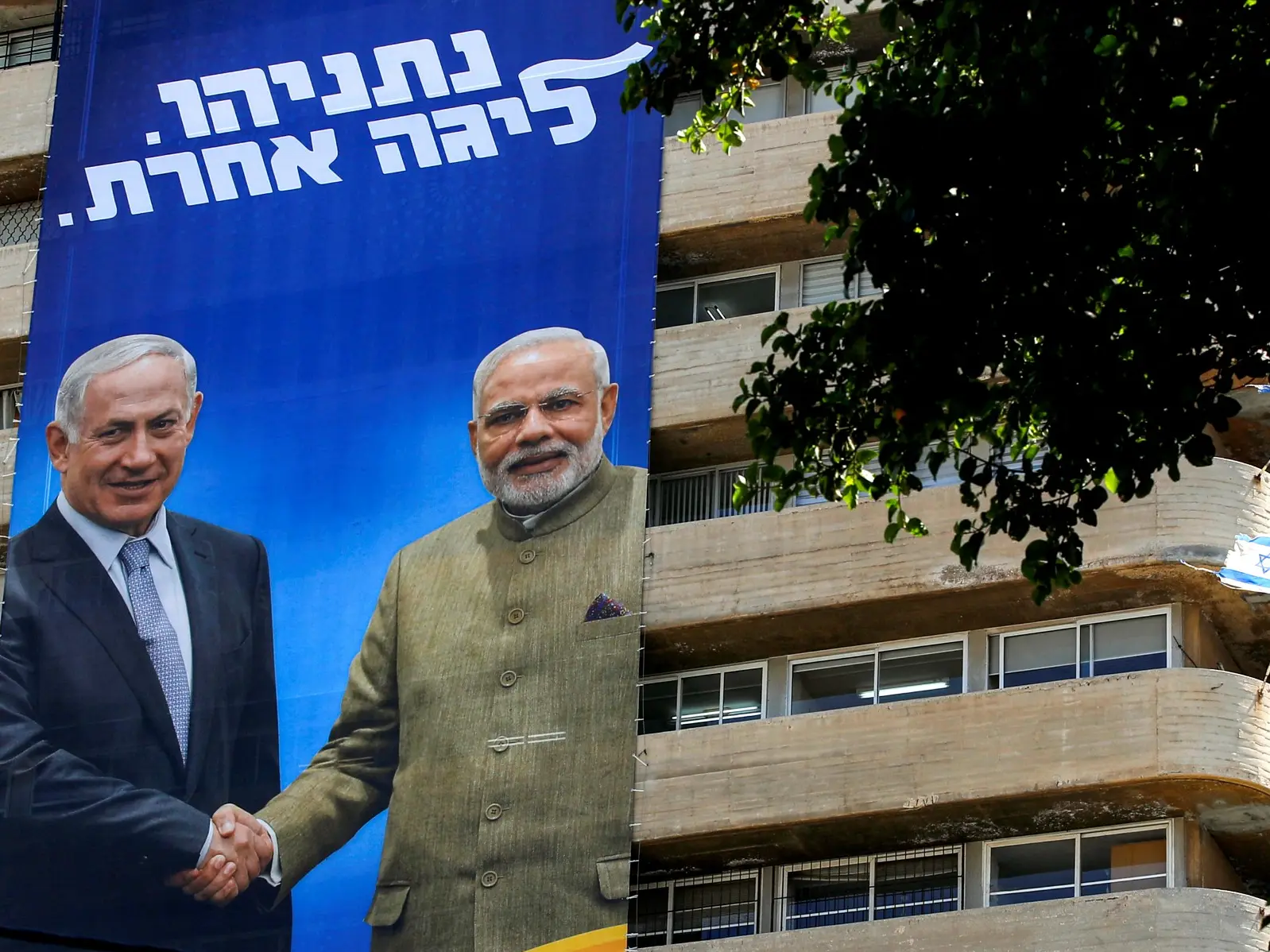
This picture taken on July 28, 2019 shows two giant Israeli Likud Party election banners hanging from a building showing Israeli Prime Minister Benjamin Netanyahu shaking hands with Indian Prime Minister Narendra Modi Photograph: (AFP)
PM Narendra Modi begins a two-day Israel visit as Ambassador Reuven Azar signals an updated security agreement, deeper defence tech access, and progress on a free trade deal. Pegasus spyware row may cast a shadow.
PM Narendra Modi will travel to Israel on Wednesday, February 25, for a two-day official visit. Israeli Ambassador to India Reuven Azar, on Monday, said that both parties are expected to update the joint security agreement. The agreement will likely provide scopes for broader security cooperation and Indian access to sensitive Israeli technologies.
Ezar further claimed that the two nations are working on a free trade agreement. “..We are making progress in negotiations for a free trade agreement. We also want to connect the financial systems of the two countries and invite Indian companies to participate in infrastructure tenders in Israel,” said Azar.
Israeli researchers and foreign policy think tanks Center for Strategic and International Studies at Bar-Ilan University, emphasised that Israel should extend cooperation with India. According to Dr Lauren Dagan Amos, India is seeking cooperation in artificial intelligence, quantum and energy, and Israel is poised to assist with brain capabilities and experience.
Israeli media reported that the security agreement will allow for “deeper cooperation in defence industries”, including Israeli technologies that India did not have access to before, considering the “security challenges that the Indians have gone through in the past year.”
It remains unclear what security technologies will be offered by Israel to India. Azar further added that the agreement will "allow for things to open up that were not there before" in India's security sector. The Indian government had previously used highly invasive Peagusus software developed by NSO, to target 300 verified Indian mobile numbers belonging to opposition leader Rahul Gandhi, journalists and activists such as Siddharth Varadarajan, founding editor of digital media outlet The Wire, and Anand Mangnale, South Asia editor at The Organised Crime and Corruption Reporting Project (OCCRP), CBI chief Alok Verma, and Election Commissioner Ashok Lavasa.
Trending Stories
)
)
)
)
)
)
)
)
)
)
)
)
)
)
)
)
)
)
)
)
)
)
)
)
)
)
)
)
)
)
)
)
)
)
&im=FitAndFill=(700,400))
)
)
)
)
The details of the attack were disclosed by the human rights group Amnesty International. The Indian government did not cooperate with the probe committee, citing national security concerns. In April 2025, the SC observed that there is nothing wrong with a country possessing a spying tool, but it depends on who it was used against. The case is still pending for review.