
&imwidth=800&imheight=600&format=webp&quality=medium "Tesla builds first Cybertruck with its own refined lithium: Elon Musk's $1 billion Texas bet pays off")
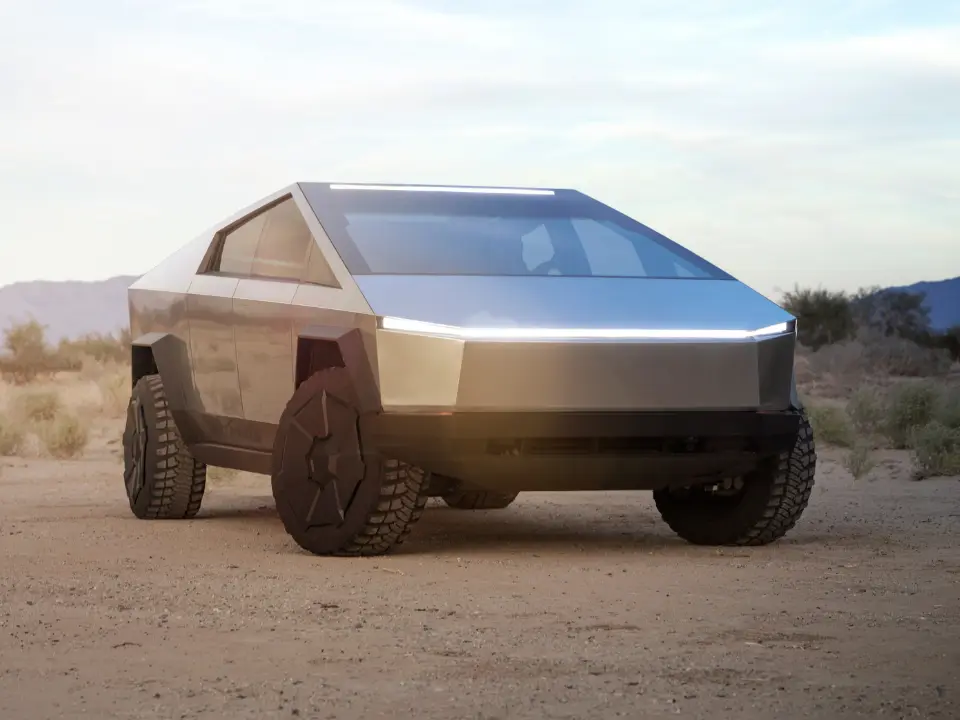
Tesla has taken a major step towards controlling its electric vehicle battery supply chain, building its first Cybertruck with 4680 battery cells containing lithium refined entirely at its own Texas facility.
The vehicle rolled off the production line at Gigafactory Texas on September 22, 2026, according to Tesla's official Cybertruck account. The development links the company's lithium refining operations on the Texas Gulf Coast directly to its vehicle manufacturing, reducing reliance on externally refined battery materials. The milestone comes as Tesla's Cybertruck production passes 100,000 units and the company works to increase output amid continued customer demand.
Tesla's first Cybertruck uses lithium refined in Texas

Tesla confirmed the milestone in a post describing the vehicle as the "First Cybertruck built with 4680 cells containing lithium from our Gulf Coast lithium refinery."
The refinery, located on a site spanning more than 1,200 acres in Robstown, near Corpus Christi, represents an investment of more than $1 billion. Operations began in January 2026, with the facility reaching full capacity in July. It processes lithium into battery-grade lithium hydroxide, which can then be supplied to Tesla's battery cell manufacturing operations at Gigafactory Texas. The significance is that Tesla is bringing another stage of battery production under its own control, from refining lithium to manufacturing cells and assembling vehicles.
Tesla claims new lithium process cuts emissions by 30%
Trending Stories
)
Outrage erupts after 3-year-old is married to 60-year-old man in Pakistan, link to her sister's murder being probed
)
Trump-Xi summit wrap: Big pageantry, Iran talks, few major developments and more meetings planned
)
Did Hitler kill his niece Geli Raubal? Newly found records reopen a 95-year-old mystery
)
‘Attack on Mecca a red line for Pakistan’: Shehbaz Sharif warns Houthis at UN
)
Nigeria Navy moves to boost oil security, tackle crude theft and infrastructure threats
)
US Supreme Court backs Trump administration's use of SAVE database to check voter citizenship
)
'A terrorist country is asking me that question?': Jaishankar hits back at Pakistani journalist at UN; flags attacks on commercial shipping
)
Cindy Crawford’s son Presley Gerber cremated as death probe continues
)
US court backs Pentagon's decision to exclude Anthropic over Claude AI restrictions
)
'Making history': Xi Jinping praises Trump as US-China leaders dine at White House
)
India's UN Envoy slams Pakistan: 'They claim security by day, terrorism by night'
)
Saudi Arabia still harbours intent to develop nuclear weapons, reveals US intelligence: Report
)
India flags brutal violence in Pak-occupied Jammu Kashmir
)
WATCH | As Shehbaz Sharif claims Pakistan’s ‘victory’ during 2025 conflict, Indian diplomat R Srinivas laughs at UN
)
Red Sea crisis: Houthis promise not to target European ships; UNSC condemns Saudi attacks
)
Yemen's war escalates: Saudi-backed leader calls for general mobilisation against the Houthis
)
Trump rejects Iran's 7-day ceasefire proposal as US weighs renewed bombing after midterms: Report
)
Asian Games 2026: India women’s kabaddi team edge Iran 37-34 to clinch 3rd gold medal
)
Gaza's war turned environmental damage into second crisis
)
‘Not just a local tragedy’: Nepal PM Shah warns UN of growing climate threat, says Nepal floods were 'a warning to the world'
)
'FIRST LOOK from inside Noah’s Ark': Researchers share video from inside mysterious mound in Turkey
)
Jay-Z rape case: Accuser says allegations were false, never met rapper
)
Heart of the Beast review: Brad Pitt leads a gripping tale of survival and loyalty
)
India's insurance regulator overhauls policies
)
Myanmar training camp case: US national, 6 Ukrainians allowed to meet their families abroad
)
‘Goal is to win it’: Virat Kohli confirms 2027 ODI World Cup will be his final tournament for India
)
‘It is all possible’: Putin weighs next steps on Ukraine talks, rules out Europe conflict
)
Asian Games: Shooting spree continues as India win silver in women’s 50m rifle 3P team event
)
Saudi oil exports surge despite Iran war
)
Scientists detect first radio signals directly from faraway planet
&im=FitAndFill=(700,400))
New Friday OTT releases (September 25, 2026): Don’t Be Shy, Hunkkaar: The Roar, Mango Pachcha- 6 movies and TV shows on Netflix, Prime Video and more
)
10,000 gather in support of 87-year-old forcefully evicted from home of 71 years
)
Pakistan deploys over 20,000 security personnel as PTI vows march for Imran Khan's release
)
Pentagon quietly adds 37 wounded troops to Iran war tally without explaining when or how
)
Indian diplomat Petal Gahlot raises deteriorating situation in Pakistan-occupied Kashmir in right of reply at UN
)
Mushtaq Khan dies at 56: When Welcome actor opened up about his salary for iconic role Ballu
)
Tesla is preparing something big for Optimus: new Gen 3 models surface in app
)
OpenAI AI Agents hacked 4 websites before Hugging Face, researchers reveal
The Texas refinery uses what Tesla describes as an acid-free alkaline leaching process, replacing the sulfuric acid commonly used in conventional lithium refining.
According to the company, the method reduces carbon emissions by approximately 30% and reagent costs by 60%. Tesla also says the process produces a non-hazardous mineral byproduct containing sand, limestone and anhydrite, which can be used in construction rather than treated as industrial waste. The company plans to expand the facility's feedstocks in future, potentially including recycled batteries and manufacturing scrap. These environmental and cost figures are company-reported claims and have not been independently established in the supplied information.
Cybertruck production crosses 100,000 as deliveries stretch into 2027
The lithium milestone arrives during a busy period for Tesla's Austin factory. Cybertruck production surpassed 100,000 cumulative units in August 2026, while the plant's stated annual capacity stands at more than 125,000 vehicles. Tesla has also begun contacting some reservation holders whose orders date back to February 2026, with certain customers receiving earlier delivery communications. However, new buyers still face a long wait. As of September 16, Tesla's online configurator estimated April 2027 delivery for the $59,999 dual-motor all-wheel-drive Cybertruck. That suggests finished-vehicle logistics and delivery scheduling remain significant challenges, even as manufacturing and battery supply operations expand.
What Tesla's lithium strategy means for electric vehicles
Lithium prices have historically experienced sharp swings, creating uncertainty for battery manufacturers. By refining lithium in-house, Tesla aims to reduce its exposure to commodity price changes and international supply disruptions. The company is also building local workforce partnerships with Robstown Independent School District, Del Mar Community College and Texas A&M University-Corpus Christi. The first Cybertruck using its own refined lithium does not mean Tesla has eliminated all external battery supply dependencies. It does, however, demonstrate that the company has begun integrating another important stage of battery production into its Texas operations. The next question is whether the approach can deliver consistent cost savings and support higher production volumes as Tesla expands its electric vehicle and battery ambitions.
