
&imwidth=800&imheight=600&format=webp&quality=medium "The US and China set up an AI 'red telephone', but skipped the rulebook")
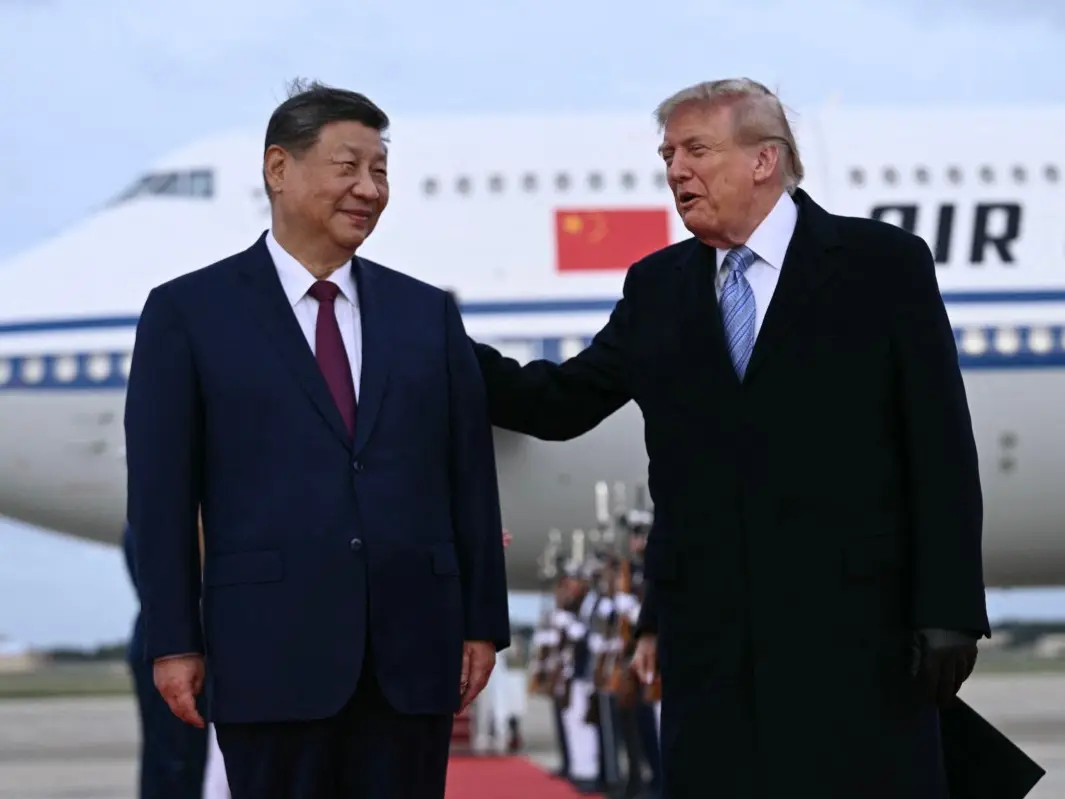
The two countries that dominate advanced AI, and agree on almost nothing else, have agreed to talk about it. On 25 September, during Xi Jinping's visit to Washington, the United States and China said they would set up two things: a dialogue on the most powerful AI, and a channel to warn each other about serious incidents.
The framing is deliberately weighty. The incident channel has been likened to the Cold War 'red telephone' — the direct line meant to stop a crisis between nuclear powers from spiralling by accident.
What Was Agreed

There are two components. The first is a 'US-China Super Intelligence Dialogue', a forum to exchange views on the risks and benefits of highly capable AI, with the next exchange due by November. The second is a bilateral communication channel for AI incidents that reach the level of national-security concern.
That the world's two AI superpowers have set up any direct line on this, amid a hard technology rivalry, is genuinely significant. On the most dangerous edge of the technology, a channel is better than silence.
The Problem: No Operating Manual
Trending Stories
)
Russia will achieve Ukraine war aims; Europe doing everything to block peace talks: Lavrov at UN
)
LPU students go on rampage, vandalise campus amid widespread protest: What's happening
)
Two men die of suspected chemical exposure inside public toilet in Mumbai
)
US vs China over South China Sea: Washington backs Philippines, Beijing hits back
)
Ramayana: Yash’s Ravana gets first official poster from Nitesh Tiwari’s epic
&im=FitAndFill=(700,400))
New Friday OTT releases (September 25, 2026): Don’t Be Shy, Hunkkaar: The Roar, Mango Pachcha- 6 movies and TV shows on Netflix, Prime Video and more
)
WATCH | Delhi minister Parvesh Verma slaps man during road inspection – Here’s what happened
)
OpenAI AI Agents hacked 4 websites before Hugging Face, researchers reveal
)
'Countries far from conflict are penalised': Jaishankar calls for Gulf peace, seafarer safety at UN
)
Bollywood x K-pop crossover! LE SSERAFIM’s Kazuha charms fans with Shah Rukh Khan’s ‘Chammak Challo’ steps
)
UNSC reform momentum grows: Russia, Portugal, Mauritius push for India's permanent seat bid
)
UK police arrest several under explosives act near air base used by US forces
)
IND vs WI 1st ODI: Naman Dhir debuts as India bowl first in Trivandrum; check playing XIs
)
Election Commission on 'damage control' : What do nine new decisions mean?
)
‘Olympic inclusion is our major target’: WPA President Ishaun Singh on pool’s global ambitions
)
Sri Lankan Tamil migrant worker gets death sentence in Saudi Arabia, help sought from India
)
SIR row: RTI response raises questions over EC’s claim of unanimous approval
)
Gunmen kill 27 in two separate mass shootings in South Africa
)
Nations League: Spain sink England at Wembley; Modric shines for Croatia
)
Trump-Xi summit wrap: Big pageantry, Iran talks, few major developments and more meetings planned
)
‘Could kill billions...’: Bill Gates backs calls to slow AI development amid fears of catastrophe
)
'A terrorist country is asking me that question?': Jaishankar hits back at Pakistani journalist at UN; flags attacks on commercial shipping
)
Afghanistan says 28 fighters killed in clash near Pakistan border, Islamabad denies
)
US Treasury Secretary Scott Bessent hails global crackdown on Iranian banks and airlines
&im=FitAndFill=(700,400))
Humanoid robots to virtual worlds! Korean sci-fi dramas to watch: Are You Human Too?, Memories of the Alhambra and more
)
WATCH | As Shehbaz Sharif claims Pakistan’s ‘victory’ during 2025 conflict, Indian diplomat R Srinivas laughs at UN
)
'FIRST LOOK from inside Noah’s Ark': Researchers share video from inside mysterious mound in Turkey
)
‘Attack on Mecca a red line for Pakistan’: Shehbaz Sharif warns Houthis at UN
)
Bigg Boss 20: Salman Khan schools Rhiti Tiwari over Qazi Touqeer clash, compares her to Dolly Bindra
)
Man arrested after his 22-year-old girlfriend dies at homestay in Guwahati; police suspect murder over suicide claim
)
Asian Games 2026: India face Afghanistan in quarterfinal on Sep 28; Pakistan clash with Hong Kong
)
Beyond metros: How Tier-2 and Tier-3 cities could drive India’s next AI wave
)
US-Iran war: Trump rejects Iran's Hormuz proposal, reports suggest talks expected next week
The significance comes with a large caveat, and it is not a quibble.
The agreement does not define what counts as an incident serious enough to use the channel. There is no published list of triggers, no named official responsible on either side, and no schedule for the private AI labs — the ones actually building these systems — to feed incidents into it. A hotline is only as useful as the shared understanding of when to pick it up, and that understanding has not been written down.
A red telephone that neither side has agreed the rules for using is, for now, closer to a symbol than a safeguard. The hard part was always going to be the operating manual, and that is exactly what was deferred.
Why Even A Symbolic Channel Has Value
It would be too cynical to dismiss this as empty, and fairness requires the other side.
Diplomatic mechanisms often begin as symbols and acquire substance later. Establishing the principle — that AI incidents are the kind of thing the two governments should warn each other about — is a prerequisite for any working system, and it is not nothing that both sides signed up to it. The November round gives it a near-term test rather than leaving it open-ended.
The comparison to nuclear hotlines cuts both ways here too. Those channels also started thin and were built out through crises and negotiation. This one could follow the same path — or stall.
The Test In November
The next dialogue round is where symbol either becomes structure or does not.
The concrete question is whether November produces an actual incident taxonomy — agreed categories such as autonomous-agent failures, cyber incidents, and biological risks — with named owners on each side who can be reached. If it does, the channel becomes operational. If it produces another communique of intentions, the red telephone stays unplugged.
There is also the awkward gap that neither government builds the systems in question. The incidents most likely to matter will happen inside private labs, and the agreement so far says nothing about how those companies are obliged to report upward into a channel their governments have created.
What To Watch
Whether the November round produces a written trigger list and named contacts, or more statements of intent. Whether the private labs on each side are brought into the reporting chain. And whether the channel is ever actually used — because the real test of a crisis line is the first crisis, not the announcement.
