Iran is using civillian sites as missile cover? This is what ‘leaked’ IRGC manual reveals

&imwidth=600&imheight=450&format=webp&quality=medium "Iran is using civillian sites as missile cover? This is what ‘leaked’ IRGC manual reveals")
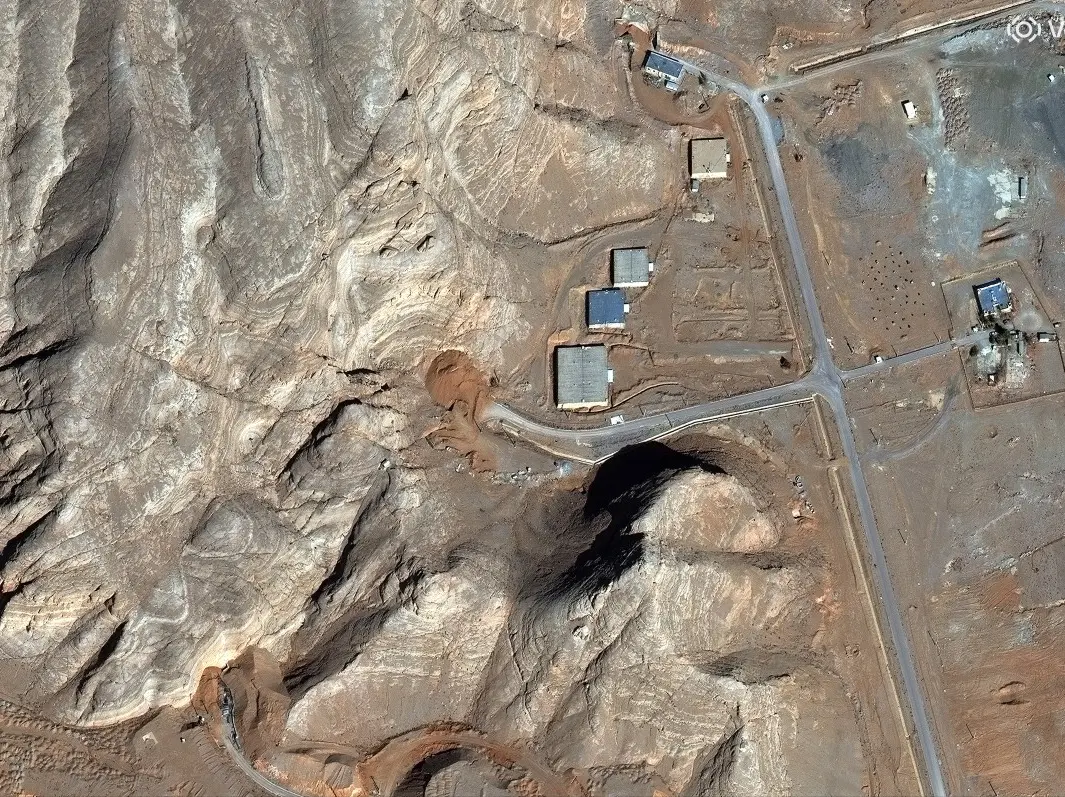
This handout satellite image courtesy of Vantor taken and released on February 10, 2026, shows Iran's Isfahan nuclear facility site. (For representation) Photograph: (AFP)
A leaked IRGC manual reveals a systematic strategy to hide missile operations within civilian sites like sports complexes and warehouses, using “deception” to complicate detection and endangering non-combatants.
A leaked internal directive from the Islamic Revolutionary Guard Corps (IRGC) appears to reveal a systematic strategy of using civilian locations to conceal and support missile operations, raising fresh concerns over the risks posed to non-combatants.
The 33-page document, marked “very confidential” and titled Instruction for Identification, Maintenance, and Use of Positions, was obtained by the hacktivist group Edalat-e Ali (Ali’s Justice) and shared with Iran International. It is attributed to the Specialised Documents Centre under the Intelligence and Operations Deputy of the IRGC’s missile command.
As per the document, the integration of civilian environments into missile operations is not incidental but forms part of a structured and bureaucratic framework. It outlines detailed procedures for identifying, classifying and maintaining a wide network of launch positions, complete with inspection protocols, coding systems and chains of responsibility.
Also read: Power shift in Iran? Not Mojtaba Khamenei, IRGC assumes 'de facto control' amid war with US, Israel
The directive argues that advances in enemy surveillance and strike capabilities necessitate new approaches to concealment. It explicitly calls for the use of “deception”, “cover” and “normalisation” to make missile units less visible and harder to detect.
Rather than relying solely on hardened silos or underground “missile cities”, the framework expands operational flexibility by enabling missile units to operate across a dispersed network of sites, including non-military environments.
Trending Stories
&im=FitAndFill=(700,400))
)
)
)
)
)
)
)
)
)
)
)
)
)
)
&im=FitAndFill=(700,400))
)
)
)
)
)
)
)
)
)
)
)
)
)
&im=FitAndFill=(700,400))
Civilian sites repurposed
The most contentious aspect of the document is its explicit inclusion of civilian locations as potential missile cover. It identifies so-called “artificial dispersion” sites, including service facilities, industrial centres, sports complexes, warehouses and sheds - locations that are civilian in function but can be repurposed for military use.
Conditions for selecting such sites include being enclosed, shielded from surrounding buildings, and either lacking CCTV surveillance or allowing cameras to be disabled. Analysts say these criteria indicate a deliberate effort to embed missile activity within ordinary civilian settings, reducing visibility and complicating detection.
The directive further details how these sites are catalogued, inspected and maintained, with responsibilities assigned across intelligence, engineering, communications, safety and counterintelligence units, suggesting a standing system rather than an improvised wartime measure.
Farzin Nadimi, a senior defence analyst at the Washington Institute, said the document points to a database-driven effort to map out not just launch sites but also dispersal, deception and technical positions.
“These technical positions can include large, covered spaces such as industrial sheds or sports halls, where missile launchers and support vehicles can be brought inside,” Nadimi told the outlet. He added that such locations could also be used to assemble and prepare missiles, including attaching warheads and fuelling systems. This, analysts warn, goes beyond concealment, indicating that core elements of missile preparation may be embedded within civilian infrastructure.

