

&imwidth=800&imheight=600&format=webp&quality=medium "Illegal wildlife trade on Facebook: How endangered species are sold online")
A recent report by a coalition of NGOs, including Freeland, Education for Nature Vietnam, and International Wildlife Trust, accuses Facebook’s parent company, Meta, of hosting the world's largest single known illegal wildlife trade market. These findings align with research from the Global Initiative Against Transnational Organised Crime (GI-TOC), which identified Facebook as the primary public infrastructure accelerating, concentrating, and scaling online wildlife trafficking.
Between April 2024 and March 2026, GI-TOC discovered over 20,000 advertisements offering more than 260,000 wildlife products on social media. Nearly three-quarters of these adverts were hosted on Facebook. Despite being reported, many of these unredacted accounts and groups remain fully live and active.
Traffickers openly utilise Meta's platforms, including Facebook, Instagram, and WhatsApp, to market a wide variety of illicit items. These listings range from live chimpanzees intended as pets to rhino horns used in traditional medicine and dead pangolins sold for consumption. For example, a Thai Facebook account advertising "seasonal wild delicacies" posted an image of a dead, de-scaled pangolin on a weighing scale. Pangolins are recognised as one of the world's most endangered and heavily trafficked mammals.
Policy Failures and Financial Incentives
While Meta declined to answer specific questions from the news agency AFP, the company pointed to its existing policies that restrict the sale of endangered species. However, conservationists argue that these policies merely pay lip service to the issue and have done little to stop the trade. Tom Taylor, chief operating officer of Wildlife Friends Foundation Thailand, noted that he has never received a response or seen action taken after reporting illegal listings. Experts assert that accounts openly breaking the law should be investigated and closed.
Trending Stories
&imwidth=180&imheight=135&format=webp&quality=medium)
100,000 strikes in 3 years: How October 7 redefined Israel's war
&im=FitAndFill=(700,400)&imwidth=180&imheight=135&format=webp&quality=medium)
Happy Birthday Rekha: Watch these 7 evergreen Bollywood hits on Netflix, Prime Video and more
&imwidth=180&imheight=135&format=webp&quality=medium)
‘Your people don’t even let us near it’: IAF chief’s blunt response on US F-35; India yet to decide on Russia’s Su-57
&imwidth=180&imheight=135&format=webp&quality=medium)
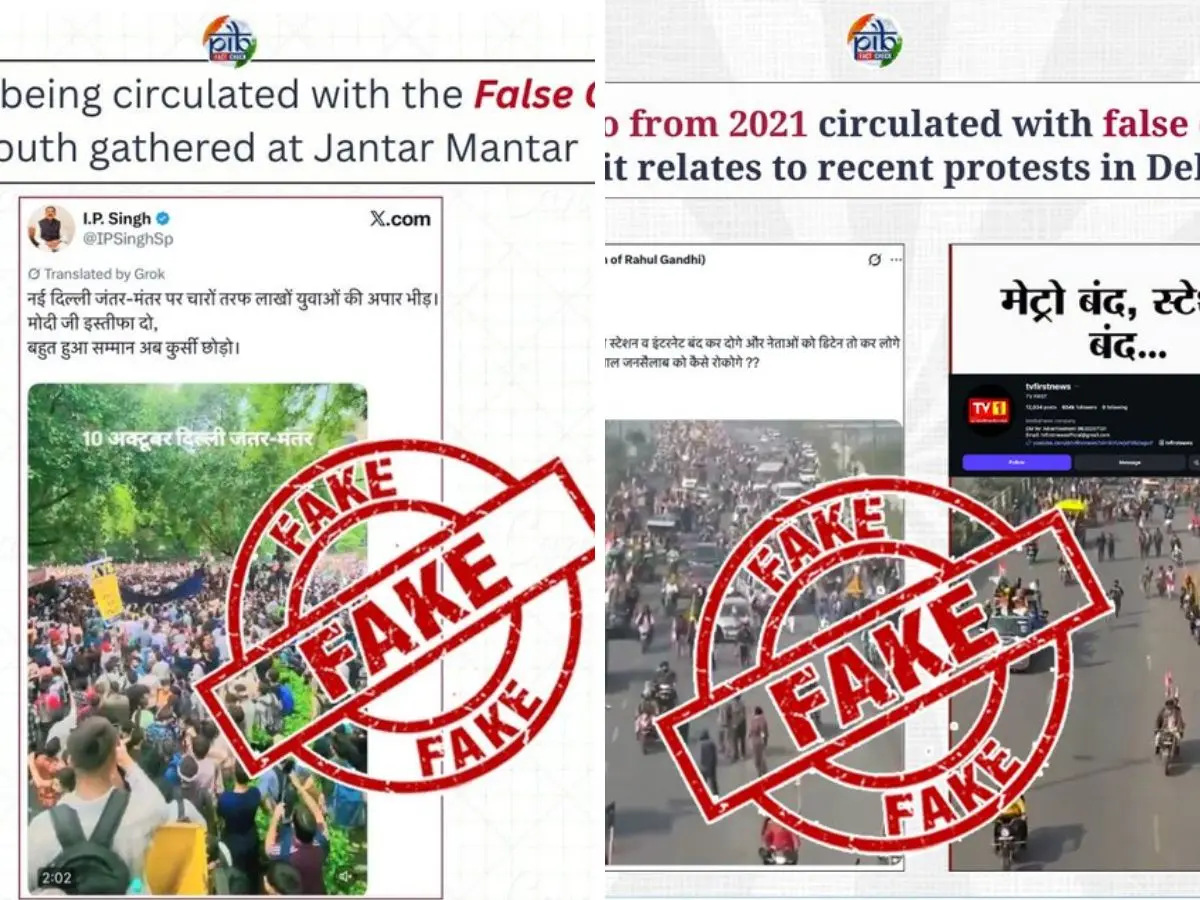
Real or fake? PIB fact-checks protest videos; Delhi Police clarifies on Gurdwara Bangla Sahib clip
&imwidth=180&imheight=135&format=webp&quality=medium)
UK navy hit by espionage scandal: Sailor accused of spying for Russia | Gravitas
&imwidth=180&imheight=135&format=webp&quality=medium)
Delhi on high alert for CJP protest: Delhi police to use body cams to 'prove whether we did anything’; Pink Force, RAF, 35,000 personnel deployed
&imwidth=180&imheight=135&format=webp&quality=medium)
‘Never-ending flow of cheap labour’: JD Vance hits back at Indian-origin Congresswoman over US green card curbs for major tech companies
&imwidth=180&imheight=135&format=webp&quality=medium)
Panama president declares ‘major disaster’ after powerful 7.7-magnitude earthquake; over 80 aftershocks recorded
&imwidth=180&imheight=135&format=webp&quality=medium)
'Jantar Mantar not the story of India': BJP's Sambit Patra claims 'anarchists' tried to hold Delhi captive
&imwidth=180&imheight=135&format=webp&quality=medium)
BJP MP Ravi Shankar Prasad slams CJP protests, calls it 'shadow boxing for AAP'
&imwidth=180&imheight=135&format=webp&quality=medium)
Riyadh airport hit in missile attack, dozens injured; 5 in intensive care
&imwidth=180&imheight=135&format=webp&quality=medium)
'Spent Rs 2,000 cr to elect Trump': Elon Musk bought US President's loyalty by writing the biggest political cheque in human history
&imwidth=180&imheight=135&format=webp&quality=medium)
Powerful 7.7 magnitude earthquake strikes Panama, tsunami warning issued
&imwidth=180&imheight=135&format=webp&quality=medium)
US mid-term elections: What are PACs - Unique American System that lets corporates shape voting
&imwidth=180&imheight=135&format=webp&quality=medium)
Elon musk & India clash over Starlink's market entry terms
&imwidth=180&imheight=135&format=webp&quality=medium)
INDIA bloc plans mega protest on Monday amid Delhi crackdown, Wangchuk's warns to launch 'padyatra'
&imwidth=180&imheight=135&format=webp&quality=medium)
Who is Ajinkya Shinde, announced to lead CJP protest after Dipke, Das and Ranka's detention?
&imwidth=180&imheight=135&format=webp&quality=medium)
'Ouch!!! That must hurt': Kangana Ranaut hails Kamal Haasan's sharp reply to Elon Musk over Starlink row
&imwidth=180&imheight=135&format=webp&quality=medium)
‘Right to protest must be protected, but...’: Delhi Police reveals why it denied CJP permission for October 10 Jantar Mantar protest
&imwidth=180&imheight=135&format=webp&quality=medium)
Hamas used double agents, deceived Israel to carry out October 7 massacre
&imwidth=180&imheight=135&format=webp&quality=medium)
NIA files FIR in Flydubai hijack attempt and attack on Smit Machchhar, probes ‘larger conspiracy’
&imwidth=180&imheight=135&format=webp&quality=medium)
Portugal Federation confirms Cristiano Ronaldo’s return to national team despite suspension
&imwidth=180&imheight=135&format=webp&quality=medium)
All 22 Indian seafarers safe in attack on Panama-flagged tanker off UAE coast
&imwidth=180&imheight=135&format=webp&quality=medium)
‘Time for Ukraine to get a new president’: Trump lashes out at Zelensky over Russia strikes
&imwidth=180&imheight=135&format=webp&quality=medium)
Ryan Reynolds’ private messages reveal his blunt views on Justin Baldoni from Blake Lively’s legal case
&im=FitAndFill=(700,400)&imwidth=180&imheight=135&format=webp&quality=medium)
Food shortages, suicide attempts and more: USS Abraham Lincoln returns to US after 321 day deployment — What happened aboard the US carrier?
&imwidth=180&imheight=135&format=webp&quality=medium)
Thai queen becomes first reigning monarch to fly jet solothailand #queen #wion
&imwidth=180&imheight=135&format=webp&quality=medium)
‘Every game against Liverpool is special’: Erling Haaland ahead of Anfield clash
&imwidth=180&imheight=135&format=webp&quality=medium)
Rahul Gandhi calls Modi, Shah ‘cowards’ amid CJP protest crackdown in Delhi
&imwidth=180&imheight=135&format=webp&quality=medium)
Four years, 3 licenses, zero launch: Why is Elon Musk’s Starlink still struggling to crack Indian market? EXPLAINED
&imwidth=180&imheight=135&format=webp&quality=medium)
AUS vs SA 1st Test, Day 2: Renshaw shines with 190 as Australia dominate South Africa
&imwidth=180&imheight=135&format=webp&quality=medium)
Why was CJP founder Abhijeet Dipke detained? What Delhi Police said
&imwidth=180&imheight=135&format=webp&quality=medium)
Putin conveys Iran’s proposal to Trump, offers to take Tehran’s enriched uranium
&imwidth=180&imheight=135&format=webp&quality=medium)
'It’s been 12 hours': CJP writes to Delhi Police, demands release of Dipke, Saurav Das and Ranka
“Accounts that are openly breaking the law should be closed, and investigations into the criminal activities behind them should be launched,” Taylor told news agency AFP.
Furthermore, conservationists argue that Meta effectively encourages illegal trafficking by sharing advertising revenues and allowing subscription models. Daniel Stiles, an independent wildlife trafficking investigator, explained that Meta's content monetisation models incentivise illegal acts; higher interaction and engagement translate directly into more money for the users. "The more interaction and engagement they get on their account, the more money they can make," added Stiles, who co-authored the report released Monday by NGOs including Freeland, Education for Nature Vietnam and International Wildlife Trust.
Although Meta does not publicly disclose which accounts participate in its monetisation programmes, accounts enrolled in its subscription programme are publicly visible. This includes an active account seemingly based in Laos that showcases the poaching of wildlife, including pangolins.
While the issue is highly concentrated on Meta's infrastructure, other platforms like TikTok and Snapchat are also increasingly utilised by traffickers. Snapchat is particularly favoured due to its disappearing post settings.

