

&imwidth=800&imheight=600&format=webp&quality=medium "How Donald Trump took the US into war with Iran: Inside the White House decision")
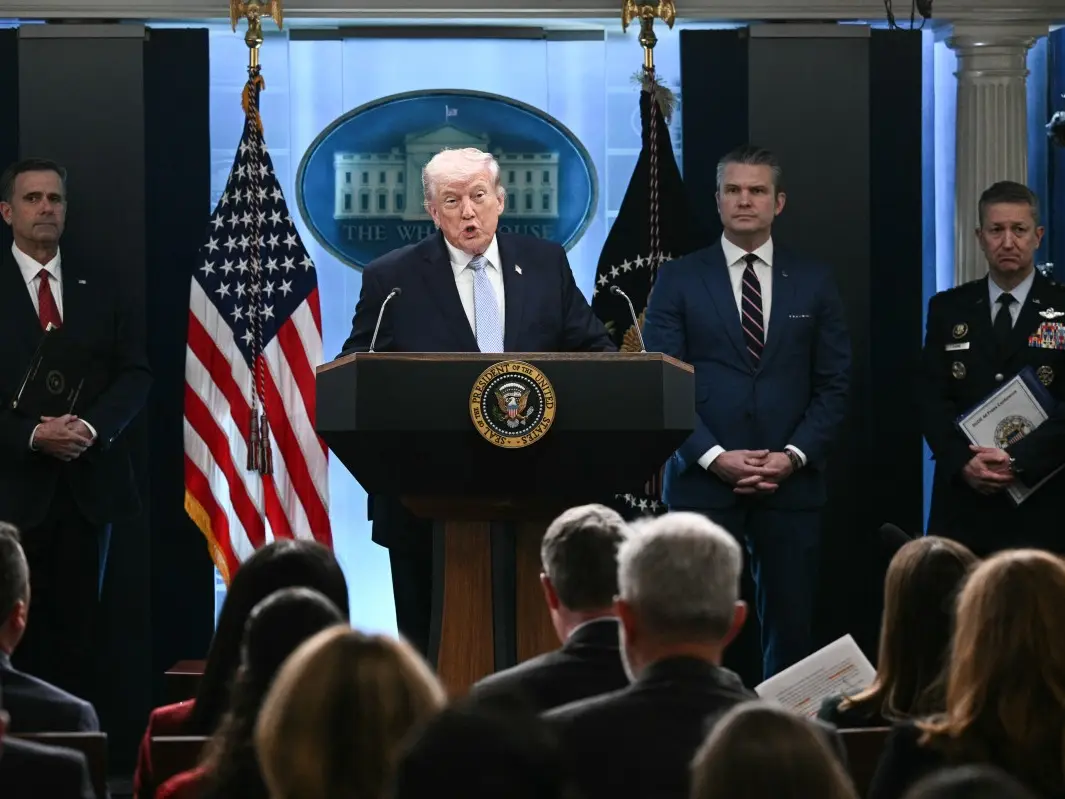
On February 11, Israeli Prime Minister Benjamin Netanyahu arrived at the White House with a clear objective: persuade US President Donald Trump that the time had come to strike Iran. Inside the Situation Room, in a tightly controlled and highly classified setting, Netanyahu delivered a detailed military and intelligence briefing. Flanked virtually by Israel’s top security officials, he laid out a compelling case for immediate action. Iran, he argued, was vulnerable. Its defenses could be dismantled, its leadership targeted, and its regime weakened to the point of collapse. Trump’s response was brief but decisive. “Sounds good to me.” That moment set the United States on a path toward war.
Netanyahu’s case: Act now or pay later
Netanyahu framed the decision in stark terms. Delay, he warned, would only strengthen Iran’s missile capabilities and nuclear infrastructure. “The risks of inaction were greater than the risks of action.” His proposal outlined an ambitious four-part strategy: eliminate Iran’s leadership, cripple its military, ignite internal unrest, and ultimately enable regime change. It was a sweeping vision, one that aligned closely with Trump’s long-standing view of Iran as a central threat to US interests.
The intelligence reality check
Within hours, US intelligence agencies began evaluating the Israeli proposal. Their conclusions were sharply different. American officials agreed that targeted military strikes could degrade Iran’s capabilities. But the broader goal of regime change was dismissed as unrealistic. CIA Director John Ratcliffe described that aspect of the plan as “farcical.” Secretary of State Marco Rubio was even more direct: “In other words, it’s bullshit.” Rubio clarified his position in strategic terms. Limited military objectives were achievable. Regime change was not. “If our goal is regime change or an uprising, we shouldn’t do it. But if the goal is to destroy Iran’s missile program, that’s a goal we can achieve.”
Trending Stories
&imwidth=180&imheight=135&format=webp&quality=medium)
Premier League: Haaland wants Manchester City to 'try to enjoy the situation and win the game'
&imwidth=180&imheight=135&format=webp&quality=medium)
'Nidal Hasan's firing-squad execution to be livestreamed', says Pentagon; first US military execution since 1961
&imwidth=180&imheight=135&format=webp&quality=medium)
Trump's naked 23-karat gold statue unveiled near European Parliament
&imwidth=180&imheight=135&format=webp&quality=medium)
‘Never-ending flow of cheap labour’: JD Vance hits back at Indian-origin Congresswoman over US green card curbs for major tech companies
&imwidth=180&imheight=135&format=webp&quality=medium)
Thai Actors Fourth Nattawat, Gemini Norawit face racism accusations from Indian fans over viral Bollywood act
&imwidth=180&imheight=135&format=webp&quality=medium)
Nigeria govt rolls out 30-day NNPC petrol discount, insists it is not a subsidy
&imwidth=180&imheight=135&format=webp&quality=medium)
Captain Smit Machchhar on feet again, walks 10 steps as recovery continues after Flydubai flight attack
&im=FitAndFill=(700,400)&imwidth=180&imheight=135&format=webp&quality=medium)
Fastest-growing Asian economies in 2026: Who tops the chart? Where does India rank?
&imwidth=180&imheight=135&format=webp&quality=medium)
A Love Other Than Yours: The temptation to cheat and what pushes people over the edge
&imwidth=180&imheight=135&format=webp&quality=medium)
Russia president Putin promises to 'do everything' to help settle Middle East conflict as US-Iran negotiations stall
&imwidth=180&imheight=135&format=webp&quality=medium)
‘Wait till you discover the other guy’: Rahul Gandhi takes a swipe as Musk's 'Ambani real boss of India' remark triggers X subscription cancellations
&imwidth=180&imheight=135&format=webp&quality=medium)
BTS agency HYBE announces first-ever Weverse Con Festival in India
&imwidth=180&imheight=135&format=webp&quality=medium)
Trump has a new 'enemy': Anyone who calls it 'artificial intelligence'. Here's what we wants instead
&imwidth=180&imheight=135&format=webp&quality=medium)
India at UN: Pak allows terror groups to operate from its soil
&imwidth=180&imheight=135&format=webp&quality=medium)
Air India, Air India Express increase fuel surcharge on domestic, international flights amid rising ATF costs
&imwidth=180&imheight=135&format=webp&quality=medium)
'Something truly catastrophic will happen': Former OpenAI researchers sound the alarm, claim they were fired for prioritising AI safety
&imwidth=180&imheight=135&format=webp&quality=medium)
Scientists find highly radioactive nuclear particles at Chernobyl 40 years after the disaster
&imwidth=180&imheight=135&format=webp&quality=medium)
Nana Patekar's #MeToo controversy: From Tanushree Dutta’s allegations to court ruling
&imwidth=180&imheight=135&format=webp&quality=medium)
Pakistan denies reports of PAF jets being used in attacks against Iran-backed Houthis in Yemen
&imwidth=180&imheight=135&format=webp&quality=medium)
New York ICE shooting sparks protests as Mamdani to call on Trump to halt ICE operations
&imwidth=180&imheight=135&format=webp&quality=medium)
Atlantic hurricane Isaias could make landfall as a strong Category 2 storm, tornado warnings issued
&im=FitAndFill=(700,400)&imwidth=180&imheight=135&format=webp&quality=medium)
From Kramatorsk buses to Yandex fire: Russia-Ukraine war in the last 48 hours
&imwidth=180&imheight=135&format=webp&quality=medium)
AUS vs SA: 'That's fine,' says Cummins on Khawaja's book contents about Sandpapergate
&imwidth=180&imheight=135&format=webp&quality=medium)
Who is Nana Patekar's wife Neelakanti? The bank officer who earned Rs 2,500 when he earned Rs 50
&imwidth=180&imheight=135&format=webp&quality=medium)
KATSEYE’s Sophia Laforteza to return in 2027 after hiatus, agency issues statement
&imwidth=180&imheight=135&format=webp&quality=medium)
French students light European bonfire, protests erupt in Belgium, Italy & Greece | Gravitas
&imwidth=180&imheight=135&format=webp&quality=medium)
France student protests: Over 500 arrested, govt promises 3,000 substitute teachers
&imwidth=180&imheight=135&format=webp&quality=medium)
Arizona congressional candidate claims she was sexually assaulted while repairing signs
&imwidth=180&imheight=135&format=webp&quality=medium)
New Cold War: Why is China buying more gold? Explained
&imwidth=180&imheight=135&format=webp&quality=medium)
OpenAI shuts down Russian, Iranian influence operations using ChatGPT to spread propaganda
&imwidth=180&imheight=135&format=webp&quality=medium)
'Understood consequences of a few mistakes': Ishan Kishan reflects on journey back to India team
&im=FitAndFill=(700,400)&imwidth=180&imheight=135&format=webp&quality=medium)
435 House seats, 35 Senate races: The numbers behind US midterms 2026
&imwidth=180&imheight=135&format=webp&quality=medium)
Bangladesh named as Pakistan’s replacement for Asian Hockey Champions Trophy
&imwidth=180&imheight=135&format=webp&quality=medium)
SC asks Centre to frame mechanism against unethical pharma marketing practices
&imwidth=180&imheight=135&format=webp&quality=medium)
US suspends Microsoft, Infosys, Tata, Wipro from green card programme over alleged H-1B abuse
&imwidth=180&imheight=135&format=webp&quality=medium)
Trump honours Microsoft CEO Satya Nadella with top technology honour amid immigration scrutiny
&imwidth=180&imheight=135&format=webp&quality=medium)
Flydubai flight attack: Indian pilot Smit Machchhar to receive Israel's highest civilian bravery award for saving 174 lives
A divided inner circle
The debate within Trump’s inner circle revealed deep divisions, not over whether Iran posed a threat, but over how far the United States should go. Vice President JD Vance emerged as the most consistent voice of caution. He warned that a full-scale war could spiral unpredictably, destabilize the region, and strain American resources. “You know I think this is a bad idea, but if you want to do it, I’ll support you.” Rubio, meanwhile, took a pragmatic middle ground, skeptical of diplomacy but cautious about escalation. Defense Secretary Pete Hegseth argued the opposite. In his view, confrontation with Iran was inevitable. If conflict were coming, delaying it would only raise the cost.
Warnings from military and political advisers
Behind the scenes, concerns extended beyond strategy. White House Chief of Staff Susie Wiles worried about the broader consequences, economic shocks, rising oil prices, and the risk of another prolonged conflict in the Middle East.
Military leaders raised operational concerns. A war with Iran could deplete US weapons stockpiles and expose vulnerabilities in global supply chains. Securing the Strait of Hormuz, a critical oil transit route, would be a major challenge. Yet these warnings were presented as risks, not red lines. No one directly moved to block the president’s decision.
Trump’s calculation
By late February, the debate had narrowed. Trump was less focused on regime change and more on achievable military objectives: targeting Iran’s leadership and crippling its military capacity. Regime change, he said, would be 'their problem'. His decision-making reflected a broader pattern: reliance on instinct, confidence in military strength, and a willingness to take calculated risks. Netanyahu’s argument did not fundamentally change Trump’s thinking. It reinforced it.
The final decision
In the final Situation Room meeting, Trump asked each adviser for their view. The positions were clear. The risks had been outlined. The divisions were understood. But the decision rested with one person. “I think we need to do it,” Trump said. The following day, just minutes before the operational deadline, he issued the order: “Operation Epic Fury is approved. No aborts. Good luck.”
A war defined by instinct
The United States’ entry into war with Iran was not the result of unanimous agreement or overwhelming intelligence consensus.
It was shaped by a convergence of factors:
- A forceful push from Netanyahu
- A divided but ultimately deferential advisory team
- Intelligence warnings that tempered, but did not stop, the plan
- And a president who trusted his instincts over caution
In the end, it was a decision made not by committee, but by conviction. And its consequences would extend far beyond the walls of the Situation Room.

