

&imwidth=800&imheight=600&format=webp&quality=medium "G7 Summit: Energy security, AI governance and climate finance to test bloc unity")
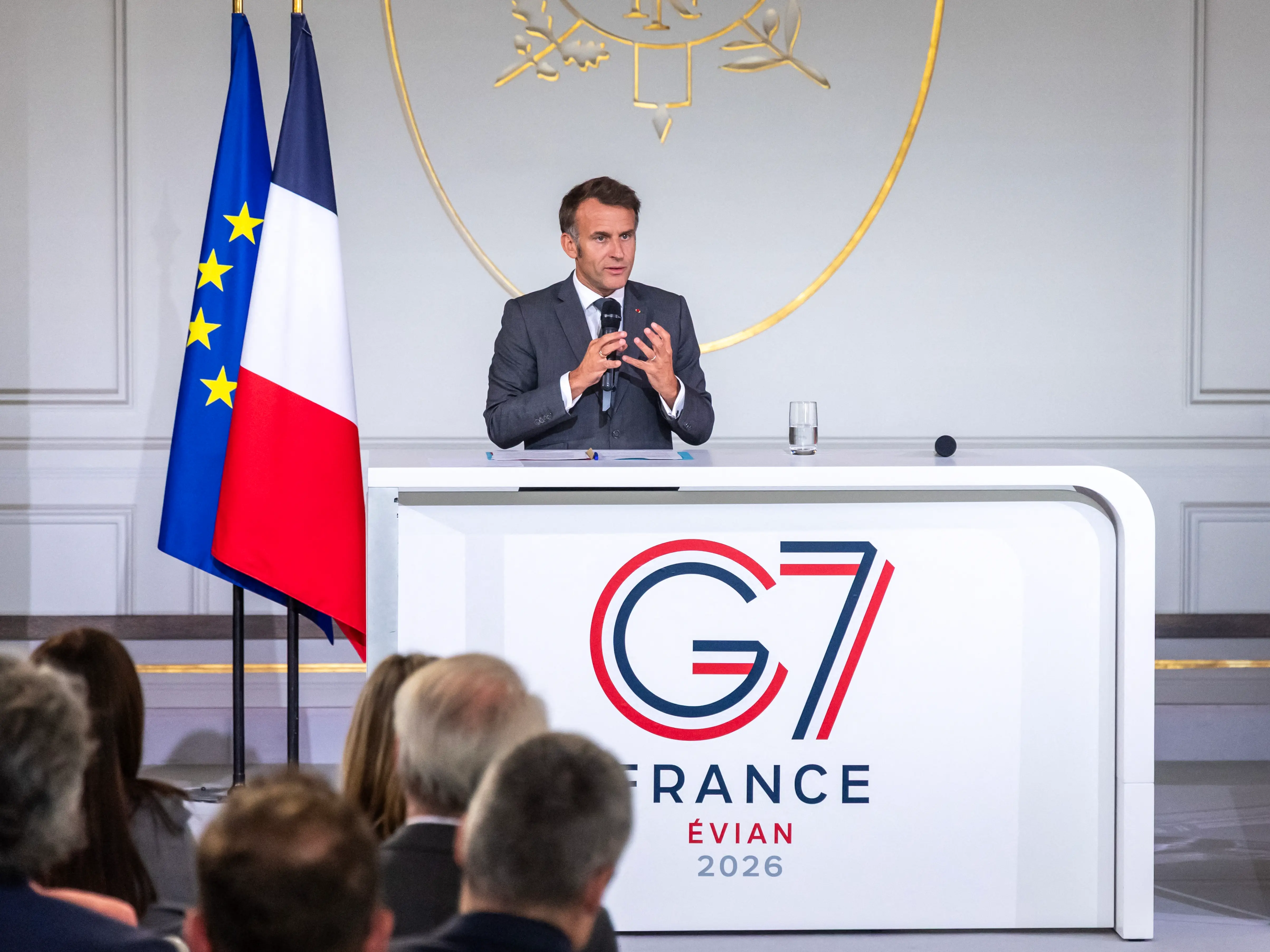
The leaders of the world's seven major economies will gather in the French town of Évian-les-Bains from June 15 to 17 for the 52nd G7 summit. France is hosting this year's meeting, with President Emmanuel Macron leading the discussions. Along with the seven core members, four countries have been invited as guests: India, Brazil, South Korea and Kenya. Their presence reflects France's goal of building stronger ties with emerging powers and broadening the group's global reach.
The summit comes at a difficult moment. Leaders are arriving with very different priorities, and managing those differences will be just as challenging as agreeing on the big issues themselves. The contrasting approaches of US President Donald Trump, German Chancellor Friedrich Merz and UK Prime Minister Keir Starmer mean that reaching consensus could prove difficult.
War, security and Ukraine
Security sits at the top of the agenda. Leaders will discuss the continuing war in Ukraine, conflicts in the Middle East and rising tensions in the Gulf of Oman. Ukrainian President Volodymyr Zelenskyy is expected to attend, giving him a direct platform to make his case to G7 leaders.
The group will look at how to sustain financial and military support for Kyiv over the longer term. France is also pushing its "No Money for Terror" initiative, which aims to tighten international cooperation against groups that use the global financial system to fund terrorism and criminal activity.
Furthermore, recent unilateral US naval blockade actions in West Asia and the closure of the Strait of Hormuz have caused friction with key outreach partners like India, creating a delicate balancing act for G7 leaders trying to maintain a unified global front.
Trending Stories
&imwidth=180&imheight=135&format=webp&quality=medium)
'Hell of a beautiful a**': Trump compliments Nicki Minaj as rapper joins him in Michigan rally
&imwidth=180&imheight=135&format=webp&quality=medium)
'Hire the robot, fire the human': Bill Gates's words hint at a bleak future
&imwidth=180&imheight=135&format=webp&quality=medium)
Israel elections: Record voter turnout in decades as Opposition edges ahead of Netanyahu in early projections
&imwidth=180&imheight=135&format=webp&quality=medium)
Delhi traders urge Rahul Gandhi to postpone INDIA bloc rally once again
&imwidth=180&imheight=135&format=webp&quality=medium)
Maurene Comey, daughter of ex-FBI director James Comey, was unlawfully fired as federal prosecutor, judge rules
&imwidth=180&imheight=135&format=webp&quality=medium)
‘After Breaking Bad, Prison Break has begun in Tamil Nadu’: Stalin turns sarcastic in slamming Vijay govt over Theni jailbreak
&imwidth=180&imheight=135&format=webp&quality=medium)
India invites Pakistan, along with other SCO member countries for SCO Civilisational Dialogue in Delhi
&imwidth=180&imheight=135&format=webp&quality=medium)
Hijack scare unfolds on United flight over suspicious text message. Here is what happened
&imwidth=180&imheight=135&format=webp&quality=medium)
Police called after 3-year-old scores 10 goals in 12 minutes at Florida youth soccer game
&im=FitAndFill=(700,400)&imwidth=180&imheight=135&format=webp&quality=medium)
New OTT releases this week (October 26-November 1, 2026): Baththa, Akka, The One About Matthew Perry- 7 titles coming on Netflix, Prime Video and more
&imwidth=180&imheight=135&format=webp&quality=medium)
Supreme Court seeks Centre's response to DNPA's challenge to DPDP Act
&imwidth=180&imheight=135&format=webp&quality=medium)
US weighs lifting sanctions on Russia’s state-backed investment fund after diesel deal: Report
&imwidth=180&imheight=135&format=webp&quality=medium)
'Already tired of his 9-to-5': Baby born with a moustache becomes internet sensation, video goes viral | Watch
&imwidth=180&imheight=135&format=webp&quality=medium)
‘Food poisoned by meat’: Trump mocks James Talarico over campaign absence, as former Texas Chief Justice endorses Democrat
&imwidth=180&imheight=135&format=webp&quality=medium)
Trump says he will accept midterm results ‘if they’re honest’, refers to his veto powers
&imwidth=180&imheight=135&format=webp&quality=medium)
Russia, Iran eye joint oil and gas projects as Pezeshkian, Putin hold talks in Moscow
&imwidth=180&imheight=135&format=webp&quality=medium)
US midterms 2026: Trump says Venezuela could ‘maybe someday soon’ become 51st US state, calls Venezuelan oil shipment a ‘gift'
&imwidth=180&imheight=135&format=webp&quality=medium)
'One-time opportunity to defeat Iran': Netanyahu claims right-wing bloc has ‘decisive majority’, rejects exit polls
&imwidth=180&imheight=135&format=webp&quality=medium)
Storm Boelo’s fierce winds push passenger plane onto grass in UK, terrifying landing caught on cam
&imwidth=180&imheight=135&format=webp&quality=medium)
Brazil's Flavio Bolsonaro flees to US after presidential election defeat to Lula
&imwidth=180&imheight=135&format=webp&quality=medium)
52 years later, DNA evidence links serial killer Ted Bundy to 1974 murder of 17-year-old
&imwidth=180&imheight=135&format=webp&quality=medium)
'Complete lack of confidence' in Netanyahu, says Eisenkot after Opposition leads in exit polls; Arab parties make gains
&imwidth=180&imheight=135&format=webp&quality=medium)
'She is a beautiful woman': Trump mocks Mexican President Sheinbaum, mimics her voice at US Midterms rally
&imwidth=180&imheight=135&format=webp&quality=medium)
Mitchell Starc leads Australia’s fightback with six-wicket haul on day 1 of Cape Town Test
&imwidth=180&imheight=135&format=webp&quality=medium)
Indian pilot Smit Machchhar honoured by UAE for courage during Flydubai cockpit attack | VIDEO
&imwidth=180&imheight=135&format=webp&quality=medium)
France protests: Demonstrators may pay up to €10,000 for riot damage under new bill
&imwidth=180&imheight=135&format=webp&quality=medium)
'I've done my work sincerely': AR Rahman on facing backlash over Ramayana soundtrack
&imwidth=180&imheight=135&format=webp&quality=medium)
Uganda arrests its 'worst serial killer and cannibal' who hacked 38 people to death
&imwidth=180&imheight=135&format=webp&quality=medium)
Israel elections 2026: What happens if Netanyahu loses | Gravitas
&imwidth=180&imheight=135&format=webp&quality=medium)
'Shove that ballroom up your a**': Trump heckled at Mississippi rally over White House ballroom renovations | WATCH
&imwidth=180&imheight=135&format=webp&quality=medium)
Trump accused of 'brutal' rape by ex-Miss Switzerland; Beatrice Keul alleges 'Don's best friend' Epstein facilitated assault in 1993
&imwidth=180&imheight=135&format=webp&quality=medium)
'This is America. Back up': Shouting match breaks out between US and Cuban officials at UN | WATCH
&imwidth=180&imheight=135&format=webp&quality=medium)
'There’s only one devil I can see, and he sits in the White House': Woman's fiery speech against Trump goes viral, netizens react
&imwidth=180&imheight=135&format=webp&quality=medium)
'He is a red flag': Ex-India strength and conditioning coach on Rohit's fitness regime
Artificial intelligence
Artificial intelligence has emerged as one of the most high-profile topics of the summit. The core question is how much governments should regulate AI and who gets to set the rules. France and the European Union are pushing for a coordinated framework built around risk, with stricter oversight and tighter competition rules applied to the most powerful AI systems. They also want stronger protections online, especially for children.
The United States prefers a lighter-touch approach, favouring market-driven development with fewer restrictions and viewing aggressive action against big technology companies as potentially protectionist. Finding common ground will require careful diplomacy.
Economic security and supply chains
Leaders will also debate how to reduce dependence on single countries for essential goods such as critical minerals used in semiconductors and defence equipment. The goal is to make economies more resilient to geopolitical shocks by spreading supply chains across multiple countries. The challenge is doing this without undermining the rules-based international trading system or triggering disputes over national industrial policies.
Climate and energy
Climate discussions are expected to be the most difficult. France wants climate risk embedded in financial regulation and more green finance channelled to developing countries through the Paris Pact for People and the Planet framework. The United States has resisted international climate commitments and prioritises conventional energy security, putting it at odds with European members. There is also concern that imposing strict environmental conditions on finance could put off the emerging economies that France is trying to bring closer to the G7, making it harder to build the broader coalition Macron is seeking.
