
&imwidth=800&imheight=600&format=webp&quality=medium "China deploying advanced fighter jets closer to India's northern frontier")
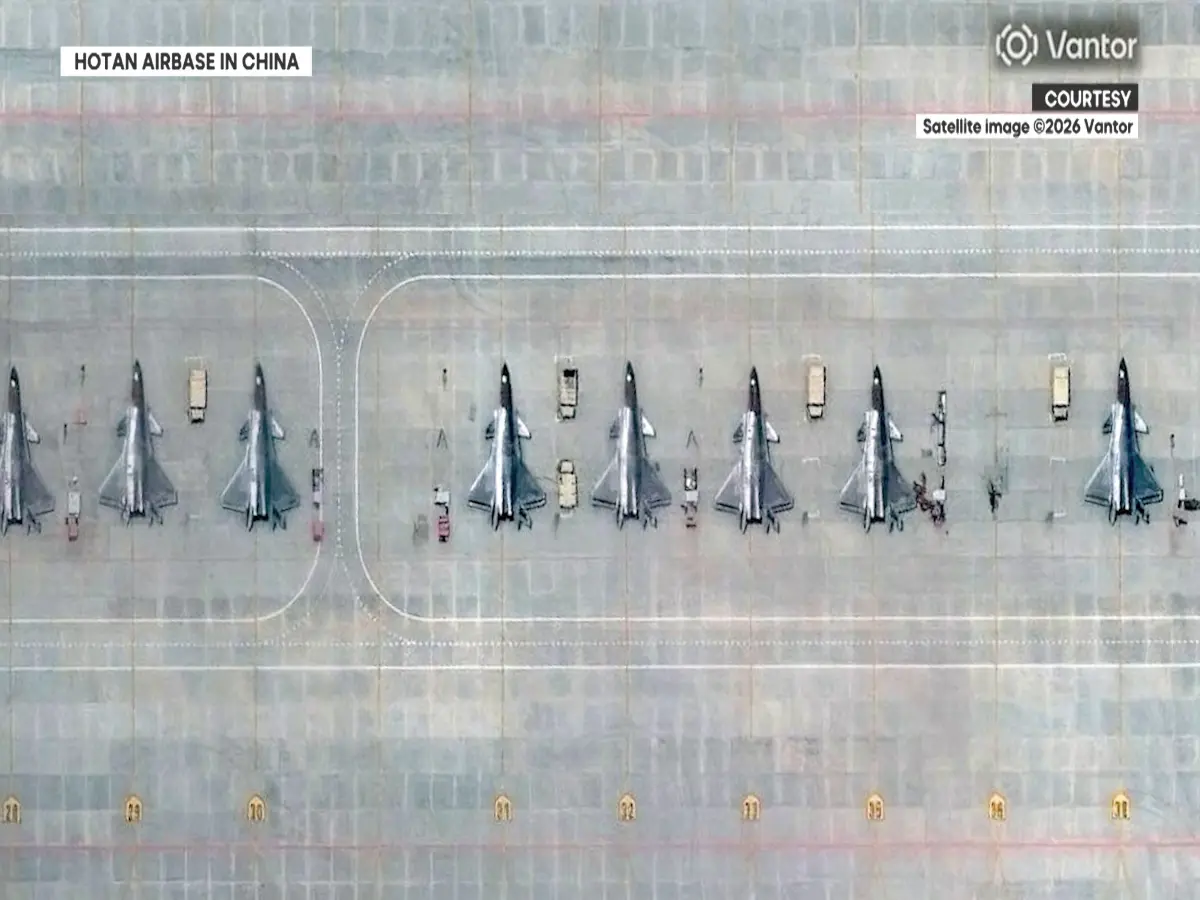
China is deploying its most advanced fighter jets closer to India's northern frontier. Satellite imagery accessed by WION shows 12 J-20 stealth fighters positioned at two Chinese airbases during late June and early July. The satellite images, sourced from Vantor, show eight fighter jets at Hotan in Xinjiang. It is located about 400 km from Leh in India. Four more were seen at Damxung in Tibet.
The base lies 344 km northwest of Tawang in Arunachal Pradesh. The imagery offers a rare glimpse of China's fifth-generation air power operating from bases facing India. The locations are significant. Hotan lies roughly 245 kilometres from India's Daulat Beg Oldi airstrip, while Damxung is approximately 344 kilometres northwest of Tawang in India's Arunachal Pradesh.
India shares a 3,488 km border with China that runs along the states of Jammu & Kashmir, Himachal Pradesh, Uttarakhand, Sikkim, and Arunachal Pradesh.

These latest satellite images also highlight how the air balance along the Line of Actual Control is evolving. China has spent years upgrading its military infrastructure in Tibet and Xinjiang, while India has strengthened its own forward airfields and deployed advanced fighter aircraft.
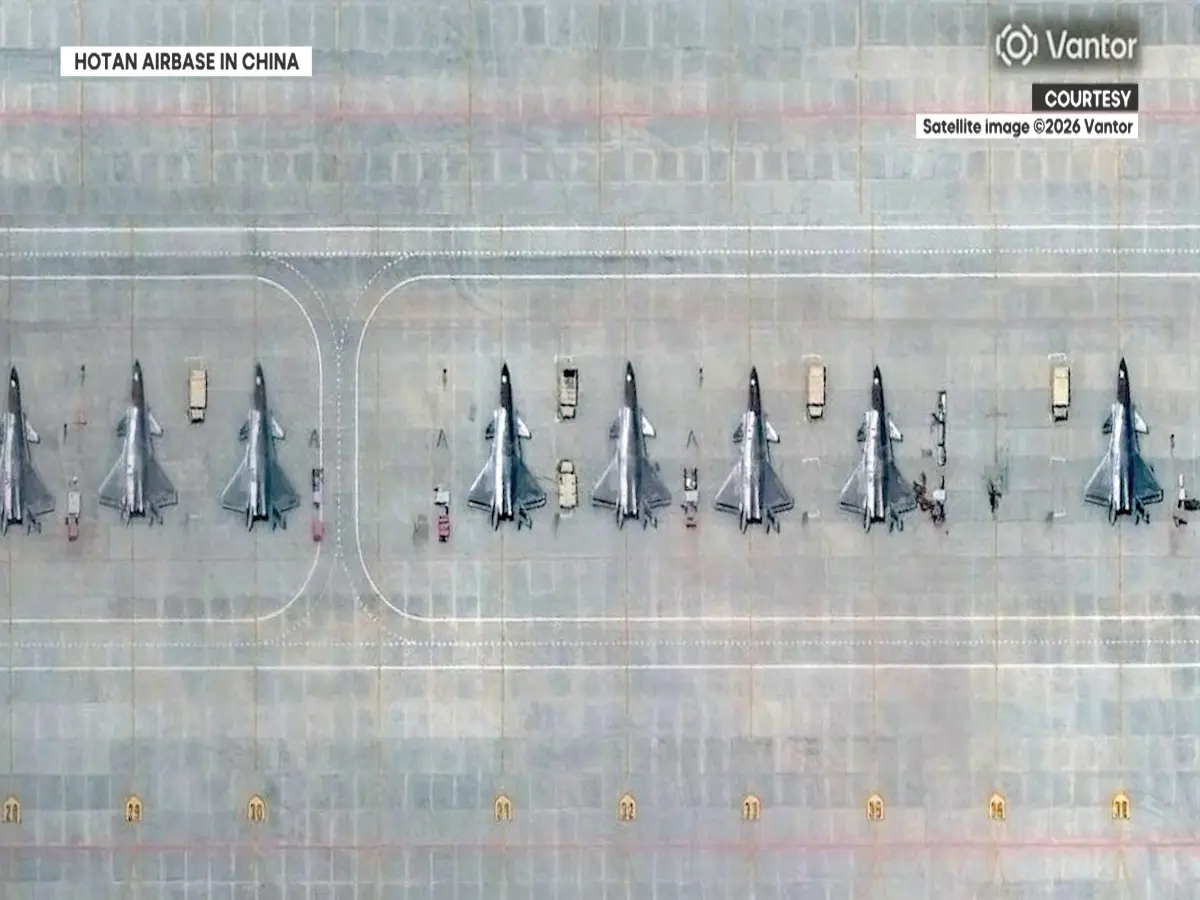)
Satellite images, sourced from Vantor, show eight fighter jets at Hotan in Xinjiang Photograph: (Satellite image ©2026 Vantor)
The latest imagery suggests the contest is moving into another phase. The Chengdu J-20, nicknamed the "Mighty Dragon," is a twin-engine, all-weather, fifth-generation stealth fighter aircraft developed by China's Chengdu Aircraft Corporation for the People's Liberation Army Air Force. First flown in 2011 and officially introduced in 2017, it is designed primarily as an air superiority fighter with long-range interception and precision strike capabilities.
The message is not necessarily that a confrontation is imminent. But the military calculation is clear. China is increasingly comfortable operating advanced aircraft from high-altitude bases close to India's northern and eastern sectors. That gives the People's Liberation Army Air Force greater options in a crisis while forcing India to track a more sophisticated threat.
Indian defence forces equipped to handle situations
The Indian Air Force maintains a highly strategic network of primary airbases and specialized advanced landing grounds along the 3,488 km Line of Actual Control shared with China. The forward airbases of the Indian defence forces have been equipped to handle situations along the western and northern fronts and have seen extensive flying operations in the recent past.
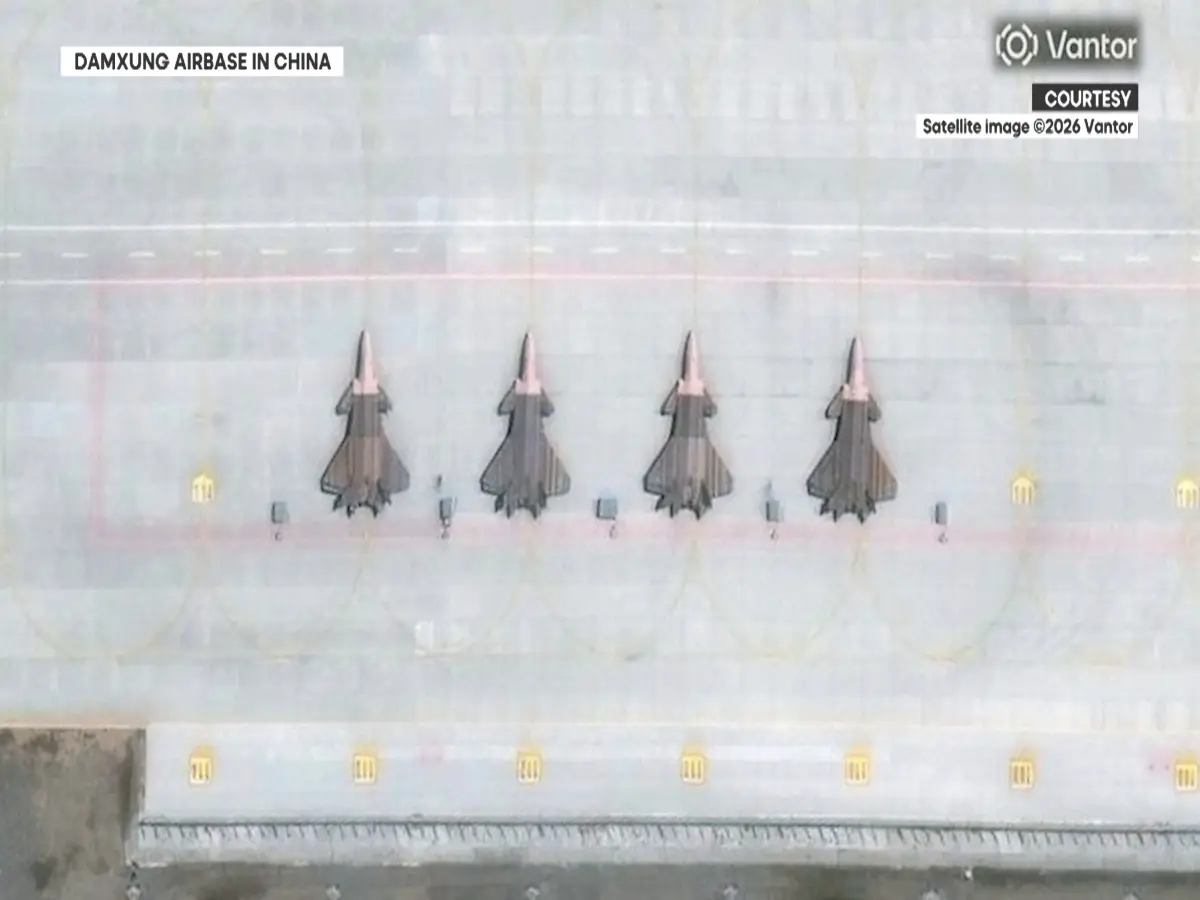)
Satellite images sourced from Vantor show four more at Damxung in Tibet. Photograph: (Satellite image ©2026 Vantor)
The IAF is also incorporating next-generation radar technology, secure communication systems, and stronger cybersecurity capabilities to address evolving security challenges.
Relations between New Delhi and Beijing have cautiously normalised.
While diplomats trade cautious communiqués about disengagement in valley bottoms, the skies above tell a far more aggressive story.
China isn't just maintaining a posture along the Indian border; it is flexing its top-tier air superiority assets right on the edge of the Himalayan frontier. And New Delhi needs to keep a sharp eye on the emerging threat on the other side of the border.
