

&imwidth=800&imheight=600&format=webp&quality=medium "List of Countries with the highest Foreign Exchange Reserves: China, Japan, India and more")
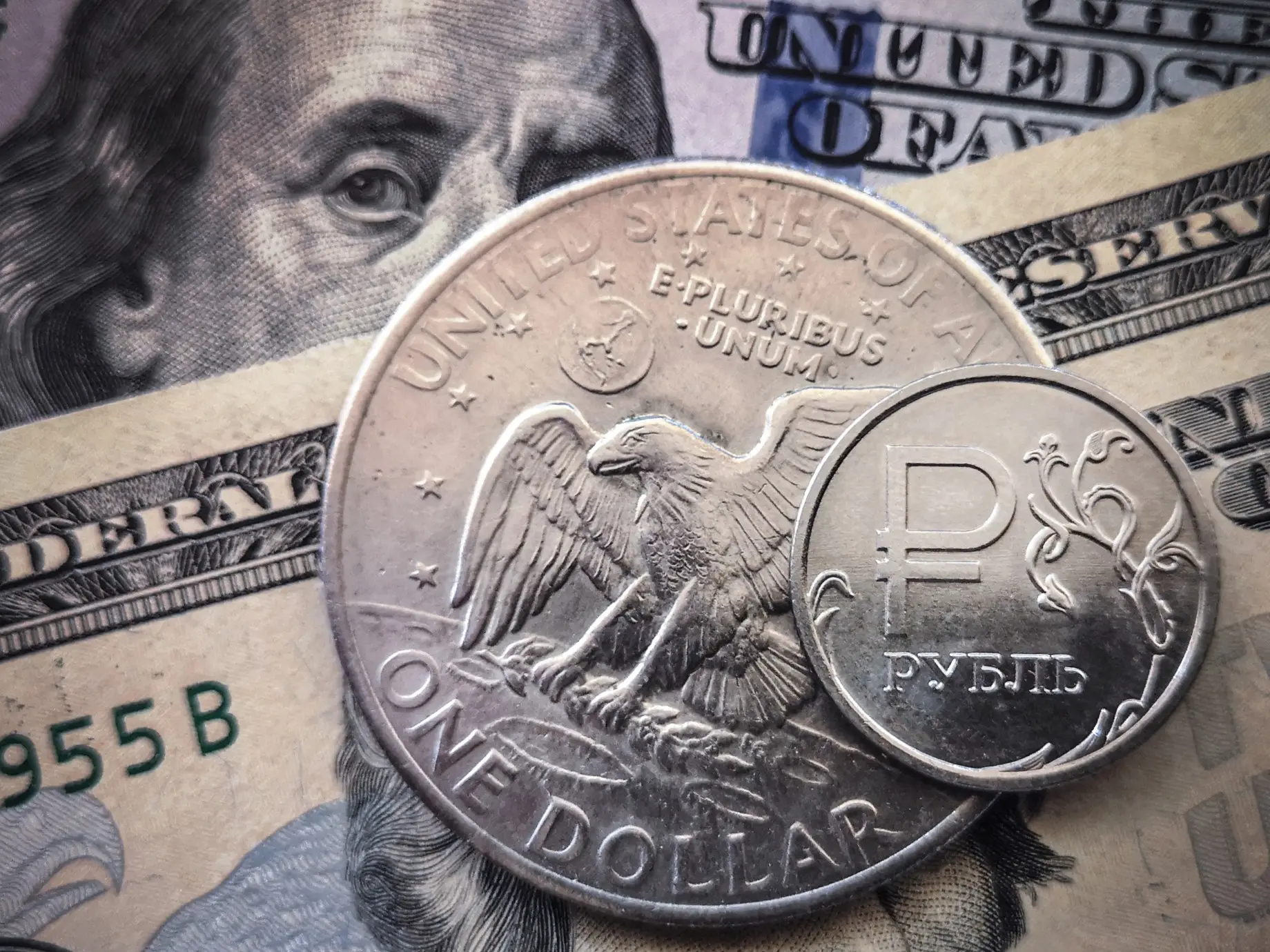
Foreign currency reserves are assets mostly denominated in foreign currency and held by the Central Bank of a nation. These are important to maintain the financial stability of a nation as well as to pay for critical import items, pay off external debts and prevent a sovereign debt crisis. They comprise mainly of Foreign Currency Assets like US dollar, Euro, Bonds and Treasuries, Gold, Special Drawing Rights and IMF Reserve Positions
Types of Foreign Exchange Reserves
Primarily, there are four types of Foreign Exchange Reserves
- Foreign Currency Assets: These are holdings of major international currencies like the US dollar, Euro, Japanese yen, British pound, and Chinese yuan. They can be in the form of bank notes, bank deposits, bonds and other treasury deposits and securities from other foreign nations.
- Gold: Gold is the historically used Foreign Currency Reserve. Gold acts as a hedge against financial crisis, inflation and currency devaluation.
- Special Drawing Rights: These are Currency Instruments created by the IMF in 1969 as a substitute for the lack of the Dollar and Gold. They are built on a basket of five important currencies: the US Dollar, the Euro, the Japanese yen, the British pound, and the Chinese yuan. SDRs are not currency but claims to a potential usable currency that can be exchanged for them. The weightage of each currency is fixed every 5 years.
- Reserve Positions of IMF: This is like a critical account held within the IMF that countries can access at any point without any condition or fees. It represents a quota for any member country
Importance of Foreign Exchange Reserves
Foreign exchange reserves are important to maintain the financial stability of a country. They act as a buffer against financial crisis. Central banks use these to maintain a desired exchange rate. For example, if the currency of a country is weakening quickly, the central bank or monetary authority can sell off extra reserves and buy the domestic currency to increase its demand. Again, if there is a sudden surge in capital outflow or a global recession, these Forex reserves can cushion the impact as India did in 2008.
Trending Stories
&imwidth=180&imheight=135&format=webp&quality=medium)
‘Don’t blame SIR, Congress will lose 2029 too’: Amit Shah tells Rahul Gandhi after Gujarat local poll results
&imwidth=180&imheight=135&format=webp&quality=medium)
Out on bail in fatal Mercedes crash, 20-year-old arrested again for allegedly trying to run over people in Odisha
&im=FitAndFill=(700,400)&imwidth=180&imheight=135&format=webp&quality=medium)
Navratri 2026: 9 days, 9 forms of Goddess Durga and 9 colours- Check the complete list
&imwidth=180&imheight=135&format=webp&quality=medium)
'Turn approver, resign, we'll forgive you': Rahul Gandhi claims receiving messages from CEC Gyanesh Kumar
&imwidth=180&imheight=135&format=webp&quality=medium)
Robot gropes girl, makes thrusting movements in bizarre crime in Germany
&imwidth=180&imheight=135&format=webp&quality=medium)
Anupam Kher joins Ranbir Kapoor's Ramayana as Jatayu, new poster unveiled
&imwidth=180&imheight=135&format=webp&quality=medium)
Trump warns Houthis, says Erdogan would do as asked on Saudi Arabia
&imwidth=180&imheight=135&format=webp&quality=medium)
Cornell University suspends fraternity parties over 2024 gang rape allegations
&imwidth=180&imheight=135&format=webp&quality=medium)
Trump accuses Houthis of driving up oil prices before US midterms, warns of consequences
&imwidth=180&imheight=135&format=webp&quality=medium)
1,500 drones illuminate Mumbai sky as Cordelia Cruises unveils second ship, Cordelia Sky
&im=FitAndFill=(700,400)&imwidth=180&imheight=135&format=webp&quality=medium)
IMF World Economic Outlook: 10 economies to watch for growth in FY27 and FY28 - Where does India stand?
&imwidth=180&imheight=135&format=webp&quality=medium)
CMs Vijay-Naidu meet in Vijayawada, discuss water sharing, river-linking
&imwidth=180&imheight=135&format=webp&quality=medium)
MI5 chief warns Russia is UK’s ‘aggressor number one’ as Iran and AI threats grow
&imwidth=180&imheight=135&format=webp&quality=medium)
Mundhe: Fight against unsafe food goes on
&imwidth=180&imheight=135&format=webp&quality=medium)
France accuses Musk of ‘online harassment’ of European leaders, warns of poll interference
&imwidth=180&imheight=135&format=webp&quality=medium)
Rahul Gandhi speaks on Anti-CeC protests: Gathering over tea after Supreme Court rally
&im=FitAndFill=(700,400)&imwidth=180&imheight=135&format=webp&quality=medium)
New OTT releases this week (October 12-18, 2026): Sacrifice, Koffee with Karan S9, Roadies Rebirth- 6 titles coming on Netflix, JioHotstar and more
&imwidth=180&imheight=135&format=webp&quality=medium)
Measles kills again: 6 dead in Pennsylvania as America faces its worst outbreak in decades | Gravitas
&imwidth=180&imheight=135&format=webp&quality=medium)
Blasts heard in Sanaa as Saudi-led coalition warns civilians to evacuate; Houthis vow retaliation
&imwidth=180&imheight=135&format=webp&quality=medium)
Suicidal man survives jump from 11th floor in Japan, could now be tried for murder
&imwidth=180&imheight=135&format=webp&quality=medium)
'Ouch!!! That must hurt': Kangana Ranaut hails Kamal Haasan's sharp reply to Elon Musk over Starlink row
&imwidth=180&imheight=135&format=webp&quality=medium)
Pakistan to chair UN-backed global Borrowers’ Platform as its own debt burden mounts, triggers sarcastic reactions on social media
&imwidth=180&imheight=135&format=webp&quality=medium)
UK school ditches technology, shifts from screen to pen and paper for learning
&imwidth=180&imheight=135&format=webp&quality=medium)
New Delhi rejects Beijing’s claims and remarks on Ladakh location naming exercise
&imwidth=180&imheight=135&format=webp&quality=medium)
Trump says Republicans face equally tough fight in House and Senate midterms
&imwidth=180&imheight=135&format=webp&quality=medium)
Sidhu Moose Wala’s younger brother wins hearts by recreating late singer’s signature move at Toronto Hologram Show
&imwidth=180&imheight=135&format=webp&quality=medium)
Man dies at Six Flags Georgia: Past accidents at Six Flags amusement parks across US
&imwidth=180&imheight=135&format=webp&quality=medium)
OpenAI employee arrested by FBI after allegedly hiding recording device in office
&imwidth=180&imheight=135&format=webp&quality=medium)
‘My president, I mean my husband’: Trump's new press secretary Katie Zacharia's first briefing goes off the rails in 14 minutes
&imwidth=180&imheight=135&format=webp&quality=medium)
Girl 'dead' for 8 hours wakes up at her own funeral, dad insists she wasn't breathing
&imwidth=180&imheight=135&format=webp&quality=medium)
Inside the alleged drug-money trail behind a Mumbai couple’s properties
&imwidth=180&imheight=135&format=webp&quality=medium)
L Murugan resigns as Union Minister, expresses wish to return to grassroots
Foreign Exchange reserves are also used for International Trading, like purchasing critical minerals or crude oils, other important merchandise and services. Moreover, a strong Foreign Exchange reserve shows a good financial health of the country, strong liquidity, which means an extra authority for paying external debts, which increases investor confidence. These also influence a strong monetary policy, and fixed rate and the power to intervene in the market in case needed. Some Central Banks use these reserves to invest in highly liquid bonds from high-performing countries like the United States and China.
| Country | Foreign Currency Reserves | Notes |
| China | $3.2 trillion | As of July 2025, China has nearly $3.2 trillion worth of assets, making it the largest owner of foreign exchange reserves in the world. These show the robust nature of the Chinese economy. It consists of a mix of assets, including foreign currencies, gold, bonds, and other financial instruments. The exact composition of the reserve is classified information. However, since 2014, China has been consistently trying to lower its US dollar assets and diversify its foreign currency holdings. |
| Japan | $1.3 trillion | Japan has $1.3 trillion worth of Foreign Reserves, the second largest in the world. It is also the largest holder of US securities. As of July 2025, the composition of Japan's Foreign Reserves includes, $1.13 trillion of Foreign currency reserves, $89.7 billion of Gold, IMF Reserve position and Special Drawing Rights of approximately $71 billion. |
| Switzerland | $897.6 billion | In July 2025, Switzerland's Foreign Exchange Reserves were measured at approximately $897.6 billion. Switzerland's Central Bank maintain these reserves in a diversified portfolio. With gold reserves $112.6 billion, other reserve assets are approximately $0.021 billion, a notable gain in SDR and IMF reserve options. |
| India | $695.10 billion | As of mid-August 2025, the Indian Foreign Reserve stands at $695.10 billion. Foreign Currency Assets (FCA) stood at $585.90 billion, the largest portion in major currencies like the Dollar, Euro, and Franc. Rest is divided up between Gold Reserve, SDR and IMF reserve options. |
| Russia | $689.458 billion | According to the Central Bank of Russia, Russia's foreign exchange reserves as of now are $689.458 billion, which is an all-time high amount for Russia. The reserves are mostly gold or currencies of other countries; they can be special drawing rights and marketable securities. The exact composition of the reserves is not disclosed. |
| Germany | $471.736 billion | Foreign Exchange Reserves in Germany increased to 401591 EUR Million in August from 399485 EUR Million in July of 2025 |
| Saudi Arabia | $444.068 billion (February 2024) | Foreign Exchange Reserves in Saudi Arabia decreased to 1665258 SAR Million in July from 1716300 SAR Million in June of 2025. |
| Hong Kong | $421 billion | Foreign exchange reserve in Hong Kong declined to $421.6 billion in August 2025, from $425.4 billion in the previous month. |
| South Korea | $416.3 billion | South Korea's foreign exchange reserves increased to $416.3 billion in August 2025, up from $411.3 billion in a month earlier. The rise was due by higher securities holdings, which climbed to $366.2 billion from $365.1 billion, and deposits, which grew to $25 billion from $21.3 billion. |
| Singapore | $389.656 billion | Singapore has 502,020.80 million Singapore Dollar of Foreign reserves in August 2025 chnaging from 515,481.90 million Singapore Dollar in July 2025 |
Which country has the most Forex in the world?
China has the largest foreign reserves in the world, even if Hong Kong is not accounted for together. As of July 2025, China has nearly $3.2 trillion worth of foreign reserves.
What are the risks of holding large Foreign Reserves?
Large Foreign reserves have very little downside.However, the anarchy of international relations produces conflicts and sanctions as a more usual outcome. In such scenarios, foreign assets are frozen, rendered inaccessible. The only major risk is in the process of building large reserves; the increase of domestic money supply can result in inflation if the fiscal monetary management is poor and in developing countries where there is a lack of market integration or available financial instruments.

