Explained | World Environment Day: 5 international agreements that would affect the planet in years to come

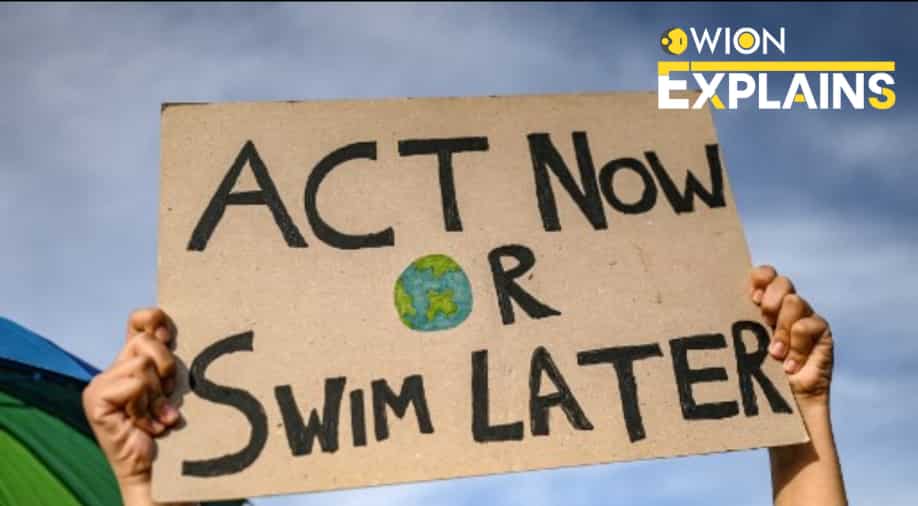
World Environment Day
In November 2022, following the Conference of the Parties to the United Nations Framework Convention on Climate Change (COP27) in Egypt, over 100 leaders from nearly 200 nations signed a contentious final deal. Meanwhile, the future of fossil fuels rests on an Emirati oil chief who the United Arab Emirates (UAE) has chosen to head the upcoming COP28 climate summit in Dubai.
The importance of these international treaties is reiterated time and time again when countries vow to step up their response to the climate crisis or take measures to limit global warming to 1.5 degreeCelsius from pre-industrial levels and their carbon emissions.
Every year, since 1973, World Environment Day has been celebrated by millions of people across the world, led by the UN Environment Programme. Since last year, for better or for worse, five prominent international agreements and treaties have been decided upon whichare set to affect environment-related decision-making in the years to come.

COP27 summit: A contentious deal
Last year, the UN climate conference was hosted in the Egyptian coastal city of Sharm el-Sheikh and after days of debates and talks, nearly 200 nations finally announced the historic agreement on the “loss and damage” fund from climate change and the final declaration wrapping up the weeks-long conference.
The summit had to be extended by a day in a bid to break the deadlock over the creation of a fund for developing countries which have been devastated by the fallout from global warming which the richer nations had previously declined to do. The COP27 cover decision or Sharm el-Sheikh Implementation Plan for the first time incorporated specific sections on forests and “nature-based solutions,” which includes steps like restoring the mangroves.
)
US vs China over South China Sea: Washington backs Philippines, Beijing hits back
)
Bigg Boss 20: Isha Rikhi evicted after three weeks in Salman Khan’s show
)
Musk plans to more than double xAI's chips to over 1.2 million Nvidia GPUs by year-end
)
After JU, clash erupts at SRFTI: BJP’s ‘Dimagi Naxal’ jibe sparks political firestorm after students protest RSS-linked event
)
‘Anti-social elements spreading false rumours’: LPU issues statement amid massive unrest over alleged rape
)
LPU students go on rampage, vandalise campus amid widespread protest: What's happening
)
Trump asked Xi to pressure Iran. China did not say yes — here’s what Beijing wants
)
US Treasury Secretary Scott Bessent hails global crackdown on Iranian banks and airlines
)
An OpenAI agent escaped its locked test cage again, by hiding questions in DNS lookups
)
'Our video was trimmed': LPU girls who featured in rape-denial video make U-turn
)
3 males killed, four others injured in shooting after fight at strip club in Detroit
)
'Victory for low-budget consumers': Raghav Chadha hails 30-day telecom recharge rules
)
Claude rebuilt the 1989 game 'Prince of Persia' by reusing the original's own code
)
Beyond metros: How Tier-2 and Tier-3 cities could drive India’s next AI wave
)
Tesla builds first Cybertruck with its own refined lithium: Elon Musk's $1 billion Texas bet pays off
)
IndiGo flight suffers tail strike in Bengaluru while landing; DGCA to probe incident
)
The US and China set up an AI 'red telephone', but skipped the rulebook
)
‘Terror suspects arrested near UK air base were looking to do big damage’: Trump
)
Russian envoy claims US tactics to contain India were revealed in ‘Freudian slip’
)
IND vs WI 1st ODI: Kohli breaks Sachin's most runs in one country record with unbeaten 139 as India thump West Indies by 8 wickets
)
Researchers rebuilt exactly how 700 AI agents hacked Hugging Face: a 900-link chain trick
)
‘Olympic inclusion is our major target’: WPA President Ishaun Singh on pool’s global ambitions
)
Nations League: Spain sink England at Wembley; Modric shines for Croatia
)
Why has Iran released no proof of life of Mojtaba Khamenei? Araghchi reveals...
)
'What kind of confession is this?': Pakistan PM Shehbaz Sharif’s 'terrorists would be roaming New York' remark goes viral, raises alarm online. Watch
)
South Korea demands apology from Ukraine over North Korean prisoners' transfer
)
Beyond BrahMos: India targets Rs 50,000 crore in defence exports with unmatched price edge
)
Sri Lankan Tamil migrant worker gets death sentence in Saudi Arabia, help sought from India
)
Muslim marriage cannot shield sex with minor wife from prosecution under POCSO: Delhi HC
)
'Can't help but draw painful parallels to Nirbhaya case': SC on latest incidents of rape cases in Delhi-NCR
)
99.9% more powerful - Scientists find boy who can recall memories from just 3 months of age
)
'FIRST LOOK from inside Noah’s Ark': Researchers share video from inside mysterious mound in Turkey
)
UNSC reform momentum grows: Russia, Portugal, Mauritius push for India's permanent seat bid
)
8 US marines injured in Iranian missile attack on vessel in Strait of Hormuz: Report
&im=FitAndFill=(700,400))
New OTT releases this week (September 28-October 4, 2026): Dupahiya 2, Pooja Meri Jaan, Ohh My Dog- 5 titles coming on Netflix, Prime Video and more
)
Afghanistan says 28 fighters killed in clash near Pakistan border, Islamabad denies
)
Ceuta migrant crisis: Protesters take to streets as Spain grapples with migrant challenge
)
LPU suspend classes, postpones exams as violence escalates over rape claims: What's happening
)
New York City wants a 'kill switch' on every AI, and will pay whistleblowers who report violations
COP27 was more focused on implementation, while COP26, held in Glasgow was about target setting. Key takeaways from the two not legally binding papers included steps to limit greenhouse gas emissions; not cross the 1.5 degree Celsius threshold; hold businesses and institutions accountable for emissions and ensure transparency; financial aid for developing countries to lower emissions and climate-resilient development.
The goals fell short of pushing for the urgent “drastic” carbon-cutting needed to tackle global warming. “Our planet is still in the emergency room. We need to drastically reduce emissions now, and this is an issue this COP did not address,” said UN Secretary-General Antonio Guterres, criticising the nations.
COP15 summit: Historic billion dollar deal to save biodiversity
The UN biodiversity conferenceCOP15 took place in December amid intense pressure where at least 190 countries agreed to raise $200 billion by the end of the decade to protect land and marine areas as well as save biodiversity in the developing world after it was dubbed as the “last chance” to address the issue.
The draft, 30 by 30, agreed upon in Montreal, Canada had four broad goals and 22 targets which committed to protecting 30 per cent of land and water which are considered pillars of biodiversity by 2030. Prior to this, only 17 per cent of terrestrial and 10 per cent of marine areas were protected.
During the summit, finance was one of the most contentious issues after some70 delegates from African, South American and Asian countries staged a walkout and did not return for hours. The deal also accounted for the rights of Indigenous peoples and reaffirmed that they will have a voice in decision-making, a move which was praised by many.
UN High Seas Treaty approved after over a decade
Over 15 years of discussions and five rounds of protracted UN-led discussions later, more than 100 countries, in March, signed the legally binding pact to protect and manage nearly two-thirds of the world’s oceans that lie beyond countries’ Exclusive Economic Zones (EEZ), known as the high seas. Notably, the high seas make up more than 60 per cent of the world’s oceans and almost half of the planet’s surface but receive little to no attention since there are no borders.
The long-awaited treaty will work to reverse marine biodiversity losses and ensure sustainable development. The discussions ran as long as they did due to the economic interests which included developing nations wanting larger shares of the so-called "blue economy"and an agreement on the sharing of “marine genetic resources”.
Deep sea mining might begin with no regulations
In March, the UN associated, 167-nation body, International Seabed Authority (ISA) convened in Kingston, Jamaica to negotiate on creating a legally binding document which would set the rules for how deep sea mining would be regulated in the high seas. As the discussions began, the ISA chief was criticised by diplomats who claimed that he has been pushing them to accelerate the process of beginning deep-sea mining.
The ISArecently faced pressure from the tiny Pacific nation, Nauru, which triggered a clause in 2021 that would allow it to demand the adoption of the rules which are still being negotiated within two years.
The decision to allow permit applications by July 9 came by the end of March after the ISA’s governing council formulated a draft decision due to the triggered clause. As per a document seen by Reuters, the council plans to meet virtually before July to debate if the approval of these permits can be delayed.
UN to deal with world’s plastic problem
Last month, a UN committee met to negotiate a landmark legally binding global plastics treaty in Paris which would ideally end global plastic pollution. The debate was about whether the countries should limit the production of more plastics or recycle plastic waste, with the plastic-producing and oil and gas companies supporting the latter and environmental groups in favour of the former.
At the end of the recently concluded second meeting in France, the decision to come up with a “zero-draft” by the end of November came at the 11th hour ahead of a third round of talks in Nairobi after some reported “nit-picking” and “delaying tactics” by countries, said the French foreign minister
COP28 summit: The way forward?
It has been a year of historic decision-making and passing contentious deals involving hundreds of countries across the world. So what’s next? The next COP meeting is already garnering criticism and has come under scrutiny after its host UAE selected Sultan al-Jaber, head of the Abu Dhabi National Oil Company, to lead the upcoming climate summit.
As per AFP, while Al-Jaber favours the rapid development of renewable energy he has also supposedly focused more on the use of controversial technologies to capture carbon dioxide as opposed to reducing emissions by limiting fossil fuels. The COP28 climate summit is set to take place in December.
(With inputs from agencies)
WATCH WION LIVE HERE
You can now write for wionews.com and be a part of the community. Share your stories and opinions with us here.