Explained | UN ocean treaty talks resume: Why the deal to protect the world’s oceans is so important

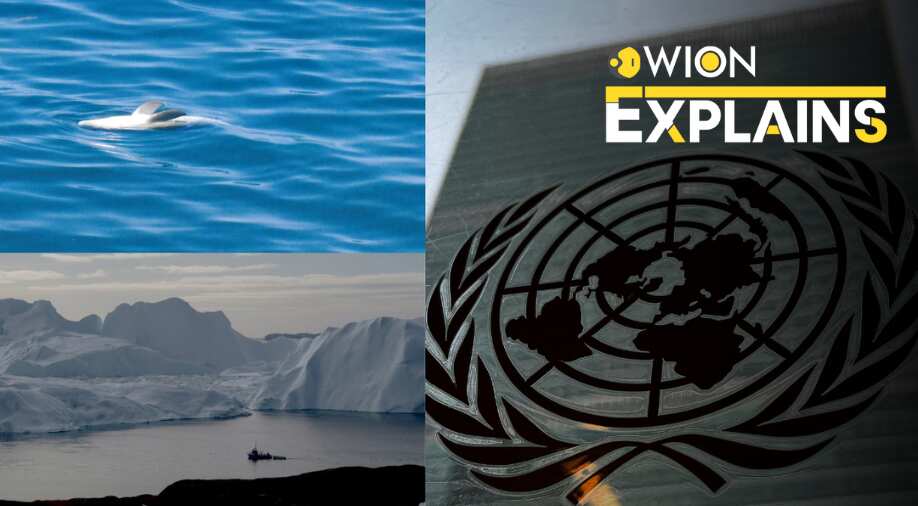
UN ocean treaty
Representatives from 193 member nations of the United Nations convened on Monday (February 20) in the United States city of New York and for the next two weeks will negotiate its long-awaited treaty to protect the world’s oceans. This meeting comes after decades of formal and informal talks which opened with cautious optimism as many hope to make a decision at the end of it. The global agreement will protect and manage nearly two-thirds of the world’s oceans that lie beyond countries’ Exclusive Economic Zones (EEZ) known as the high seas.
What do we know about the meeting so far?
The talks which opened on Monday will go on till March 3 and are supposed to be the final round of negotiations after no agreement has been reached after more than 15 years. Notably, this is the third time in less than one year that delegates have gathered at the UN headquarters and due to the historic deal reached by the end of the United Nations Biodiversity Conference or COP15 in Montreal, Canada many are hopeful.

“I hope we've come together here with a will to get us to the finish line,” said conference chair Rena Lee, addressing the delegates as the talks began, reported AFP. She added, “an agreement that is universal, that is effective, that is implementable and that is future proofed is within our reach.” The President of the Intergovernmental Conference also encouraged delegates to build on the progress made during the August session, last year and focus on developing an agreement “that will bridge the existing gaps.”
The fifth session of the conference was convened following the General Assembly resolution 77/248 on “Oceans and the law of the sea”. The aim of these rounds of talks is to finalise an international legally binding agreement on the conservation and sustainable use of marine biological diversity in areas which are beyond national jurisdiction under the UN Convention on the Law of the Sea.
What per cent of our oceans are protected?
&imwidth=180&imheight=135&format=webp&quality=medium)
India’s naval priorities: Ex-Navy Chief calls for third aircraft carrier, more warships and submarines
&imwidth=180&imheight=135&format=webp&quality=medium)
Abhishek Sharma sets all-time record for most T20I sixes in a year
&imwidth=180&imheight=135&format=webp&quality=medium)
US midterms 2026: FBI investigates suspicious mailings containing 'unknown substance' sent to election offices
&imwidth=180&imheight=135&format=webp&quality=medium)
‘My president, I mean my husband’: Trump's new press secretary Katie Zacharia's first briefing goes off the rails in 14 minutes
&imwidth=180&imheight=135&format=webp&quality=medium)
Nine former FBI employees fired over investigation into Trump's classified records sue Kash Patel, DOJ over alleged unlawful dismissal
&imwidth=180&imheight=135&format=webp&quality=medium)
Russian woman and Bihar boy's love story goes viral after she reaches India to marry him
&im=FitAndFill=(700,400)&imwidth=180&imheight=135&format=webp&quality=medium)
World's 7 most innovative countries in 2026 REVEALED: Did India make the list? | In Pics
&imwidth=180&imheight=135&format=webp&quality=medium)
Majid Majidi's new film Midday Meal takes top prize at Asia's biggest film festival
&imwidth=180&imheight=135&format=webp&quality=medium)
Oregon school shooting: 16-year-old identified as suspect after at least four killed, including three children
&imwidth=180&imheight=135&format=webp&quality=medium)
Who is Abu Dhabi royal Mahrah Al Nahyan, found unconscious on London street with toddler after cocaine use
&imwidth=180&imheight=135&format=webp&quality=medium)
Trump's tariff strategy faces new test: India wants preferential access and tariff stability
&im=FitAndFill=(700,400)&imwidth=180&imheight=135&format=webp&quality=medium)
Inside Tesla's Roadster: 10 features of Elon Musk's 'flying car' that push the limits of electric vehicles | In Pics
&imwidth=180&imheight=135&format=webp&quality=medium)
'Ukraine must get all it needs to protect civilians and infrastructure': Macron
&imwidth=180&imheight=135&format=webp&quality=medium)
Ukraine blinded: Musk deflects blame on Trump, Putin sharpens attack | Gravitas
&imwidth=180&imheight=135&format=webp&quality=medium)
Portland stabbing: Multiple people reportedly stabbed hours after deadly Bend school shooting
&imwidth=180&imheight=135&format=webp&quality=medium)
Leave India notice to Imran Khan explained: What are OCI rules and why can't foreigners protest in India?
&imwidth=180&imheight=135&format=webp&quality=medium)
Trump says Zelensky 'not a good guy' amid fresh Russia-Ukraine tensions | Watch video
&imwidth=180&imheight=135&format=webp&quality=medium)
US sanctions Cuban state-owned bank BICSA over alleged financial links to Iran
&imwidth=180&imheight=135&format=webp&quality=medium)
'Troubling pattern of threats': Hindu groups issue advisory after man arrested for alleged plot to target Illinois temple
&imwidth=180&imheight=135&format=webp&quality=medium)
Arijit Singh 9-city India stadium tour to start from January: Check venue and ticket prices
&imwidth=180&imheight=135&format=webp&quality=medium)
Broke Your iPhone Duo? Here’s how much screen repair could cost
&imwidth=180&imheight=135&format=webp&quality=medium)
'Turn approver, resign, we'll forgive you': Rahul Gandhi claims receiving messages from CEC Gyanesh Kumar
&imwidth=180&imheight=135&format=webp&quality=medium)
'White supremacist' terror plot against Illinois Hindu temple foiled by jammed gun: Who is Alexandros Paporakis?
&imwidth=180&imheight=135&format=webp&quality=medium)
Central Park in Delhi shut on October 16, 17 amid CJP's protest call
&imwidth=180&imheight=135&format=webp&quality=medium)
Turkey Floods: Heavy rains flood homes and submerge vehicles in Istanbul
&imwidth=180&imheight=135&format=webp&quality=medium)
Australian woman charged for adding snail poison to lover's curry at work
&imwidth=180&imheight=135&format=webp&quality=medium)
Saudi Arabia executes Two Bangladesh nationals over immoral act
&imwidth=180&imheight=135&format=webp&quality=medium)
Girl 'dead' for 8 hours wakes up at her own funeral, dad insists she wasn't breathing
&imwidth=180&imheight=135&format=webp&quality=medium)
'Will stand with Pakistan in case of war with US': Rajasthan BJP chief's remark sparks row
&imwidth=180&imheight=135&format=webp&quality=medium)
Mumbai: CJP brings Tricolour protest to Azad Maidan after weeks of demonstrations
&imwidth=180&imheight=135&format=webp&quality=medium)
Netanyahu defies Trump, blocks Gaza military base for Board of Peace | Gravitas
&imwidth=180&imheight=135&format=webp&quality=medium)
US-Iran War: Trump eyes mother of all bombs; Iran in crosshairs
&imwidth=180&imheight=135&format=webp&quality=medium)
Russia-Ukraine War: Putin vows retaliation against Ukraine
&imwidth=180&imheight=135&format=webp&quality=medium)
Earthquake measuring 7 magnitude strikes Russia’s Kamchatka Peninsula
&imwidth=180&imheight=135&format=webp&quality=medium)
'Turns out the future does have flying cars': Musk's Tesla unveils 'flying' sports car with SpaceX technology | Watch
&imwidth=180&imheight=135&format=webp&quality=medium)
Was Trump in danger at Alaska rally? Viral video shows Secret Service agents reacting
&imwidth=180&imheight=135&format=webp&quality=medium)
Katie Zacharia, White House Press Secretary admits she never passed bar exam amid credentials controversy
&im=FitAndFill=(700,400)&imwidth=180&imheight=135&format=webp&quality=medium)
Inside the Peshawar school tragedy: 34 dead, building's condition under scrutiny and owner arrested. Here's what all happened
Last year, ministers and government officials from about 190 countries in Montreal signed an agreement known as 30 by 30 which committed to protecting 30 per cent of land and water which are considered pillars of biodiversity by 2030. Prior to this, only 17 per cent of terrestrial and 10 per cent of marine areas were protected.
According to the International Union for Conservation of Nature (IUCN), only eight per of the world’s marine areas are protected which includes 1.4 per cent of the high seas. The areas of the high seas that are protected fall under North East Atlantic and Antarctic oceans but they are regional and not global, or even binding for all governments, said Jessica Battle, a senior expert on ocean policy and governance at the World Wide Fund for Nature, as per Al Jazeera.
Why is this agreement important?
As mentioned earlier, the agreement will focus on the high seas which begin at the border of countries' EEZ and extend up to 200 nautical miles, or 370 kilometres from the coast and therefore fall under the jurisdiction of no country. Notably, the high seas make up more than 60 per cent of the world’s oceans and almost half of the planet’s surface but receive little to noattention since there are no borders.
Last month UN Secretary-General Antonio Guterres said, “Humanity has been waging a senseless and self-defeating war on nature, and the ocean is on the front lines of the battle,” and called on the nations to finish the delayed negotiations. The oceans contribute significantly to global climate as well as provide oxygen, drive weather systems, and store a quarter of human-generated carbon dioxide, a greenhouse gas heating up the planet.
The ocean supports a huge range of biodiversity and is home to possibly millions of species which are yet to be discovered. According to IUCN’s Red List of Threatened Species, at least 10 per cent of underwater plants and animals assessed are under threat of going extinct. Additionally, oceans have been subjected to overfishing, depleting not only the fish stocks but also their ability to rebuild, said Battle, as per Reuters.
She also addresses the lesser-known phenomenon of “bycatch” which means that fish that is accidentally caught is later discarded as waste. It is estimated that bycatch accounts for at least 40 per cent of the world’s global commercial catch. Not to mention the human-induced climate change which has adversely affected ocean health and caused coral reefs to bleach and forced fish to migrate to cooler waters.
What’s the problem?
The UN draft treaty is said to include provisions to protect the world’s oceans from overfishing, pollution and other threats butalso comprises parenthetical clauses and multiple options which reflect the long list of contentious issues at hand. The delegates are reportedly divided on one core issue which is how would these sanctuary zones be established. Additionally, there is no agreement on the assessment of the environmental impact of activities like mining in the high seas, reported AFP.
Meanwhile, the debate on the division of future profits collected by pharmaceutical, chemical or cosmetic manufacturers, for example from newly discovered marine substances also remains unresolved. As developing countries have argued that they will not be able to afford costly research and fear they might get left behind. This is something that observers had accused rich countries, particularlyEuropean Union member states, of doing during the previous session in August 2022, as per reports.
(With inputs from agencies)
WATCH WION LIVE HERE
You can now write for wionews.com and be a part of the community. Share your stories and opinions with us here.