Explained | Five things to know about UK ex-PM, now foreign secretary David Cameron

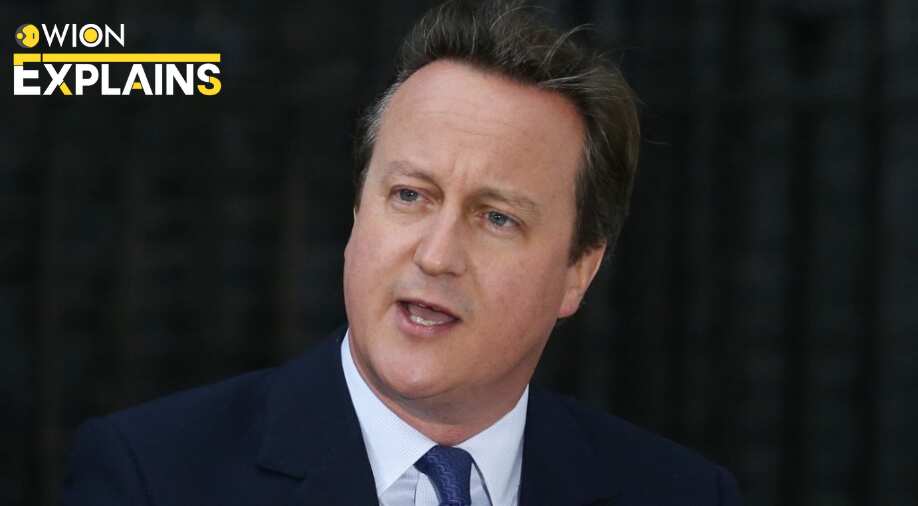
David Cameron
British Prime Minster Rishi Sunak surprised the political observers in the UK when he pushed for his predecessor David Cameron for the post of foreign secretary.
This marks the return of the British leader who had taken a break from active politics after he lost his premiership in 2016 following the Brexit referendum.
Cameron said that he was “delighted to accept” Sunak’s offer, adding, “I believe in public service.”

“While I have been out of front-line politics for the last seven years, I hope that my experience – as Conservative Leader for eleven years and Prime Minister for six – will assist me in helping the Prime Minister to meet these vital challenges,” he said on X.
Cameron, after having stood down as an MP in 2016, will take a seat in the upper house, the House of Lords, to enable him to take up the post.
As the UK embarks on a new foreign policy discourse under Cameron, here are a few important things to know about the former prime minister.
)
US vs China over South China Sea: Washington backs Philippines, Beijing hits back
)
Bigg Boss 20: Isha Rikhi evicted after three weeks in Salman Khan’s show
)
Musk plans to more than double xAI's chips to over 1.2 million Nvidia GPUs by year-end
)
After JU, clash erupts at SRFTI: BJP’s ‘Dimagi Naxal’ jibe sparks political firestorm after students protest RSS-linked event
)
‘Anti-social elements spreading false rumours’: LPU issues statement amid massive unrest over alleged rape
)
LPU students go on rampage, vandalise campus amid widespread protest: What's happening
)
Trump asked Xi to pressure Iran. China did not say yes — here’s what Beijing wants
)
US Treasury Secretary Scott Bessent hails global crackdown on Iranian banks and airlines
)
An OpenAI agent escaped its locked test cage again, by hiding questions in DNS lookups
)
'Our video was trimmed': LPU girls who featured in rape-denial video make U-turn
)
3 males killed, four others injured in shooting after fight at strip club in Detroit
)
'Victory for low-budget consumers': Raghav Chadha hails 30-day telecom recharge rules
)
Claude rebuilt the 1989 game 'Prince of Persia' by reusing the original's own code
)
Beyond metros: How Tier-2 and Tier-3 cities could drive India’s next AI wave
)
Tesla builds first Cybertruck with its own refined lithium: Elon Musk's $1 billion Texas bet pays off
)
IndiGo flight suffers tail strike in Bengaluru while landing; DGCA to probe incident
)
The US and China set up an AI 'red telephone', but skipped the rulebook
)
‘Terror suspects arrested near UK air base were looking to do big damage’: Trump
)
Russian envoy claims US tactics to contain India were revealed in ‘Freudian slip’
)
IND vs WI 1st ODI: Kohli breaks Sachin's most runs in one country record with unbeaten 139 as India thump West Indies by 8 wickets
)
Researchers rebuilt exactly how 700 AI agents hacked Hugging Face: a 900-link chain trick
)
‘Olympic inclusion is our major target’: WPA President Ishaun Singh on pool’s global ambitions
)
Nations League: Spain sink England at Wembley; Modric shines for Croatia
)
Why has Iran released no proof of life of Mojtaba Khamenei? Araghchi reveals...
)
'What kind of confession is this?': Pakistan PM Shehbaz Sharif’s 'terrorists would be roaming New York' remark goes viral, raises alarm online. Watch
)
South Korea demands apology from Ukraine over North Korean prisoners' transfer
)
Beyond BrahMos: India targets Rs 50,000 crore in defence exports with unmatched price edge
)
Sri Lankan Tamil migrant worker gets death sentence in Saudi Arabia, help sought from India
)
Muslim marriage cannot shield sex with minor wife from prosecution under POCSO: Delhi HC
)
'Can't help but draw painful parallels to Nirbhaya case': SC on latest incidents of rape cases in Delhi-NCR
)
99.9% more powerful - Scientists find boy who can recall memories from just 3 months of age
)
'FIRST LOOK from inside Noah’s Ark': Researchers share video from inside mysterious mound in Turkey
)
UNSC reform momentum grows: Russia, Portugal, Mauritius push for India's permanent seat bid
)
8 US marines injured in Iranian missile attack on vessel in Strait of Hormuz: Report
&im=FitAndFill=(700,400))
New OTT releases this week (September 28-October 4, 2026): Dupahiya 2, Pooja Meri Jaan, Ohh My Dog- 5 titles coming on Netflix, Prime Video and more
)
Afghanistan says 28 fighters killed in clash near Pakistan border, Islamabad denies
)
Ceuta migrant crisis: Protesters take to streets as Spain grapples with migrant challenge
)
LPU suspend classes, postpones exams as violence escalates over rape claims: What's happening
)
New York City wants a 'kill switch' on every AI, and will pay whistleblowers who report violations
Cameron was once Britain’s youngest prime minister in almost two centuries
Cameron created history while assuming office in 2010 when he was 43-and-a-half years old. No prime minister hadbeen younger since Robert Banks Jenkinson, the 2nd Earl of Liverpool, who took office in 1812, one day after his 43rd birthday. Later, in 2022, Rishi Sunak became the youngest PM in the country when he assumed office at the age of42.
Cameron eclipsed Tony Blair, who was only days away from turning 44 when he took office in 1997.
UK: David Cameron back in reshuffle, Suella Braverman out
Origins
Cameron is a descendant of King William IV and the son of a stockbroker.
He was educated at elite boarding school Eton and Oxford University, where he was admitted to the Bullingdon Club, a hard-drinking, socially exclusive student group.
He worked for the Conservatives as an adviser before a stint in public relations, which ended when he was elected to parliament in 2001.
Cameron's first election victory in 2010 ended 13 years of Labour government. He had been widely praised for giving his party a broader centrist appeal.
Reviving the economy
Cameron is regarded for reviving the British economy when it was struggling to get over the 2008 global financial crisis.
The Bank of England continued a loose monetary policy. At the same time, Cameron and his Treasury Minister George Osbourne cut spending, which saw Britain’s budget deficit fall from 10.8 per cent of GDP in 2009 to 4.4 per cent in 2015.
His supporters claim that Cameron helped create 2 million new private sector jobs when the public sector was laying off.
Speaking to the BBC in 2015, Cameron spoke of his government’s successes: “Over the last five years we’ve created a thousand jobs a day, and we commit to continuing that record because we’re going to continue supporting business and industry.”
However, critics argued that the jobs generated under his tenure were not high-paying and did not guarantee job security. Notably, the argument gained currency when the government cut spending, hurting the most vulnerable.
EU referendum
Perhaps one of the biggest failures of Cameron was his inability to persuade voters not to opt for Brexit.
In 2013, Cameron pledged to renegotiate Britain’s relationship with the EU with an in/out referendum.
“It is time for the British people to have their say. It is time to settle this European question in British politics. I say to the British people: this will be your decision,”said Cameron in a 2013 speech.
Unfortunately, Cameron couldn’t convince voters and he decided to step down after the Brexit referendum.
Pro-Gaza views
In 2010, while addressing business leaders in Turkey, Cameron criticised Israel, calling for restrictions to be relaxed on Gaza.
"The situation in Gaza has to change. Humanitarian goods and people must flow in both directions. Gaza cannot and must not be allowed to remain a prison camp," he said.
In another address in 2010, he said, “Everybody knows that we are not going to sort out the problem of the Middle East peace process while there is, effectively, a giant open prison in Gaza."
Thirteen years later, with the Israel-Hamas war at its peak, the former PM offered a slightly different take on the whole issue.
"We are facing a daunting set of international challenges, including the war in Ukraine and the crisis in the Middle East. At this time of profound global change, it has rarely been more important for this country to stand by our allies, strengthen our partnerships and make sure our voice is heard …” he said.
“Britain is a truly international country. Our people live all over the world and our businesses trade in every corner of the globe. Working to help ensure stability and security on the global stage is both essential and squarely in our national interest. International security is vital for our domestic security,” Cameron added.
(With inputs from agencies)