Explained | Can China be an ‘honest broker’ for peace amid Russia-Ukraine conflict?

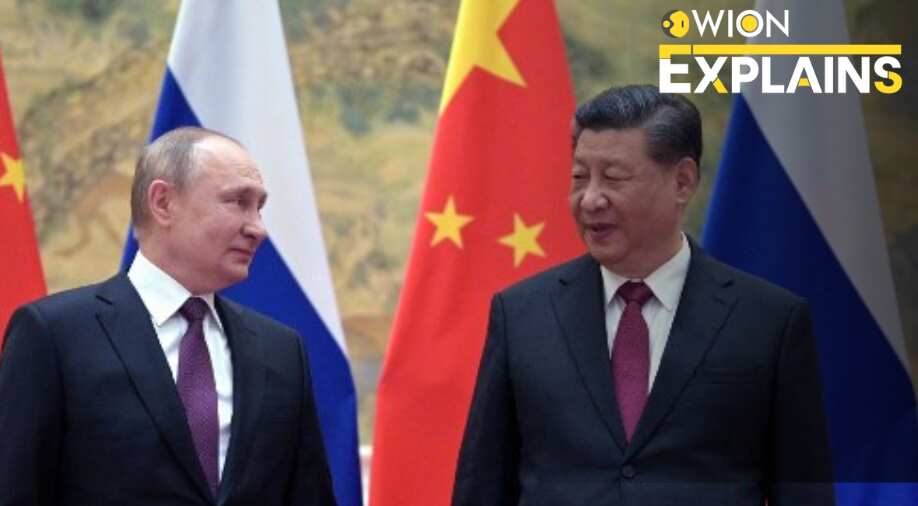
Russia and China
The Kremlin as well as Beijing have recently confirmed Chinese President Xi Jinping’s visit to Russia from March 20 to 22. This comes weeks after Beijing proposed a 12-point peace plan urging both sides to agree to a gradual de-escalation. Similarly, a report by the Wall Street Journal, earlier this week, also suggested that Xi may hold talks with Ukrainian President Volodymyr Zelensky, which would be the first time since Moscow began its “special military operation” in Kyiv.
China’s role in the conflict
China had garnered criticism for its stance on the Russian invasion of Ukraine particularly as the conflict had crossed its one-year mark. This came as Beijing had and still refuses to criticise Moscow but opted for what might be viewed as a neutral stance as it continues to urge that the sovereignty and territorial integrity of all nations be upheld. In late February, the US Secretary of State Antony Blinken said American intelligence suggests China is considering supplying military aid to Moscow.

ALSO WATCH |Can China broker peace between Russia and Ukraine after its success with Saudi Arabia & Iran?
In an interview with NBC, Blinken also said that China is “trying to have it both ways,” where “publicly, they present themselves as a country striving for peace in Ukraine, but privately, as I said, we’ve seen already over these past months the provision of non-lethal assistance that does go directly to aiding and abetting Russia’s war effort.”
However, the claim was quickly dismissed while China accused the US of “fanning flames and stoking confrontations” as it continues to provide Ukraine with defensive weapons. In response, China’s top diplomat Wang Yi had also said, Beijing would “never accept finger-pointing and even coercion and pressure on China-Russia relations.”
A week or so later, on the first anniversary of Russia’s invasion of Ukraine, Beijing released a 12-point peace plan in a foreign ministry paper. In the peace plan the ministry had stated, “All parties must stay rational and exercise restraint, avoid fanning the flames and aggravating tensions, and prevent the crisis from deteriorating further or even spiralling out of control.”
)
1,200 Indian and US troops begin high-altitude and desert drills
)
800 million years old - Scientists discover 'fingerprints' of supercontinent Gondwana in ancient rocks
)
2,200 people donate Rs 1.5 crore for 'docile' Georgia donkey 'HeeHaw' shot dead by police officer
)
West Bengal IPS officer Bushra Bano transferred after objections to ‘Assalamualaikum’, ‘Inshallah’
)
Water equivalent to two Pacific Oceans could be stashed 2,900 km inside Earth
)
Top military commanders from US, Israel, and 7 Arab nations held secret meeting on Iran War
)
China's property crisis deepens as investment plunges nearly 20%
)
US fires up to 70 interceptors against Iran attack on Jordan, putting supplies under pressure
)
'Like a thug you are using agency to go after..': Kash Patel grilled by Senate Democrats over FBI firings, journalist investigations and hiring policy
)
Salman Khan gives The Revolutionaries a shoutout, watches series with Bhuvan Bam, Nikkhil Advani at Galaxy
&im=FitAndFill=(700,400))
New OTT releases this week (September 14-20, 2026): Lust Stories 3, Waiting Hai, Irumudi- 5 new titles coming on Netflix, Prime Video and more
)
Ex-India all-rounder Yuvraj Singh wants India to avoid 'massive changes' before ODI World Cup 2027
)
OpenAI boss Sam Altman repeats AI 'slow down' call, says world 'right to be afraid'
)
Putin-linked Russian oligarch, Melania links: Why Trump skipped his son’s Bahamas wedding bash?
)
Los Angeles helicopter crash: At least three dead, several injured; NTSB to investigate
)
Trump's name cannot return to Kennedy Center, US judge rules
)
Spanish officer sent home from NATO base over affair with 'Russian spy' | Gravitas
)
'Now Trump is copying us': Shivakumar links US $5,000 plan to Congress guarantees
)
Ed Sheeran’s US tour loses all support acts after Macklemore’s removal | Controversy explained
)
Saudi turns to Israel for intelligence help as Houthi attacks intensify: Report
)
‘Kill all in the name of...’: FBI arrests 21-year-old over alleged ISIS-inspired mass-casualty attack plot
)
India’s imports from Russia jump 57% in five months; China remains top import source
)
Bitter Zelensky snubs Trump for playing politics with Ukraine war | Gravitas
)
Ex-CIA officer caught with gold bars worth $40 million seeks plea deal | Gravitas
)
Saudi Arabia accuses Houthis of drone attack on Mecca, first-ever red alert in Islam's holiest site sparks panic
)
Messi set to play in farewell match on October 6 in Argentina vs Benin friendly
)
Space mines, lasers & robotic arms: Lt Gen Pannu decodes US disclosure of weapons in space
)
Who is Kalyan Bainsla, accused in the Gurugram hit-and-run case involving woman biker?
)
Saudi Arabia discovers 110 million tonnes of Uranium-rich ore in Madinah region
)
US Treasury yields cross 5% as Scott Bessent warns of ‘global issues’ impacting bonds
)
'Definitely feel bad for yourself': Kuldeep Yadav opens up on India Test snubs
)
India summons top Pakistan diplomat after Pak Navy ship collides with Indian warship at high seas
)
‘US military task force aiding Saudi Arabia forces with intel, planning support’: Official
)
Trump's Iran war faces fresh House rebuke; 7 Republicans join Democrats in push to end conflict ahead of midterms
)
Sydney Sweeney defends provocative ad choice, the internet is still not impressed
ALSO READ |Xi Jinping set to visit Russia from March 20-22, on trip ‘for friendship and peace’
It added, “Dialogue and negotiation are the only viable solution to the Ukraine crisis” and that China would play a “constructive role,” without mentioning what that would entail. Notably, China has refrained from condemning Russia for its actions or referring to its “special military operation” as an invasion but has criticised Western sanctions imposed against Moscow.
Why would China want to mediate?
China had also garnered criticism from the West about supposedly defending Moscow and not doing enough to address the issues around it. Analysts, as per Reuters say that this would be Beijing’s way of deflecting some of that backlash and even if they cannot achieve a quick breakthrough it is a low-cost venture which can yield high returns for China.
Additionally, China also recently mediated talks between Iran and Saudi Arabia and struck a peace deal where the two countries have now decided to re-establish relations after seven years of hostility which had previously threatened the stability and security in the Gulf.
ALSO READ |After Poland, Slovakia to send 13 MiG-29 fighter jets to war-torn Ukraine; Kremlin reacts
“This is a victory for dialogue, a victory for peace, offering major good news at a time of much turbulence in the world”, China’s top diplomat, Wang Yi had said at the time. Notably, the deal was seen as a landmark diplomatic win for China in a region where the geopolitical scenario had previously been dominated by the US.
Wang also said that China as a “good-faith and reliable mediator” has “faithfully fulfilled its duties as the host”. He added, Beijing will continue to play a constructive role in handling hotspot issues of the world and demonstrate its responsibility as a major nation and that the world is not just limited to the “Ukraine issue”.
ALSO READ |Russian defence minister honours pilots involved in downing of US drone over Black Sea
As per Reuters, analysts have said that under Xi’s stewardship, Beijing is attempting to project itself as a responsible power where the Chinese president “would want to be seen on the global stage as a statesman whose influence at least equals that of the US leader,” said Wang Jiangyu, a law professor at the City University of Hong Kong.
Will China be an ‘honest broker’?
Last year, weeks before the Russian invasion of Ukraine, Xi had hosted Russian President Vladimir Putin in Beijing for the Winter Olympics where the two countries had issued a joint statement committing to their “no limits” friendship.
Therefore, since China proposed its peace deal it has been met with deep scepticism given its “no-limits” friendship with Moscow, many have questioned if it can be an honest broker between Russia and Ukraine. After the 12-point plan was released, charge d’affaires at the Ukrainian embassy in Beijing, Zhanna Leshchynska, said that it was a “good sign” but questioned China’s neutrality.
ALSO WATCH |Xi Jinping to visit Russia in show of support for Vladimir Putin
“If it is neutrality, then China should talk to both sides, Russia and Ukraine. Now we see the Chinese side mostly talking with Russia, but not Ukraine,” said Zhanna. She added that Kyiv will not agree to anything which keeps “Ukrainian territories occupied” and “puts our people at the aggressor’s mercy”.
Similarly, an international security expert Li Mingjiang dismissed the proposal as China’s “attempt at public relations”. He added, “I'm not convinced that this policy is going to improve their credibility in being an honest broker.”
ALSO READ |Putin, Xi to sign declaration as Russia-China ties enter 'new era': Kremlin
It is also worth noting that since the conflict began Beijing has called for peace but at the same time backed the Russian position of NATO being a threat to Moscow with its eastward expansion. Meanwhile, it has also accused the West of fanning the flames of the conflict by supplying Ukraine with military aid.
In this context, some have also called on Beijing to clarify its stance, “China feels it necessary to repeat its self-perceived neutrality at this juncture, to save some international inference by not only criticising NATO but also distinguishing itself from Russia’s behaviour,” said Shi Yinhong, a professor of international relations at Beijing’s Renmin University, as per Sky News.
ALSO READ |Chinese-made retrofitted, weaponised drone shot down by Ukrainian forces
“China doesn't have much credibility because they have not been able to condemn the illegal invasion of Ukraine,” NATO Secretary-General Jens Stoltenberg said last month after the deal was announced. While China may not have “credibility” as an honest broker, experts believe that it is in a better position to mediate than Turkey as it holds some leverage over both Russia and Ukraine.
Currently, China can be viewed as Russia’s most important ally as not only has it been buying oil from Moscow it also provided a market for its goods after they were sanctioned by Western countries. On the other hand, a Russia expert at Oxford University, Samuel Ramani also spoke about Beijing’s leverage over Ukraine which includes not losing their chances of Chinese support for its reconstruction, reported Reuters.
ALSO READ |China urges Ukraine and Russia to restart peace talks 'as soon as possible'
Additionally, after Russia had annexed Crimea in 2014, Beijing increased trade with Ukraine and did not recognise the annexed territory as Russian, said Ramani. He added, “Most importantly, Zelensky does not want to provoke China so much that they start arming Russia”.
(With inputs from agencies)