
&imwidth=800&imheight=600&format=webp&quality=medium "US fires up to 70 interceptors against Iran attack on Jordan, putting supplies under pressure")
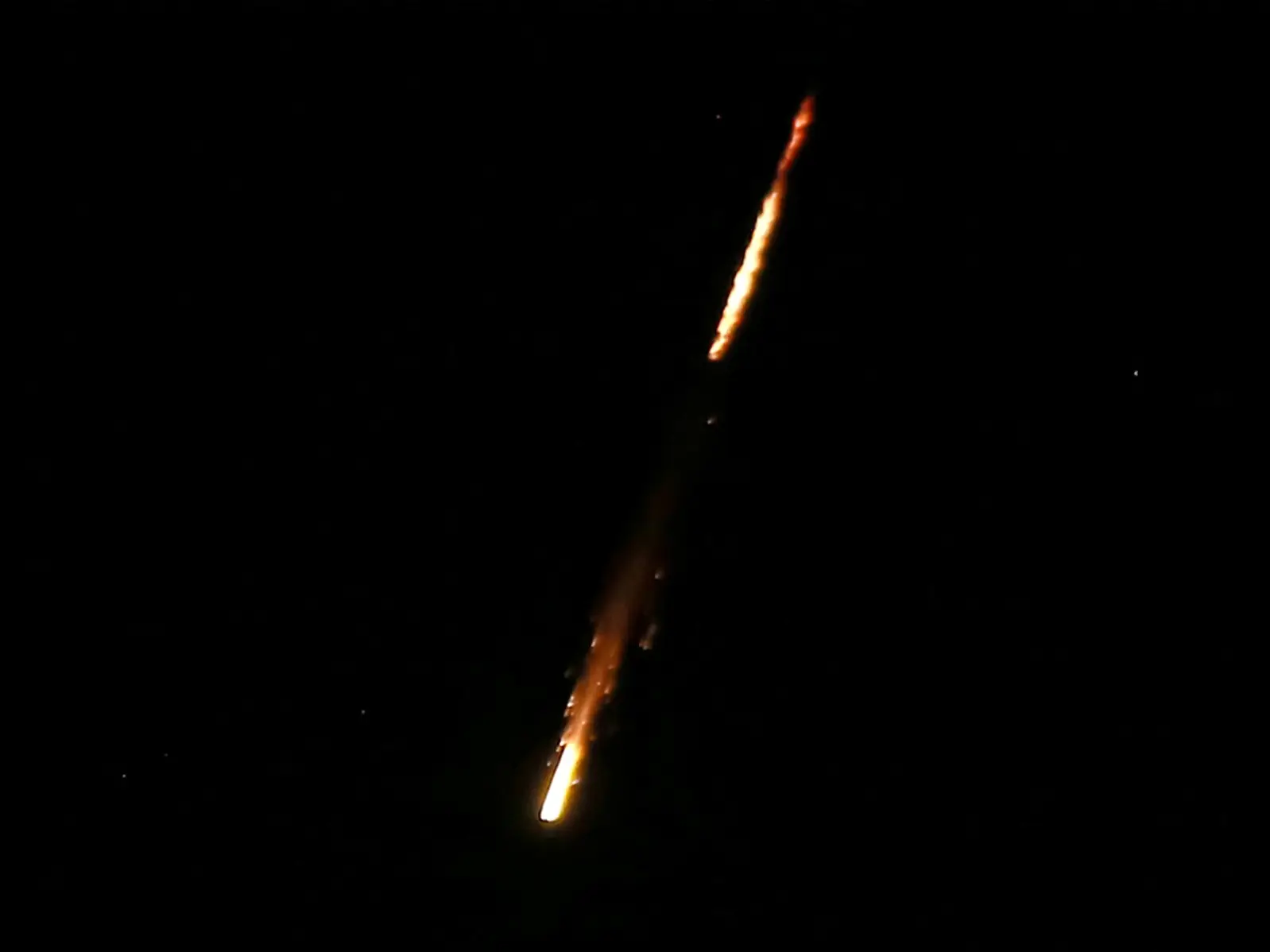
The US military fired as many as 70 or more high-end air-defense interceptors last week to counter an Iranian missile attack targeting US forces in Jordan, according to US and regional officials familiar with the matter. The scale of the response highlights Iran’s growing ability to challenge American air defenses and force the US military to expend costly interceptors at a rapid pace.
US forces launched between 60 and 70 Patriot interceptors against an Iranian barrage of roughly 20 ballistic missiles, officials said. The US also fired more than a dozen Thaad interceptors, according to one official. Another official said the expenditure was comparable to what the US had used over an entire week at other points during the war.
The exchange illustrates a fundamental challenge in missile defense: the attacker can often force the defender to spend multiple interceptors against a smaller number of incoming weapons. Iran appears to have adapted its tactics specifically to increase the pressure on US defenses. The latest attack was particularly difficult to counter because Iranian missiles were equipped with warheads capable of separating into multiple projectiles as they approached their targets, according to officials.

Despite the extensive defensive response, not every projectile was intercepted. No US troops were killed in the attack, but Iranian missiles reportedly struck fighter jets and other aircraft at Muwaffaq Salti Air Base in Jordan, one official said. Iranian missile attacks have become increasingly sophisticated throughout the war. US officials say Tehran has experimented with different missile types, flight paths, maneuvers and warhead configurations in an effort to overwhelm American and allied defenses.
In July, an Iranian missile attack on Jordan killed three US servicemembers. US officials have said Iran obtained high-resolution satellite imagery of the base from Chinese entities before that strike, according to officials familiar with the incident. US Central Command, which oversees American military operations in the Middle East, declined to comment. Jordanian officials also declined to comment. “Reports suggesting that the United States’ munitions are depleted are completely false,” Pentagon spokesman Sean Parnell said. “The U.S. military remains the strongest and most capable fighting force in the world.”
Trending Stories
)
Trump's name cannot return to Kennedy Center, US judge rules
)
IND vs AFG, 2nd T20I: Reddy, Samson shine as India defeat Afghanistan by 7 wickets to clinch series
)
West Bengal IPS officer Bushra Bano transferred after objections to ‘Assalamualaikum’, ‘Inshallah’
)
India’s imports from Russia jump 57% in five months; China remains top import source
)
Saudi turns to Israel for intelligence help as Houthi attacks intensify: Report
)
A big shift in modern air power & control
)
Elephants hide behind trees, stage surprise attack on poachers targeting rhinos in South Africa
)
Ex-CIA officer caught with gold bars worth $40 million seeks plea deal | Gravitas
)
Top military commanders from US, Israel, and 7 Arab nations held secret meeting on Iran War
&im=FitAndFill=(700,400))
Why European Meteor missiles use ramjet engines compared to standard US solid rockets
&im=FitAndFill=(700,400))
New OTT releases this week (September 14-20, 2026): Lust Stories 3, Waiting Hai, Irumudi- 5 new titles coming on Netflix, Prime Video and more
)
Spanish officer sent home from NATO base over affair with 'Russian spy' | Gravitas
)
Delhi schools receive bomb threats in Punjabi, security checks find nothing suspicious
)
Legendary costume designer Bob Mackie dies at 87: A look back at his iconic legacy
)
Imran Khan’s sons accuse Asim Munir of holding ‘personal grudge’ against imprisoned father
)
Trump downplays China's alleged 'help' to Iran in strike on Jordan base | Gravitas
)
‘US military task force aiding Saudi Arabia forces with intel, planning support’: Official
)
‘We are sharing some difficult news’: Oracle begins fresh round of job cuts
)
What is Hyrox, in news for athlete who soiled herself, but kept running and using common equipment?
)
Who is Kalyan Bainsla, accused in the Gurugram hit-and-run case involving woman biker?
)
Russia proposes to build 360 kmph Ivolga FG trains in India: What happened on sidelines of BRICS
)
1,200 Indian and US troops begin high-altitude and desert drills
)
China's property crisis deepens as investment plunges nearly 20%
)
800 million years old - Scientists discover 'fingerprints' of supercontinent Gondwana in ancient rocks
)
2026 El Niño will create new extreme weather patterns. Worse, no one can predict them
)
'She married her brother': Ilhan Omar faces criminal probe over immigration fraud claims
)
Amid AI safety fears, OpenAI, Anthropic and Google move to create standards body
)
'Now Trump is copying us': Shivakumar links US $5,000 plan to Congress guarantees
)
'Definitely feel bad for yourself': Kuldeep Yadav opens up on India Test snubs
)
Water equivalent to two Pacific Oceans could be stashed 2,900 km inside Earth
)
Bitter Zelensky snubs Trump for playing politics with Ukraine war | Gravitas
)
Extreme warming in Indian Ocean added 695 billion tons of ice to Antarctica ice sheet
)
Saudi Arabia discovers 110 million tonnes of Uranium-rich ore in Madinah region
)
US Treasury yields cross 5% as Scott Bessent warns of ‘global issues’ impacting bonds
President Trump said on Monday on social media that the US maintains large numbers of interceptors in its stockpiles and is increasing production. Lockheed Martin, the manufacturer of Patriot interceptors, produced a record 620 interceptors in 2025 and has set a target of producing approximately 2,000 annually. At the same time, a new report from the Defense Department’s inspector general said the war “has resulted in strategic inventory shortfalls and revealed industrial base bottlenecks for munitions resupply.”
The conflict has created a race between Iran’s ability to produce and launch ballistic missiles and the US military’s supply of interceptors capable of stopping them. Iran has reportedly recovered missiles from underground facilities that were targeted by US strikes earlier in the war. Tehran has also recently restarted missile production using parts held in stockpiles.
The latest Iranian attacks on Jordan followed an escalating cycle of military exchanges. Tehran has sought to counter increasing US economic pressure. After Iranian missiles came close to US warships in the region, the US military responded by destroying five Iranian oil tankers. Iran subsequently attacked US troops in Jordan, targeting a location it had repeatedly struck during the summer.

