
&imwidth=800&imheight=600&format=webp&quality=medium "Extreme warming in Indian Ocean added 695 billion tons of ice to Antarctica ice sheet")
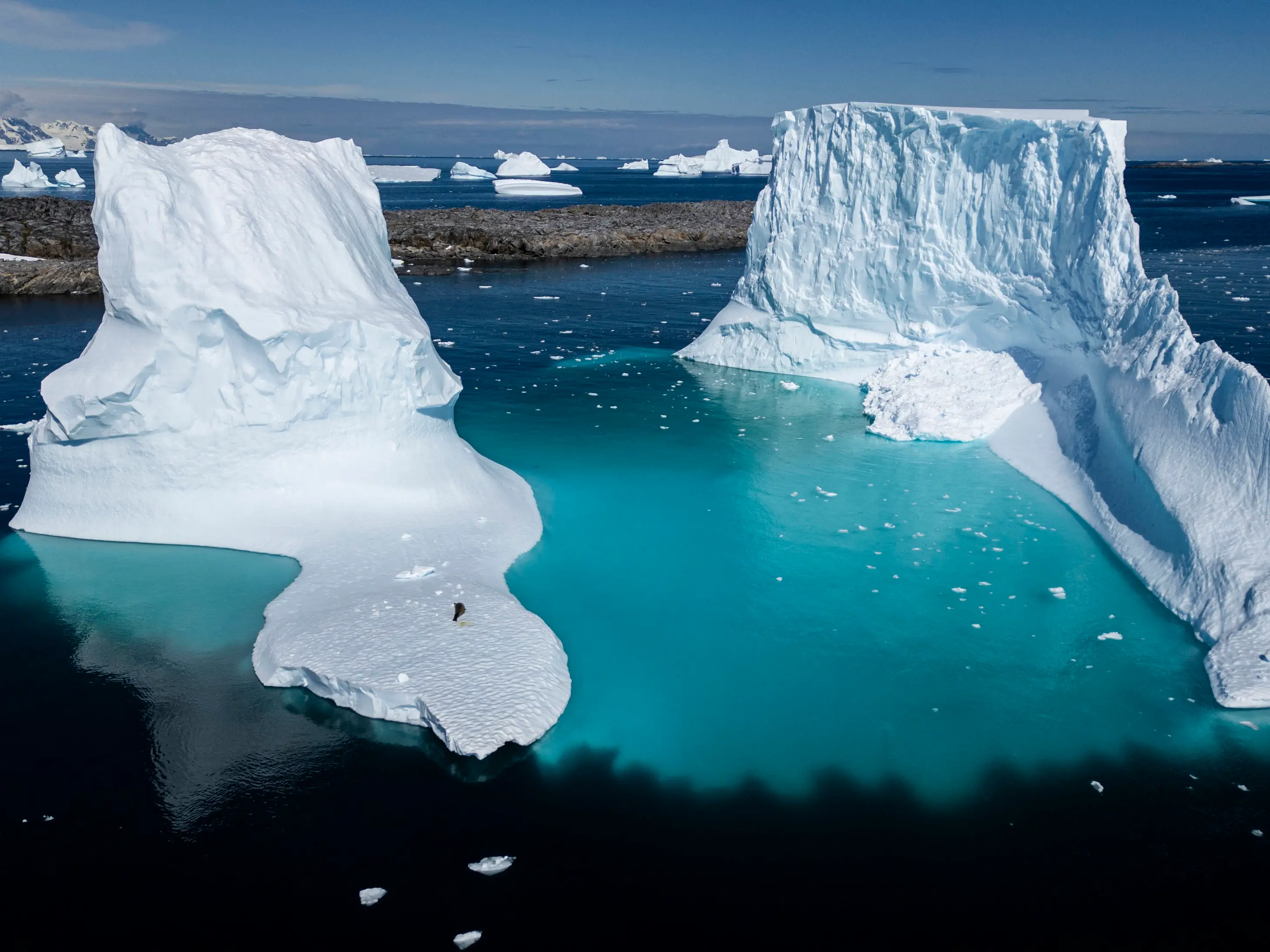
Between 2021 and 2023, East Antarctica gained 695 billion tons of ice because of extreme warming in the western Pacific and eastern Indian Ocean. A study published in Nature revealed that this temporary gain was recorded by the GRACE satellites. This happened because the heat in the tropical region altered atmospheric circulation, sending more moisture towards East Antarctica.
Over the past two decades, East Antarctica has been losing 140.5 billion tons of ice per year. The 695-billion-ton addition does nothing much to reverse it, and essentially only throws light on how a warming event thousands of kilometres away in a tropical region could affect snowfall and the ice sheet in Antarctica.
Researchers led by the Institute of Oceanology of the Chinese Academy of Sciences (IOCAS) investigated the cause of the ice gain. Observations from a gravity satellite, ice-core snow-accumulation records, water-vapour tracking, and atmospheric circulation simulations were put together to understand the strange occurrence.

Tropical heat drove increase in ice sheet in Antarctica
Their study found that the tropical warm pool at the juncture of the western Pacific and the eastern Indian Ocean was warmer than usual in those years. This triggered a Rossby wave train that moved towards the high southern latitudes, affecting the atmospheric circulation over East Antarctica. Eddy-mean flow feedbacks became stronger and more persistent, leading to a north–south dipole with low-pressure anomalies south of Australia and high-pressure anomalies along the East Antarctic coast.
Trending Stories
)
Did India risk its US trade deal despite softer stance at BRICS?
)
First naval drone battle? Ukraine says Sargan 3000 sank Russian unmanned boat
)
Practical Magic 2 breaks Spidey spell over North American box office
)
'Huge destructive power': North Korea calls its latest missile launches 'live-fire drill' even as US dismisses 'immediate threat'
&im=FitAndFill=(700,400))
Meet top 5 batters fastest to 3000 runs in T20Is
)
‘Let’s go’: Newly declassified videos show dramatic rescue of US Air Force officers downed in Iran
)
Delhi’s balancing act: BRICS serves as a stage for West Asia diplomacy
&im=FitAndFill=(700,400))
Why European Meteor missiles use ramjet engines compared to standard US solid rockets
)
'He is popular...': Malaysian PM Anwar Ibrahim's praise for PM Modi during bilateral meeting | WATCH
)
Iran, India agree to deepen humanitarian and political ties, President Pezeshkian says
)
‘Want to reset ties with India, have engagement based on mutual interests,’ says Bangladesh minister
)
Trump says Canada eager to reach a deal, it could come ‘fairly soon’ if Ottawa treats US farmers better
)
Turkish Airlines plane flies through a storm three times, triggering severe turbulence
)
‘Partners, not rivals’: Xi outlines four point plan for stronger India-China ties
&im=FitAndFill=(700,400))
Why Chinese PL-15 air-to-air missiles use dual-pulse motors compared to European interceptors
)
Russia proposes to build 360 kmph Ivolga FG trains in India: What happened on sidelines of BRICS
)
800 million years old - Scientists discover 'fingerprints' of supercontinent Gondwana in ancient rocks
)
China discovers vast gold and silver 'mine' in the Pacific with unheard-of deposits
)
Russian drone hits Warsaw-bound train near Polish border, Zelensky accuses Moscow of ‘deliberate’ targeting
)
War is making Russia stronger? How Ukraine is shaping Moscow’s next generation of weapons
)
NEET-UG to move to computer-based test soon, NTA DG says ‘CBT is the future’
)
Woman removes all her clothes on American Airlines flight, performs 'indecent acts'; arrested
)
Liam Neeson sparks romance rumours after holding hands with Stella Stocker at TIFF 2026
&im=FitAndFill=(700,400))
New OTT releases this week (September 14-20, 2026): Lust Stories 3, Waiting Hai, Irumudi- 5 new titles coming on Netflix, Prime Video and more
)
Indian importers urge Bangladesh to lift export ban on 'Hilsa' fish ahead of Durga Puja
)
Did China give Iran intel before US base strike that killed 3 troops? Trump says, 'You’re right...'
)
Baba Vanga's first prophecy for 2027 is out, and straight out of science fiction
)
Akram, Afridi, Mushtaq tear into PCB after Pakistan’s Test series collapse in UK
&im=FitAndFill=(700,400))
From Rinku Singh to Mayank Yadav, 5 players dropped from India’s squad for Afghanistan T20Is
)
PM Modi and China's Xi offered to help resolve Russia-Ukraine war: Kremlin
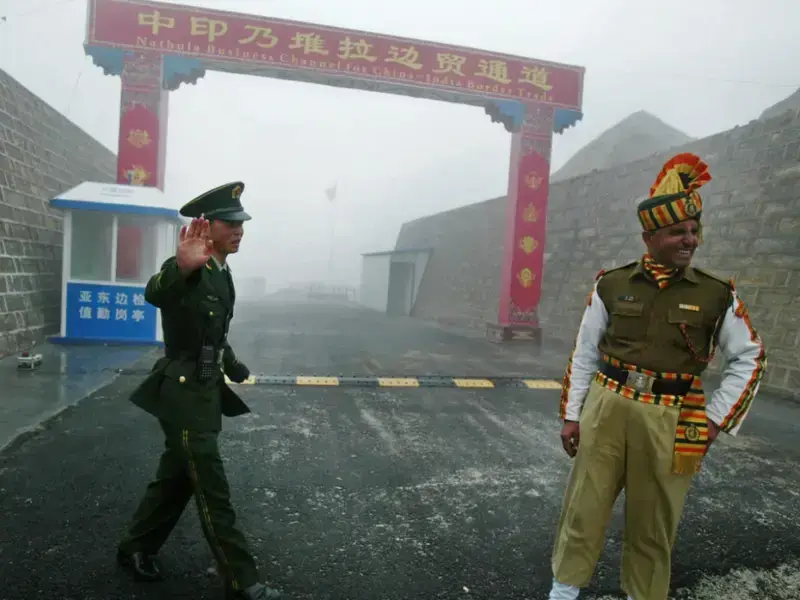)
China thinned Himalayan troop presence in 2025, India defence report says; terms border situation 'stable'
)
Humans may lose control of AI: Anthropic CEO calls for slowdown, Altman, Musk back him
The circulation from this change caused moisture from the midlatitude Indian Ocean to flow towards Antarctica, causing more number of atmospheric rivers to reach the frozen continent. The moist air led to heavy snowfall across the Queen Mary Land–Wilkes Land region, adding mass to the ice sheet. Experiments linked to atmospheric circulation showed that the circulation and the snow were a direct result of the tropical warm pool.
"We found a previously underrecognized ‘tropical warm pool–East Antarctic Ice Sheet’ teleconnection pathway," said Yunhe Wang, first author of the study. "Our research provides a theoretical basis for understanding Antarctic ice-sheet mass changes and conducting future research on the East Antarctic climate."
The study identified the north–south dipole circulation over East Antarctica as the common link between tropical warming and the increase in the mass of the ice sheet in Antarctica.

