Did US use ‘bunker buster’ bombs to strike Iran’s Natanz nuclear facility? What we know

&imwidth=600&imheight=450&format=webp&quality=medium "Did US use ‘bunker buster’ bombs to strike Iran’s Natanz nuclear facility? What we know")
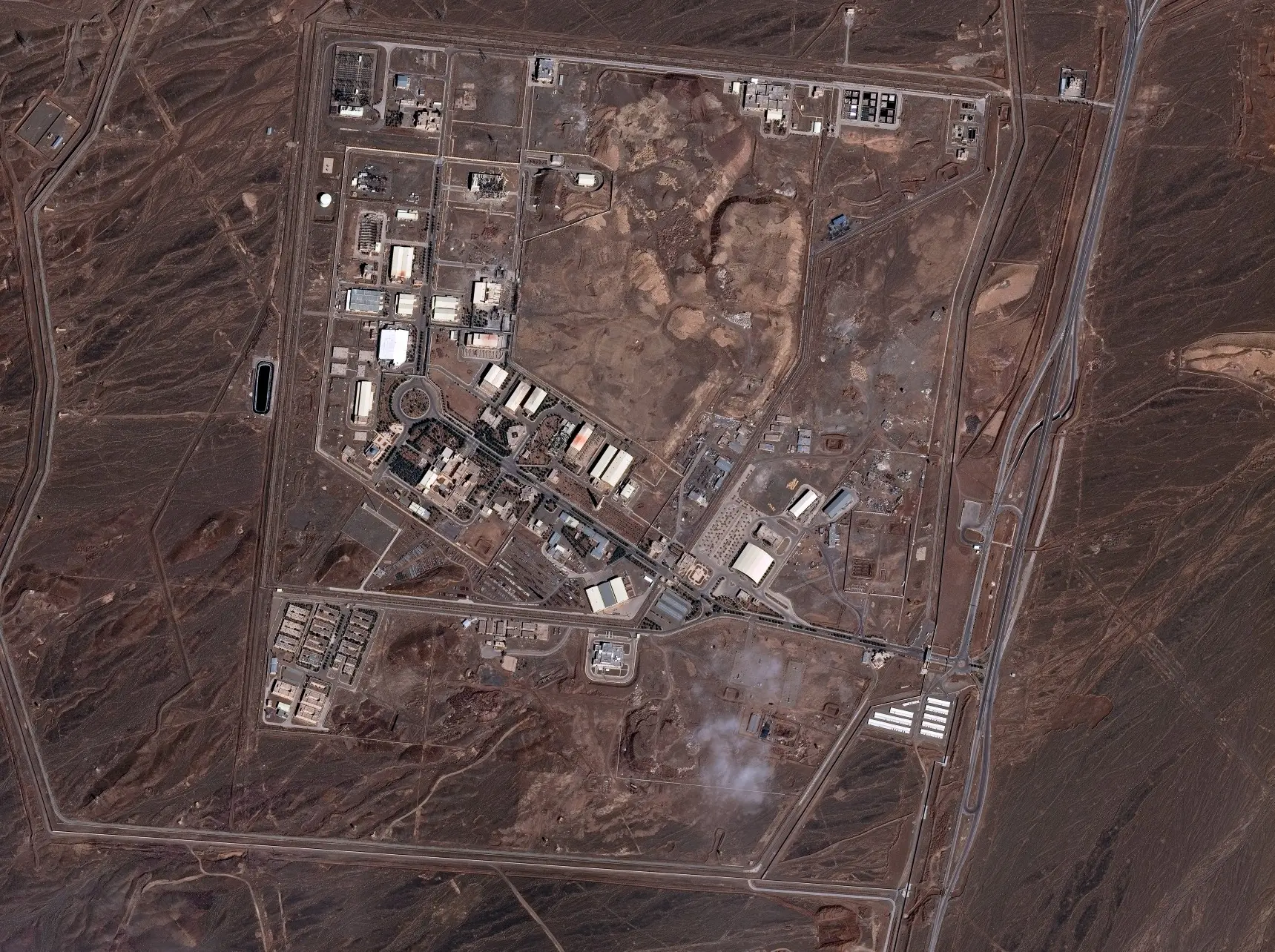
This handout satellite image courtesy of Vantor taken and released on March 2, 2026 shows an overview of the Natanz nuclear complex facility with damage observed on several buildings near Natanz, Isfahan province, Iran. Photograph: (AFP)
The US reportedly carried out an airstrike on Iran’s Natanz nuclear facility using bunker-buster bombs, targeting its enrichment complex as the West Asia conflict entered its fourth week.
The United States reportedly used ‘bunker buster’ bombs to strike Iran’s Natanz nuclear facility in an airstrike on Saturday (Mar 21). This comes after Iran’s main enrichment site was hit as the war in West Asia enters its fourth week. According to a statement carried by Iranian media, the facility’s enrichment complex was targeted in a morning attack.
According to Israel’s Kan public broadcaster report, citing unspecified sources, the attack was carried out by the US and ‘buster bunker’ bombs were used to target the site.
Iran retaliates
In retaliation, Iran launched strikes near Israel’s Dimona, which houses a nuclear facility. Iranian state TV reported that the attack was a “response” to an earlier strike on its own nuclear site.
During the June 2025 conflict, which lasted 12 days, the US dropped more than a dozen GBU-57 Massive Ordnance Penetrator munitions on the Fordo and Natanz underground nuclear facilities. The bombs are known to be the world’s most powerful bunker busters and can strike targets up to 80 metres deep. They are designed to be dropped from B-2 stealth bombers, which the US has already used in the recent operation against Iran.
Trump gives ultimatum to Iran
Trending Stories
)
)
)
)
)
)
)
)
)
)
)
)
)
)
)
)
)
)
)
)
)
)
)
)
&im=FitAndFill=(700,400))
)
)
)
)
)
)
&im=FitAndFill=(700,400))
)
)
)
)
)
)
)
As the hostilities in West Asia continue, US President Donald Trump on Saturday (Mar 21) issued a stark warning to Iran, giving Tehran a 48-hour deadline to fully reopen the strategically important Strait of Hormuz. Trump also threatened to “obliterate” the country’s power plants if his demands are not met by Iran.
In a post on his Truth Social platform, Trump wrote, “If Iran doesn’t FULLY OPEN, WITHOUT THREAT, the Strait of Hormuz, within 48 HOURS from this exact point in time, the United States of America will hit and obliterate their various POWER PLANTS, STARTING WITH THE BIGGEST ONE FIRST.”
In response, Iran's military on Sunday (Mar 22) renewed threats against the region’s infrastructure, warning to strike energy, information technology and desalination sites.
“Following previous warnings, if Iran’s fuel and energy infrastructure is violated by the enemy, all energy, information technology and desalination infrastructure belonging to the US and the regime in the region will be targeted,” the Iranian military’s operational command Khatam Al-Anbiya said in a statement carried by Fars news agency.
Iran war enters Day 23
The conflict in West Asia has entered its 23rd day on March 22. Hostilities began on February 28 when the US and Israeli military launched strikes on Iran, killing Iran’s supreme leader Ali Khamenei and several other top Iranian officials. The operation was named ‘Epic Fury’ by the US and ‘Lion’s Roar’ by Israel. The attacks came amid heightened tensions between Washington and Tehran and ongoing talks over Iran’s nuclear program. In retaliation, Iran launched attacks on Israel and US military bases in the region, including in Bahrain, Kuwait, the UAE, Iraq, Qatar, Saudi Arabia, Jordan, and Azerbaijan.
Disclaimer: WION takes utmost care to accurately and responsibly report ongoing conflicts in West Asia involving Israel, Iran, the US, Gulf nations and non-state actors like Hezbollah, Hamas, Houthis, Islamic State, and others. Claims and counterclaims, disinformation and misinformation are being made online and offline. Given this context, WION cannot independently verify the authenticity of all statements, social media posts, photos and videos.

