

&imwidth=800&imheight=600&format=webp&quality=medium "Death by Podcast: Charlie Kirk murder is also about how a new medium went from soothing pastime to weaponised words")
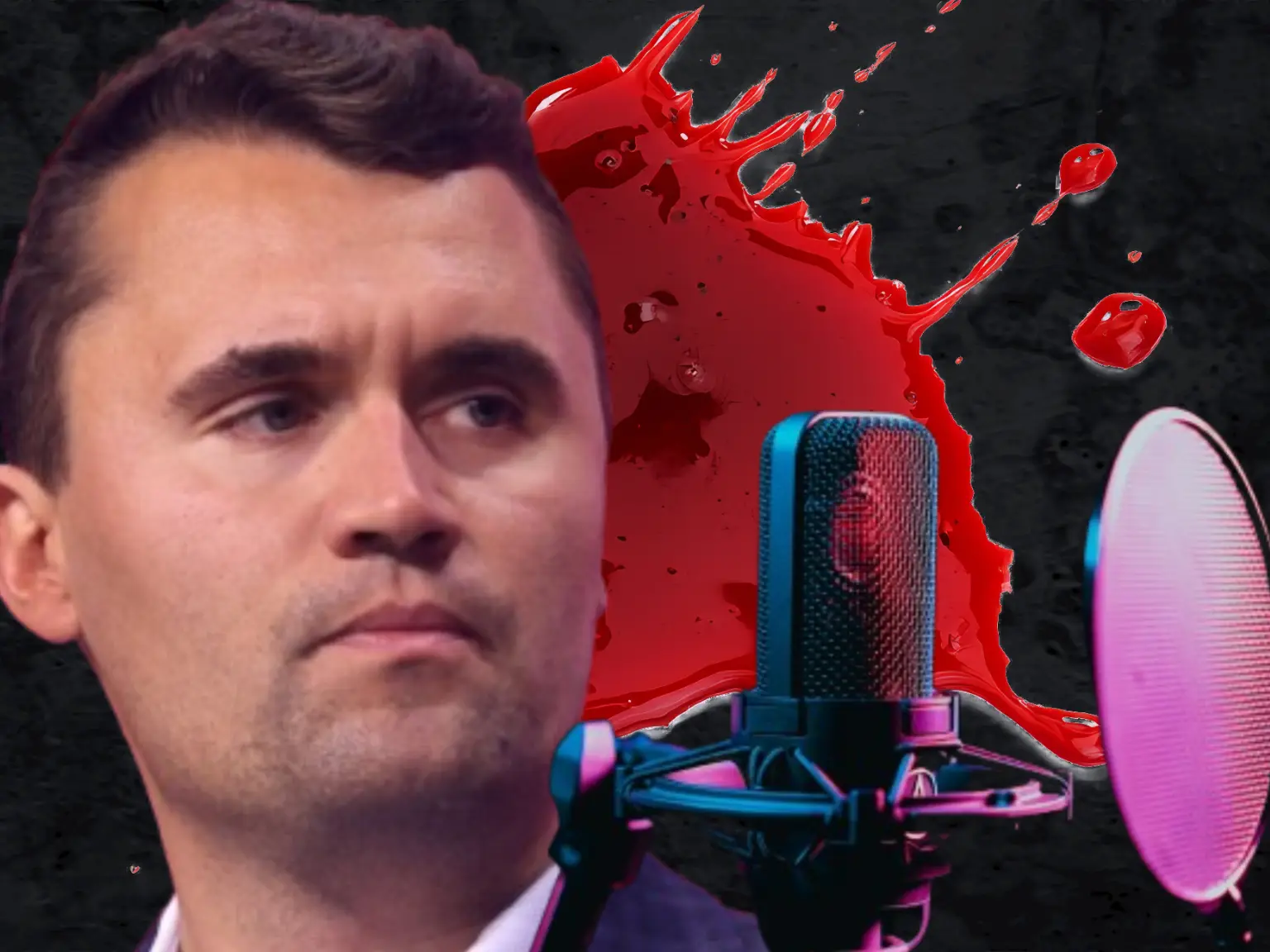
Podcasting, once a niche medium for storytelling, education, and light-hearted banter, has evolved into a potent vehicle for ideological warfare—sometimes with deadly consequences. What began in the early 2000s as an accessible, soothing pastime has, by 2025, become a channel for weaponised words, amplifying conspiracy theories, radicalising audiences trapped in echo chambers, and deepening political divides. Charlie Kirk, both a martyr for the US right-wing and a hate figure for the extreme left, was an active podcaster before he was murdered this month.
Words can kill: The far-right vs far-left podcast ecosystem
While several longstanding hosts like Joe Rogan and Glenn Beck found refuge in podcasting—often because they were shunned or limited by mainstream media—podcasts have become algorithm-driven battlegrounds. Hosts like Charlie Kirk and the Chapo Trap House crew stand on opposite ends of the ideological spectrum, reaching vast audiences. Beyond mere commentary, these podcasts serve as recruitment tools, propaganda mills, and community-building hubs. Their evolution mirrors broader digital media trends: voices colliding with unregulated extremism, fuelled by monetisation and social media virality.
The origin of innocence: Evolution of podcasting
Podcasting’s boom began around 2004, rooted in RSS feeds and MP3 downloads. Early shows focused on entertainment, learning, or storytelling—especially true crime (Serial), science (Radiolab), or comedy. Podcasts were perfect for passive listening during commutes or chores, resembling public radio without ads. As digital tech advanced and big tech platforms like Apple Podcasts, Spotify, and Google Podcasts emerged, anyone with a microphone could create content, bypassing traditional gatekeepers.
Trending Stories
&imwidth=180&imheight=135&format=webp&quality=medium)
Russia to send first tanker carrying 40,000 tonnes diesel to US after Trump-Putin deal – What we know
&imwidth=180&imheight=135&format=webp&quality=medium)
US business activity grows in June, but tariffs and inflation cloud outlook
&imwidth=180&imheight=135&format=webp&quality=medium)
Zohran Mamdani's Garba dance goes viral as he joins Indian community's Navratri celebrations | WATCH
&imwidth=180&imheight=135&format=webp&quality=medium)
Feds obtain DNA evidence that could prove Ilhan Omar married her brother: Report
&imwidth=180&imheight=135&format=webp&quality=medium)
US midterms 2026: What polls and prediction markets indicate about Congress
&imwidth=180&imheight=135&format=webp&quality=medium)
James Bond auction: Own Daniel Craig's Skyfall suit, Ana de Armas' dress and 300+ rare 007 collectibles
&imwidth=180&imheight=135&format=webp&quality=medium)
WATCH | Mysterious haze grips Ohio city as toxic chemical leak forces mass evacuation – What is happening?
&imwidth=180&imheight=135&format=webp&quality=medium)
Explosions heard in Iran’s Hormozgan province near Strait of Hormuz: State media
&imwidth=180&imheight=135&format=webp&quality=medium)
US midterms 2026: Trump's approval rating hits record low as Democrats gain ground
&imwidth=180&imheight=135&format=webp&quality=medium)
US midterms: Democrats sue Trump administration over alleged 'threats and intimidation' ahead of election, Musk issues warning to Dems
&imwidth=180&imheight=135&format=webp&quality=medium)
France protests: 'Block everything' movement escalates as public fury over austerity grows; over 200 arrested. Here's all you to need to know
&imwidth=180&imheight=135&format=webp&quality=medium)
‘Her heart and mind in good shape’: What Helen Haines’ husband said after MP loses both legs in ‘targeted’ attack
&imwidth=180&imheight=135&format=webp&quality=medium)
‘I caution the president...’: Trump’s ex-press secretary warns after Zacharia’s exit
&imwidth=180&imheight=135&format=webp&quality=medium)
Priyanka Chopra celebrates Dussehra 2026 with Nick Jonas and daughter Malti Marie | See pics
&im=FitAndFill=(700,400)&imwidth=180&imheight=135&format=webp&quality=medium)
New OTT releases this week (October 19-25, 2026): Gajab Raat to Chaar Yaar-8 titles to watch during Dussehra week on Netflix, Prime Video and more
&imwidth=180&imheight=135&format=webp&quality=medium)
US orders embassy staff, families to leave Saudi Arabia amid Houthi attacks: Report
&imwidth=180&imheight=135&format=webp&quality=medium)
IND vs NZ T20Is: Will Sooryavanshi play? Skipper Shreyas Iyer clears the air on Samson vs Vaibhav debate
&imwidth=180&imheight=135&format=webp&quality=medium)
Finance influencer dies by suicide in Chennai; father accuses tech CEO, who denies charge
&imwidth=180&imheight=135&format=webp&quality=medium)
Hunger makes alcohol more appealing, study finds
&imwidth=180&imheight=135&format=webp&quality=medium)
'I’m not saying it’s extraterrestrial' - 'Mutant' creature forces Mexicans to flee their homes
&imwidth=180&imheight=135&format=webp&quality=medium)
Kolkata airport: CISF detects ₹1.13 crore in US dollars hidden in bags of 2 Bangkok-bound passengers
&imwidth=180&imheight=135&format=webp&quality=medium)
Trump waves at 'empty space' in viral video,' critics claim 'mental decline getting worse' | WATCH
&imwidth=180&imheight=135&format=webp&quality=medium)
Shock, anger and despair in Bangladesh over the executions
&imwidth=180&imheight=135&format=webp&quality=medium)
Rafale Marine fighter begins flight trials in Goa ahead of Indian Navy induction
&imwidth=180&imheight=135&format=webp&quality=medium)
Ramayana promotion takes a funny turn after Ranbir Kapoor's verbal blunder, leaves fans in splits | Watch
&imwidth=180&imheight=135&format=webp&quality=medium)
West Bengal govt forms SIT to probe Kolkata Durga Puja stampede that killed 19
&imwidth=180&imheight=135&format=webp&quality=medium)
US Midterms 2026: Sugar Land, Plano, Irving: How Texas’s Indian-American belt could shape poll outcomes
&imwidth=180&imheight=135&format=webp&quality=medium)
Kim Jong Un death rumors explode | China accused of secretly sending troops to Pyongyang
&imwidth=180&imheight=135&format=webp&quality=medium)
US Midterms 2026 and money: From Bloomberg to Musk, corporate donors, super PACs and lobbies, it's all about the cash
&imwidth=180&imheight=135&format=webp&quality=medium)
Turkey, Qatar, Pakistan and Indonesia sign 'Badr' defence cooperation pact in Doha
&imwidth=180&imheight=135&format=webp&quality=medium)
Israel election 2026: Three possible scenarios after October 27 polls
&imwidth=180&imheight=135&format=webp&quality=medium)
Trump says end to Ukraine war is 'closer than ever'; Witkoff's Putin remarks spark criticism
&im=FitAndFill=(700,400)&imwidth=180&imheight=135&format=webp&quality=medium)
What is the real meaning behind Pete Hegseth's tattoos?
The transformation of pocasts into a cultural war zone began in the 2010s, especially after Donald Trump’s 2016 election victory. Ideology-driven and divisive rhetoric became central to many shows.
How Kirk went from campus provocateur to icon
The Charlie Kirk Show helped mobilise MAGA youth, inspiring over 37,000 chapters of Kirk’s NGO Turning Point USA. After his death, the show’s influence surged.
Kirk’s early podcasts focused on campus debates and “free speech” battles but gradually hardened in tone. His content began blending Christian nationalism, Trumpist narratives, and youth outreach.
How podcasts became the far-right’s arsenal to weaponise words
Algorithmic bias and underserved market demand led to dominance of rightwing podcasts online. Left-wing podcasts, while praised for originality, often lack comparable real-world influence.
Far-right podcasts aggressively weaponised the medium, creating a networked system of radicalisation. The Charlie Kirk Show exemplifies this: a slickly produced mix of anti-woke rants, conspiratorial framing, and culture war commentary turned Kirk into a Gen Z conservative icon. His assassination in September only intensified the show’s influence, propelling it to number 1 on Apple Podcasts and immortalising Kirk as a martyr among conservatives.
The refrain of conservative and far-right podcasts is consistent: frame progressives as existential threats, delegitimise mainstream media, and encourage both online and on-street activism. Phrases like “fight back” or “defend your country” are common, paired with disdain for “globalists,” “woke elites,” or “leftist propaganda,” creating a coordinated content ecosystem preaching mostly to the converted.
Shows like The Daily Shoah and Fash the Nation are known for promoting white nationalist ideologies, often masked as humour or coded language.
Their rhetoric imagines violent futures for the US and normalises real-life confrontation.
Hosts frequently cross-promote on apps like Telegram, swap guest spots, and build digital communities primed for activism.
Even deplatforming by YouTube or Facebook does not stop them; RSS feeds, Rumble, and peer-to-peer hosting keep content alive.
The Daily Shoah, hosted by Mike Enoch and others, uses white nationalist comedy. Fash the Nation popularised the “Great Replacement” theory, which posits that white populations are being systematically replaced through immigration and demographic change, a racist conspiracy. Killstream uses shock-jock tactics and live-stream debates to promote street-level confrontations.
These podcasts have strong reach among disillusioned youth and are amplified by social media and recommendation algorithms.
They create “rabbit holes” where ironic or casual listening can shift into genuine belief and recruitment for far-right causes.
Their popularity became evident when right-wing shows outnumbered and topped listenership on platforms like Spotify and Apple, catering to an underserved anti-woke demographic.
The far-left is far behind in the podcast war
The far-left uses intellectualism, satire, and irony to reach audiences. Chapo Trap House pioneered the “dirtbag left” style—a mix of socialist critique, comedic takedowns of liberal centrists, and profanity-laden disdain for both Democratic and Republican parties.
The show was a Patreon success, once earning over $160,000 per month, funding live tours and shaping millennial socialist discourse.
Other shows include The Antifada, which combines Marxist theory with event commentary, and Revolutionary Left Radio, which offers dense philosophical monologues critiquing capitalism and imperialism through radical, often academic frameworks.
But when compared to right-wing podcasts, these leftist shows lack mainstream platform support and have a more limited reach.
They, however, influence activist networks and political consciousness among younger listeners.
Podcasts are trusted—and that’s where the danger lies
A 2023 Pew Research Center study showed that over 30 per cent of listeners trust podcasts more than traditional news. This trust makes podcasts fertile ground for alternate reality construction, ideological grooming, and weaponising words that can have violent outcomes.
Far-right podcasts normalise political violence, white racial grievance, and conspiratorial thinking. Their hosts have been linked to real-world incidents—from the Unite the Right rally in Charlottesville in August 2017 to the January 6, 2021 US Capitol riot.
Their messaging often frames violence as defensive and necessary.
Parasocial bonds: When host becomes indoctrinator
Both far-right and far-left podcasts exploit parasocial bonds—the illusion of friendship between host and listener—to create loyalty and identity.
The line between opinion and indoctrination dissolves, when your “friend” tells you who to fear, mock, or ignore.
Podcasts spew venom: Is censorship required?
Podcasting began as an open, humanising format for casual listening but has become a digital battlefield at the hands of some hosts and listeners. Each episode can be a weapon; each listener a potential recruit.
Currently, podcasts operate largely in a legal vacuum, with no formal censorship beyond some deplatforming of controversial hosts.
It is time to balance free speech with responsibility—curbing algorithmic extremism without blanket bans.
Listeners need better media literacy—to understand framing, bias, and rhetorical manipulation.
Creators must acknowledge their influence and avoid exploiting parasocial relationships.
The genie is out of the bottle. Podcasts are no longer mere audio backdrops to our days; they are frontlines in a culture war.

