

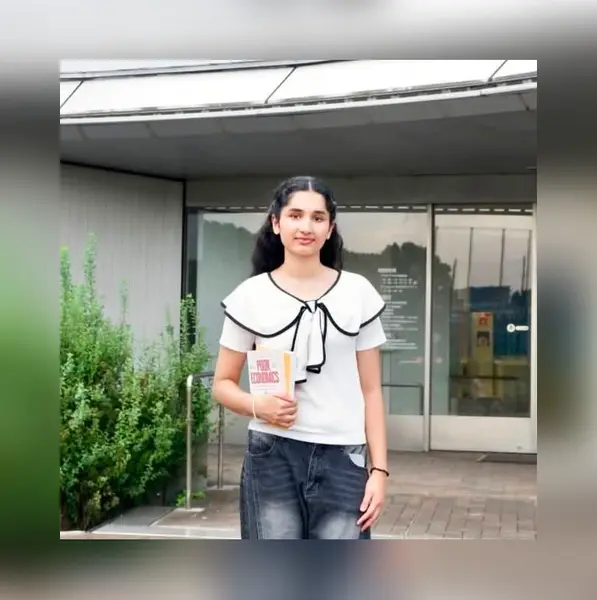
Born in Japan and raised in Nepal during her early childhood, Aditi Paudel developed a love for reading from a remarkably young age. Her earliest memory of reading dates back to preschool, when her grandfather handed her a newspaper filled with intricate Devanagari script. To the surprise of those around her, Paudel was able to make sense of the text. Years later, her passion for reading has grown into a commitment to promoting literacy. The 17-year-old high school senior in Tokyo has now been appointed Japan’s first literacy ambassador, according to a report by The Japan Times.
Paudel’s appointment is part of a global program run by the World Literacy Foundation, a nonprofit headquartered in Australia. Around 900 young people aged 16 to 25 from 101 countries are taking part in the initiative. Although the program has been running for 12 years, Paudel is the first ambassador representing Japan, according to Andrew Kay, CEO and founder of the World Literacy Foundation.
The initiative aims to connect young people worldwide and encourage them to become advocates for literacy in their own communities. Kay said participants are being encouraged to get “involved and waving the flag for literacy in their community,” while Paudel was selected “for her leadership, passion for literacy, and commitment to empowering young people in Japan.” Kay also highlighted Paudel’s interest in language and its role in shaping her advocacy. “Her curiosity about English shaped thoughtful advocacy, strengthening the program’s global voice and cultural reach,” he added.
From Nepal to Japan: A lifelong love of books
Paudel returned to Japan when she entered third grade. Adjusting to a new environment also meant relearning Japanese, and books became an important part of that process. Her love for reading had already been nurtured by her father, who regularly bought her books. She developed an early interest in fantasy literature and remembers falling in love with Enid Blyton’s The Wishing-Chair.
Her reading journey eventually expanded beyond fiction. Reading Malala Yousafzai’s autobiography, I Am Malala, sparked a strong interest in female empowerment and the importance of ensuring that women around the world have access to education and literacy. Paudel also works with children with disabilities and plans to collaborate with the Shanti Volunteer Association to collect and donate books to Asian countries with lower literacy rates, including Nepal.
Trending Stories
&imwidth=180&imheight=135&format=webp&quality=medium)
Over 100 US lawmakers urge FBI to probe foiled Hindu temple shooting as hate crime
&im=FitAndFill=(700,400)&imwidth=180&imheight=135&format=webp&quality=medium)
New OTT releases this week (October 19-25, 2026): Gajab Raat to Chaar Yaar-8 titles to watch during Dussehra week on Netflix, Prime Video and more
&imwidth=180&imheight=135&format=webp&quality=medium)
'Tap dancing through a minefield': Musk backs SpaceX-Tesla merger as AI boom fuels rocket firm's first profit
&imwidth=180&imheight=135&format=webp&quality=medium)
'They are not even telling us' - Mysterious metallic object discovered in Minnesota field
&imwidth=180&imheight=135&format=webp&quality=medium)
French military plane crashes in northeast France, one dead
&imwidth=180&imheight=135&format=webp&quality=medium)
Feds obtain DNA evidence that could prove Ilhan Omar married her brother: Report
&imwidth=180&imheight=135&format=webp&quality=medium)
The Verdict | Trump, Putin and Xi: A superpower triangle that could reshape global diplomacy
&imwidth=180&imheight=135&format=webp&quality=medium)
'UN experts is an oxymoron': Rubio mocks UN over India protests criticism, refuses to comment on India's internal matter
&imwidth=180&imheight=135&format=webp&quality=medium)
India moves to buy 10,000 more AI chips for a national compute pool open to startups
&im=FitAndFill=(700,400)&imwidth=180&imheight=135&format=webp&quality=medium)
Priyanka Chopra to Shilpa Shetty: 6 Bollywood actresses and their fitness secrets
&imwidth=180&imheight=135&format=webp&quality=medium)
‘Even legends can fall ill’: Badshah, Anupam Kher and other stars defend Daler Mehndi after Uttarakhand stage controversy
&imwidth=180&imheight=135&format=webp&quality=medium)
Boeing 737 MAX10 gets FAA certification, deliveries expected to begin in 2027
&imwidth=180&imheight=135&format=webp&quality=medium)
Ukrainian drone airlifts wounded soldier in what is likely a world first
&imwidth=180&imheight=135&format=webp&quality=medium)
Ukrainian soldier rescued by a drone chopped off own leg while hiding for 491 days
&imwidth=180&imheight=135&format=webp&quality=medium)
Trump says Ilhan Omar 'could go to jail' amid federal probe, calls Somalia a 's***house'
&imwidth=180&imheight=135&format=webp&quality=medium)
Trump considers removing White House press corps to restore historic indoor swimming pool
&imwidth=180&imheight=135&format=webp&quality=medium)
What the Mecca Joint Defence Agreement says about withdrawal and military support. Read full text of the pact here
&imwidth=180&imheight=135&format=webp&quality=medium)
India to develop first indigenous aviation gun for Prachand, Rudra attack helicopters, SSS Defence CEO confirms
&imwidth=180&imheight=135&format=webp&quality=medium)
India vs New Zealand T20I Series 2026: Complete schedule, match timings, squads and live streaming details
&imwidth=180&imheight=135&format=webp&quality=medium)
Man marries off wife of 17 years to her lover in Uttar Pradesh
&imwidth=180&imheight=135&format=webp&quality=medium)
Punjab CM Bhagwant Mann allegedly detained for three hours at Delhi airport, fined ₹50,000: AAP
&imwidth=180&imheight=135&format=webp&quality=medium)
Shastri backs Shami comeback; lauds Bhuvi and warns Bumrah on format workload ahead of World Cup
&imwidth=180&imheight=135&format=webp&quality=medium)
US-Iran war | Tehran: Must end port blockade, oil sanctions and regional attacks
&imwidth=180&imheight=135&format=webp&quality=medium)
Musk ordered Starlink restrictions that caught Ukraine off guard amid escalating tensions: Report
&imwidth=180&imheight=135&format=webp&quality=medium)
Dandiya Nite ’26: Indian High Commissioner hails diaspora as bridge between India and Nigeria
&imwidth=180&imheight=135&format=webp&quality=medium)
India-US ties: Marco Rubio seeks India's oil & energy co-operation Ad Ad options Learn more
&imwidth=180&imheight=135&format=webp&quality=medium)
Iran rejects US talks until demands are met, rules out moving enriched uranium out of the country
&imwidth=180&imheight=135&format=webp&quality=medium)
'You are not Gen Z': Delhi HC pulls up CJP's Das, Ranka over bail bond breach after Jantar Mantar trespass
&imwidth=180&imheight=135&format=webp&quality=medium)
Trump waves at 'empty space' in viral video,' critics claim 'mental decline getting worse' | WATCH
&imwidth=180&imheight=135&format=webp&quality=medium)
Zohran Mamdani's Garba dance goes viral as he joins Indian community's Navratri celebrations | WATCH
&imwidth=180&imheight=135&format=webp&quality=medium)
IND vs NZ T20Is: Will Sooryavanshi play? Skipper Shreyas Iyer clears the air on Samson vs Vaibhav debate
&imwidth=180&imheight=135&format=webp&quality=medium)
US midterms 2026: With Republicans spending big, Bloomberg opens his wallet for Democrats. Here's how much he is pouring
&imwidth=180&imheight=135&format=webp&quality=medium)
US midterms 2026: Red seats once deemed safe now appear shaky as Republicans spend big on ads
&imwidth=180&imheight=135&format=webp&quality=medium)
SBI confirms data breach: 3,897 records flagged on dark web. Is your money safe?
&imwidth=180&imheight=135&format=webp&quality=medium)
Pujara says 'Samson and Vaibhav cannot be in Playing XI' for India on NZ tour
&imwidth=180&imheight=135&format=webp&quality=medium)
Delhi HC agrees to hear Neha Bora's plea against 'maintain peace' directive on 'urgent basis'
&imwidth=180&imheight=135&format=webp&quality=medium)
Ramayana advance booking: Ranbir Kapoor, Yash's film cross $500K ahead of Diwali release
&imwidth=180&imheight=135&format=webp&quality=medium)
Cattle-feed bran in biscuits, detergent in milk: FSSAI acts against 3 companies
&imwidth=180&imheight=135&format=webp&quality=medium)
'What's wrong with you? Are you a sick person?': Trump at it again as he snaps at reporters, faces backlash
Literacy as a gateway to opportunity
Having experienced the benefits of strong reading skills and access to education herself, Paudel believes literacy extends far beyond simply being able to read and write. She describes literacy as “something that helps you open doors for more opportunities,” highlighting its role in helping people realize their potential.
Her perspective is also shaped by her family background. Paudel has experienced firsthand how access to private education influenced the course of her life. “My parents grew up in a completely opposite environment. They did not have a childhood like this,” she said. “Being literate is so important because even though you have the potential, you can never unlock it if you do not have literacy.”
Young people are reading less
Paudel’s advocacy comes at a time when reading habits among young people in Japan are changing. According to a recent study by the Benesse Educational Research & Development Institute and the University of Tokyo, around half of elementary, junior high and high school-age children in Japan do not read books. Andrew Kay said fewer young people are now reading for pleasure and enjoyment, a trend he believes could have serious long-term consequences.
“As far as embedding themselves in a novel or reading something that really takes a little bit more effort, that is becoming a rarer thing,” he said. Kay also raised concerns about the influence of artificial intelligence. With AI tools capable of providing quick answers, people may increasingly bypass the process of researching information, reading deeply and developing their own understanding of complex ideas. “It’s turning our clock back 150 years … where most people couldn’t read or would have limited ability to read,” he said of the decline of book reading as a mainstream pursuit. These challenges, he believes, make initiatives such as the World Literacy Foundation’s ambassador program even more important.
Paudel’s Advice: Find a book that connects with you
As a teenager herself, Paudel understands the distractions that compete for young people’s attention, particularly social media and smartphones. “You will always be more inclined to go for your phone rather than a book,” she said. Rather than encouraging young people to work their way through a predetermined list of classic literature, Paudel believes the best way to develop a reading habit is to start with something personally meaningful.
Her advice is simple: find a book or subject that connects with you. Reading, she believes, should not only be enjoyable but should also challenge readers to see the world from broader perspectives. For Paudel, literacy is ultimately about much more than words on a page. It is a tool for unlocking potential, creating opportunities and empowering people to shape their own futures.

