

&imwidth=800&imheight=600&format=webp&quality=medium "Beginning of the end? More glacial lake outbursts threaten millions in India, Nepal and China")
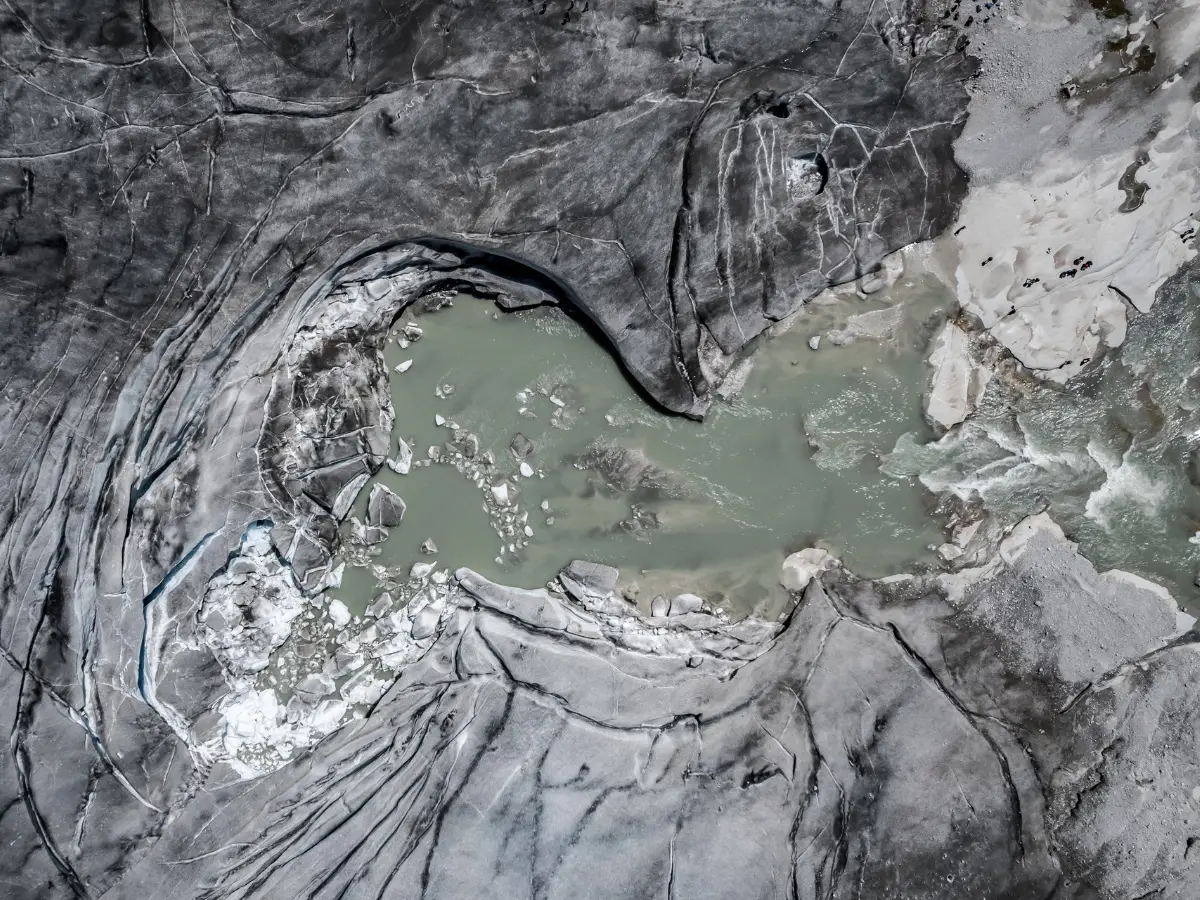
The Himalayas are at risk of several more glacial lake outbursts in the future because of global warming. Experts from the United Nations and China have warned that the region could be slammed by glacial floods similar to what swept through Nepal and Tibet on August 26. Kanni Wignaraja, an assistant secretary-general at the United Nations, said, citing updated data on glacial lakes in the region, that millions are at risk from these events.
Meanwhile, China's Ministry of Water Resources warned on Monday that the glaciers surrounding the Cuojian River in Nepal, where the glacier collapse occurred last week, have become unstable and could cause more flooding.
What is a glacial lake?
Glacial lakes are formed when a glacier melts and the water either gets filled inside, under or around the glacier. Natural barriers, such as the glacier wall and loose debris and mud, prevent the water from flowing out. The water continues to accumulate, and when the pressure builds to an extreme level, the barriers break, sending the water gushing out at great speed.
Also Read: Nepal and Tibet floods: Warning sign of a looming disaster recorded two days before tragedy struck
The Nepal-Tibet floods
Trending Stories
&imwidth=180&imheight=135&format=webp&quality=medium)
Pakistan to head IMF, World Bank boards after 74 years amid persistent economic crisis
&imwidth=180&imheight=135&format=webp&quality=medium)
IND-W vs ZIM-W, 1st T20I: Deepti Sharma, Niki Prasad shine as India beat Zimbabwe by four wickets
&imwidth=180&imheight=135&format=webp&quality=medium)
US midterms 2026: Ken Paxton may have Elon Musk to thank if he wins the Texas Senate race. Here's why
&imwidth=180&imheight=135&format=webp&quality=medium)
Trump invokes national interest to waive new Russia sanctions, tariffs; India gets relief from 100% tariff threat
&imwidth=180&imheight=135&format=webp&quality=medium)
Ankita Bhandari murder case: Parents meet CBI, seek impartial investigation
&imwidth=180&imheight=135&format=webp&quality=medium)
Lizard people? Ex-US Army sniper claims soldier killed by 'reptilian beings' in battle near Area 51
&imwidth=180&imheight=135&format=webp&quality=medium)
Gravitas | Iran threatens to hit key bridges in 7 countries if US resumes strikes
&imwidth=180&imheight=135&format=webp&quality=medium)
Ukraine drone strike disrupts 22 Russian airports, over 200 flights

Not Khan but Pal: Why did Imran Khan choose his mother's surname over his father's? Family tree explained
&imwidth=180&imheight=135&format=webp&quality=medium)
A secret code, a midnight escape and 300 deaths: The Russian officer who turned on Putin
&imwidth=180&imheight=135&format=webp&quality=medium)
'Reason UN has lost credibility': Amid SIR protests India hits out at report alleging 'youth repression'
&imwidth=180&imheight=135&format=webp&quality=medium)
Oregon school shooting: 16-year-old shooter identified, used shotgun bought by mother; Trump praises bystander who shot gunman as 'great hero'
&imwidth=180&imheight=135&format=webp&quality=medium)
China tells Israel to stop West Bank settlements, calls Palestine issue ‘historic injustice’
&imwidth=180&imheight=135&format=webp&quality=medium)
‘My president, I mean my husband’: Trump's new press secretary Katie Zacharia's first briefing goes off the rails in 14 minutes
&imwidth=180&imheight=135&format=webp&quality=medium)
China responds to Trump's Press Secretary Katie Zacharia after toilet remark: 'Visit China more often'
&im=FitAndFill=(700,400)&imwidth=180&imheight=135&format=webp&quality=medium)
Who left the White House podium the fastest? Press secretaries with the shortest stints
&imwidth=180&imheight=135&format=webp&quality=medium)
Vijay Deverakonda and Rashmika Mandanna's Ranabaali X Review: Netizens call it history-rich but overstuffed
&imwidth=180&imheight=135&format=webp&quality=medium)
Ramayana Part 1: Sai Pallavi's warrior avatar as Sita steals the spotlight in new BTS footage
&imwidth=180&imheight=135&format=webp&quality=medium)
Israel examines Russia's Shahed-type drones sent by Ukraine to combat Iran | Gravitas
&imwidth=180&imheight=135&format=webp&quality=medium)
US midterms 2026: Alexandria Ocasio-Cortez donates $1 million to Abdul El-Sayed’s as Michigan race heats up
&imwidth=180&imheight=135&format=webp&quality=medium)
Here’s who is eyeing the White House press secretary role after Katie Zacharia’s exit
&imwidth=180&imheight=135&format=webp&quality=medium)
Infiltration bid foiled in Kupwara’s Keran sector, search operation underway
&imwidth=180&imheight=135&format=webp&quality=medium)
Sean ‘Diddy’ Combs transferred to new prison amid reports of special privileges
&imwidth=180&imheight=135&format=webp&quality=medium)
Abhishek Sharma sets all-time record for most T20I sixes in a year
&imwidth=180&imheight=135&format=webp&quality=medium)
No Ravindra Jadeja, Yashasvi Jaiswal in India’s 2027 ODI World Cup plans: Report
&im=FitAndFill=(700,400)&imwidth=180&imheight=135&format=webp&quality=medium)
Inside Tesla's Roadster: 10 features of Elon Musk's 'flying car' that push the limits of electric vehicles | In Pics
&imwidth=180&imheight=135&format=webp&quality=medium)
India’s naval priorities: Ex-Navy Chief calls for third aircraft carrier, more warships and submarines
&imwidth=180&imheight=135&format=webp&quality=medium)
Starlink says 'ready to connect India with high-speed internet' amid Reliance row
&im=FitAndFill=(700,400)&imwidth=180&imheight=135&format=webp&quality=medium)
New Friday OTT releases (October 16, 2026): DC, Sacrifice, Aasha- 6 new movies and TV shows coming on Netflix, Zee 5, Prime Video and more
&imwidth=180&imheight=135&format=webp&quality=medium)
One species, two lineages: Why Sri Lanka’s spectacled cobra differs genetically from Indian variant
&imwidth=180&imheight=135&format=webp&quality=medium)
Oil tanker carrying over 2M barrels of crude hits mine in Strait of Hormuz, catches fire, says Iran
&imwidth=180&imheight=135&format=webp&quality=medium)
Selma Blair’s team responds to flight incident, says actress ‘did not intend to harm anyone’

US ends automatic work permit extensions; Indian workers lose 540-day safety net: What it means
&imwidth=180&imheight=135&format=webp&quality=medium)
US lawmaker Pramila Jaypal writes to Rubio, urges to raise handling of CJP protest with India
Tragedy unfolded in Nepal and Tibet when a glacier near the Langtang Lirung mountain peak collapsed and fell to the valley floor. A landslide was triggered, and the flood washed down the Trishuli River. More than 1,000 deaths have been reported, over 4,000 remain missing, and more than 900 hydropower workers are trapped in a tunnel.
Glacial floods could become common
Experts have warned that we are now seeing the effects of climate change unfold in real time. Glaciers in the Himalayas have become unstable, are melting and could trigger devastating flooding in the future. Scientists say the Himalayas are warming faster than other areas, putting Nepal, China and India at major risk.
Chinese experts have cautioned that millions of tons of ice in glaciers in the affected valley have become unstable and can collapse. The water in the impact crater on Nepal's Cuojian River has gone down significantly, shrinking to about 83,000 square metres from 108,000 square metres on Sunday morning, Synthetic aperture radar (SAR) imagery showed. However, more landslides could create another blockade, threatening the formation of another barrier lake, the Chinese ministry said.
Glacial lakes in Himalayas
In 2020, researchers identified 47 glacial lakes in Nepal, China and India. Latest data shows that the number of these lakes has increased, and as they burst, similar devastation could unfold again. The Nepal flash floods are a clear sign that the effects of climate change are already being felt by humans. A continuously warming world could mean the beginning of the end for all of humanity.

