

&imwidth=800&imheight=600&format=webp&quality=medium "Nepal and Tibet floods: Warning sign of a looming disaster recorded two days before tragedy struck")
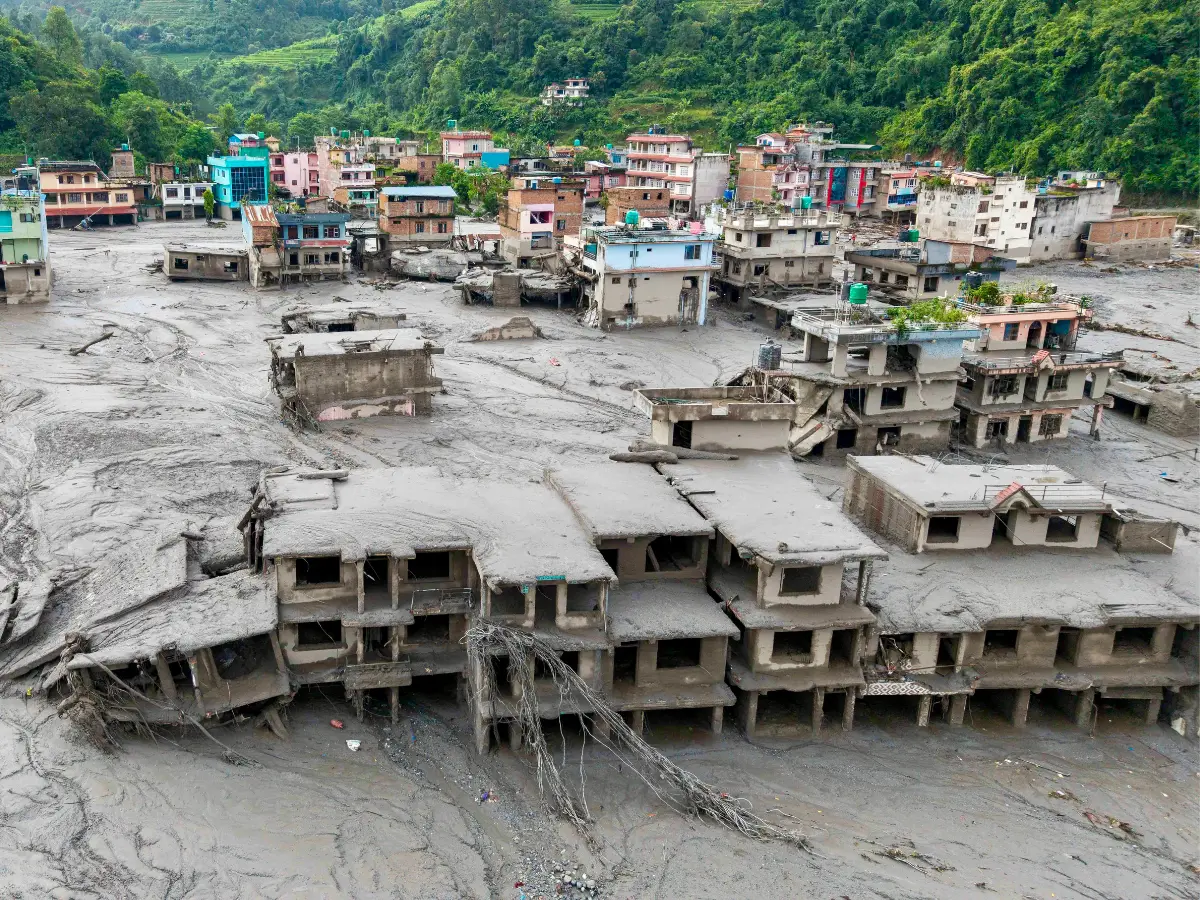
Two days before the Nepal flash floods, there were clear signs of an ominous event in the Himalayas waiting to happen, an expert has said. According to Dr Hamish Pritchard, a glaciologist from the British Antarctic Survey, two days before the catastrophe, ground temperature was at its highest in the last two years.
Meanwhile, on the day the surging waters washed away everything in its way, the temperature of a lake located at an altitude of 5,100 metres and about 10 km away from the glacier that is believed to have collapsed was the highest this year. Climate experts are still trying to figure out the exact cause of the deluge that has killed more than 900 people, with more than 4,000 missing in Nepal and 500 in Tibet.
One of the explanations right now is that a glacier crashed, causing a nearly 4,000-foot chunk of ice to smash into the valley. "These high temperatures would have weakened the snowpack, filled crevasses with water and thawed the bonds between ice and rock that hold these glaciers in place," Pritchard told Daily Mail.
Another reason that was initially flagged was a magnitude 5.2 earthquake on August 26. However, later analysis showed that the ground shook because of the glacier that collapsed on the Langtang-Lirung mountain. Ice mixed with rock and sediment cascaded down the mountain and temporarily blocked the Lhende Khola River. A large lake was temporarily formed and soon broke through, causing the devastating flood.
Trending Stories
&imwidth=180&imheight=135&format=webp&quality=medium)
Pakistan to head IMF, World Bank boards after 74 years amid persistent economic crisis
&imwidth=180&imheight=135&format=webp&quality=medium)
IND-W vs ZIM-W, 1st T20I: Deepti Sharma, Niki Prasad shine as India beat Zimbabwe by four wickets
&imwidth=180&imheight=135&format=webp&quality=medium)
US midterms 2026: Ken Paxton may have Elon Musk to thank if he wins the Texas Senate race. Here's why
&imwidth=180&imheight=135&format=webp&quality=medium)
Trump invokes national interest to waive new Russia sanctions, tariffs; India gets relief from 100% tariff threat
&imwidth=180&imheight=135&format=webp&quality=medium)
Ankita Bhandari murder case: Parents meet CBI, seek impartial investigation
&imwidth=180&imheight=135&format=webp&quality=medium)
Lizard people? Ex-US Army sniper claims soldier killed by 'reptilian beings' in battle near Area 51
&imwidth=180&imheight=135&format=webp&quality=medium)
Gravitas | Iran threatens to hit key bridges in 7 countries if US resumes strikes
&imwidth=180&imheight=135&format=webp&quality=medium)
Ukraine drone strike disrupts 22 Russian airports, over 200 flights

Not Khan but Pal: Why did Imran Khan choose his mother's surname over his father's? Family tree explained
&imwidth=180&imheight=135&format=webp&quality=medium)
A secret code, a midnight escape and 300 deaths: The Russian officer who turned on Putin
&imwidth=180&imheight=135&format=webp&quality=medium)
'Reason UN has lost credibility': Amid SIR protests India hits out at report alleging 'youth repression'
&imwidth=180&imheight=135&format=webp&quality=medium)
Oregon school shooting: 16-year-old shooter identified, used shotgun bought by mother; Trump praises bystander who shot gunman as 'great hero'
&imwidth=180&imheight=135&format=webp&quality=medium)
China tells Israel to stop West Bank settlements, calls Palestine issue ‘historic injustice’
&imwidth=180&imheight=135&format=webp&quality=medium)
‘My president, I mean my husband’: Trump's new press secretary Katie Zacharia's first briefing goes off the rails in 14 minutes
&imwidth=180&imheight=135&format=webp&quality=medium)
China responds to Trump's Press Secretary Katie Zacharia after toilet remark: 'Visit China more often'
&im=FitAndFill=(700,400)&imwidth=180&imheight=135&format=webp&quality=medium)
Who left the White House podium the fastest? Press secretaries with the shortest stints
&imwidth=180&imheight=135&format=webp&quality=medium)
Vijay Deverakonda and Rashmika Mandanna's Ranabaali X Review: Netizens call it history-rich but overstuffed
&imwidth=180&imheight=135&format=webp&quality=medium)
Ramayana Part 1: Sai Pallavi's warrior avatar as Sita steals the spotlight in new BTS footage
&imwidth=180&imheight=135&format=webp&quality=medium)
Israel examines Russia's Shahed-type drones sent by Ukraine to combat Iran | Gravitas
&imwidth=180&imheight=135&format=webp&quality=medium)
US midterms 2026: Alexandria Ocasio-Cortez donates $1 million to Abdul El-Sayed’s as Michigan race heats up
&imwidth=180&imheight=135&format=webp&quality=medium)
Here’s who is eyeing the White House press secretary role after Katie Zacharia’s exit
&imwidth=180&imheight=135&format=webp&quality=medium)
Infiltration bid foiled in Kupwara’s Keran sector, search operation underway
&imwidth=180&imheight=135&format=webp&quality=medium)
Sean ‘Diddy’ Combs transferred to new prison amid reports of special privileges
&imwidth=180&imheight=135&format=webp&quality=medium)
Abhishek Sharma sets all-time record for most T20I sixes in a year
&imwidth=180&imheight=135&format=webp&quality=medium)
No Ravindra Jadeja, Yashasvi Jaiswal in India’s 2027 ODI World Cup plans: Report
&im=FitAndFill=(700,400)&imwidth=180&imheight=135&format=webp&quality=medium)
Inside Tesla's Roadster: 10 features of Elon Musk's 'flying car' that push the limits of electric vehicles | In Pics
&imwidth=180&imheight=135&format=webp&quality=medium)
India’s naval priorities: Ex-Navy Chief calls for third aircraft carrier, more warships and submarines
&imwidth=180&imheight=135&format=webp&quality=medium)
Starlink says 'ready to connect India with high-speed internet' amid Reliance row
&im=FitAndFill=(700,400)&imwidth=180&imheight=135&format=webp&quality=medium)
New Friday OTT releases (October 16, 2026): DC, Sacrifice, Aasha- 6 new movies and TV shows coming on Netflix, Zee 5, Prime Video and more
&imwidth=180&imheight=135&format=webp&quality=medium)
One species, two lineages: Why Sri Lanka’s spectacled cobra differs genetically from Indian variant
&imwidth=180&imheight=135&format=webp&quality=medium)
Oil tanker carrying over 2M barrels of crude hits mine in Strait of Hormuz, catches fire, says Iran
&imwidth=180&imheight=135&format=webp&quality=medium)
Selma Blair’s team responds to flight incident, says actress ‘did not intend to harm anyone’

US ends automatic work permit extensions; Indian workers lose 540-day safety net: What it means
&imwidth=180&imheight=135&format=webp&quality=medium)
US lawmaker Pramila Jaypal writes to Rubio, urges to raise handling of CJP protest with India
Climate change increases the risk of such events
Scientists say the Himalayas are warming much faster than the rest of the world. The event happened in the monsoon season, when avalanches become more common because of the heavy snowfall and rain in the region, Pritchard said. The rivers were full and soil saturated at this time, setting the stage for the disaster. He added that the conditions got a further push because of “climate change that is causing rapid retreat of Himalayan glaciers.”
Why Nepal is more susceptible to such events
The terrain in Nepal is already dangerous, with steep slopes making it more vulnerable to landslides, rockfalls, and ice cliff collapses. A warming world means the conditions will only get worse. Permafrost, the layer that keeps glaciers stable, is thawing because of climate change, loosening rocks and mud, and increasing the chances of more such collapses.
Satellite data from 1976 to 2024 shows that melt rates have increased everywhere on Earth besides Iceland. This rate has been 25 per cent faster in the Himalayas in the last decade than the long-term average.

