Climate change: The action is missing despite the high-profile summits

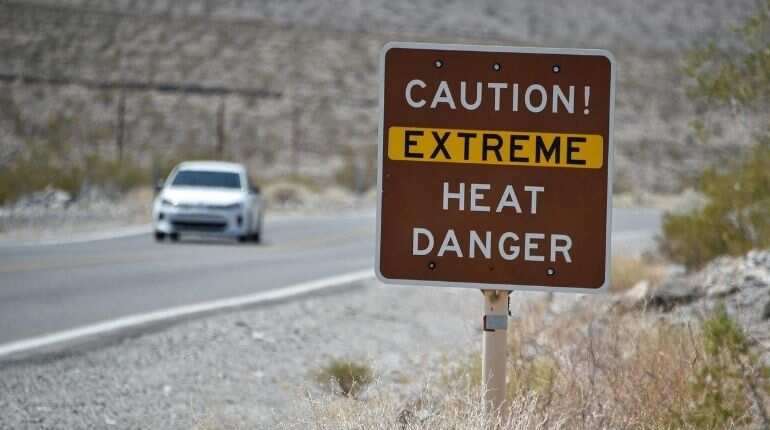
Climate change
Climate change is the punching bag of world politics and is the footnote of every joint diplomatic statement.
When rivals cannot find common ground, they talk about climate instead.
That's what the US and China are doing as they can't agree on anything, so they are discussing climate change.

Watch |
The same is the case with Russia.
&imwidth=180&imheight=135&format=webp&quality=medium)
Shreyas Iyer blames dew for West Indies' record run chase in 2nd T20I in Ranchi
&imwidth=180&imheight=135&format=webp&quality=medium)
'I am not going to be watching it': JD Vance on livestream of Nidal Hasan's firing squad execution
&imwidth=180&imheight=135&format=webp&quality=medium)
UK navy hit by espionage scandal: Sailor accused of spying for Russia | Gravitas
&imwidth=180&imheight=135&format=webp&quality=medium)
Katie Zacharia likely to succeed Karoline Leavitt as Trump's White House press secretary
&imwidth=180&imheight=135&format=webp&quality=medium)
Delhi on high alert for CJP protest: Delhi police to use body cams to 'prove whether we did anything’; Pink Force, RAF, 35,000 personnel deployed
&imwidth=180&imheight=135&format=webp&quality=medium)
‘Never-ending flow of cheap labour’: JD Vance hits back at Indian-origin Congresswoman over US green card curbs for major tech companies
&imwidth=180&imheight=135&format=webp&quality=medium)
Panama president declares ‘major disaster’ after powerful 7.7-magnitude earthquake; over 80 aftershocks recorded
&imwidth=180&imheight=135&format=webp&quality=medium)
‘250? Cool.’: Shai Hope takes swipe at Shubman Gill’s Instagram caption after Ranchi T20I masterclass
&imwidth=180&imheight=135&format=webp&quality=medium)
‘Ruh Roh’: Top US official mocks ‘Indian market collapse’ claim after Trump’s IT curbs. But did it? | FACT CHECK
&im=FitAndFill=(700,400)&imwidth=180&imheight=135&format=webp&quality=medium)
Fastest-growing Asian economies in 2026: Who tops the chart? Where does India rank?
&imwidth=180&imheight=135&format=webp&quality=medium)
'I ended 8 wars': Trump slams Nobel Peace prize decision, claims award was his due
&imwidth=180&imheight=135&format=webp&quality=medium)
Dhurandhar: The Revenge album submitted for Grammy consideration; But what does it mean?
&imwidth=180&imheight=135&format=webp&quality=medium)
J&K Government orders major police reshuffle, transfers 100 officers across UT
&imwidth=180&imheight=135&format=webp&quality=medium)
New York protests erupt as Trump administration defends ICE shooting
&imwidth=180&imheight=135&format=webp&quality=medium)
Delhi protest: Metro curbs, train cancellations, traffic diversions as protesters seek CEC Gyanesh Kumar’s resignation
&imwidth=180&imheight=135&format=webp&quality=medium)
Powerful 7.7 magnitude earthquake strikes Panama, tsunami warning issued
&imwidth=180&imheight=135&format=webp&quality=medium)
Hurricane Isaias makes landfall in Florida as Category 2 storm with winds of 105mph, threatens Gulf Coast with life-threatening surge
&imwidth=180&imheight=135&format=webp&quality=medium)
Trump has a new 'enemy': Anyone who calls it 'artificial intelligence'. Here's what we wants instead
&imwidth=180&imheight=135&format=webp&quality=medium)
Adéla gives KATSEYE’s Lara Raj and Megan Skendiel a shout-out at Fonda Theatre in LA
&imwidth=180&imheight=135&format=webp&quality=medium)
'Modi is a dictator': Abhijeet Dipke claims govt 'scared' of youth, slams stringent measures ahead of CJP Jantar Mantar protest
&im=FitAndFill=(700,400)&imwidth=180&imheight=135&format=webp&quality=medium)
New Friday OTT releases (October 9, 2026): Reporting Live, Animals, Take Charge of My Heart- 6 new titles coming on Netflix, JioHotstar and more
&imwidth=180&imheight=135&format=webp&quality=medium)
Trump announces Russian diesel deal as Zelensky criticises move
&imwidth=180&imheight=135&format=webp&quality=medium)
‘Right to protest must be protected, but...’: Delhi Police reveals why it denied CJP permission for October 10 Jantar Mantar protest
&imwidth=180&imheight=135&format=webp&quality=medium)
Pakistan denies reports of PAF jets being used in attacks against Iran-backed Houthis in Yemen
&imwidth=180&imheight=135&format=webp&quality=medium)
Ella Langley’s Oklahoma show abruptly cancelled over safety concerns after threat report
&imwidth=180&imheight=135&format=webp&quality=medium)
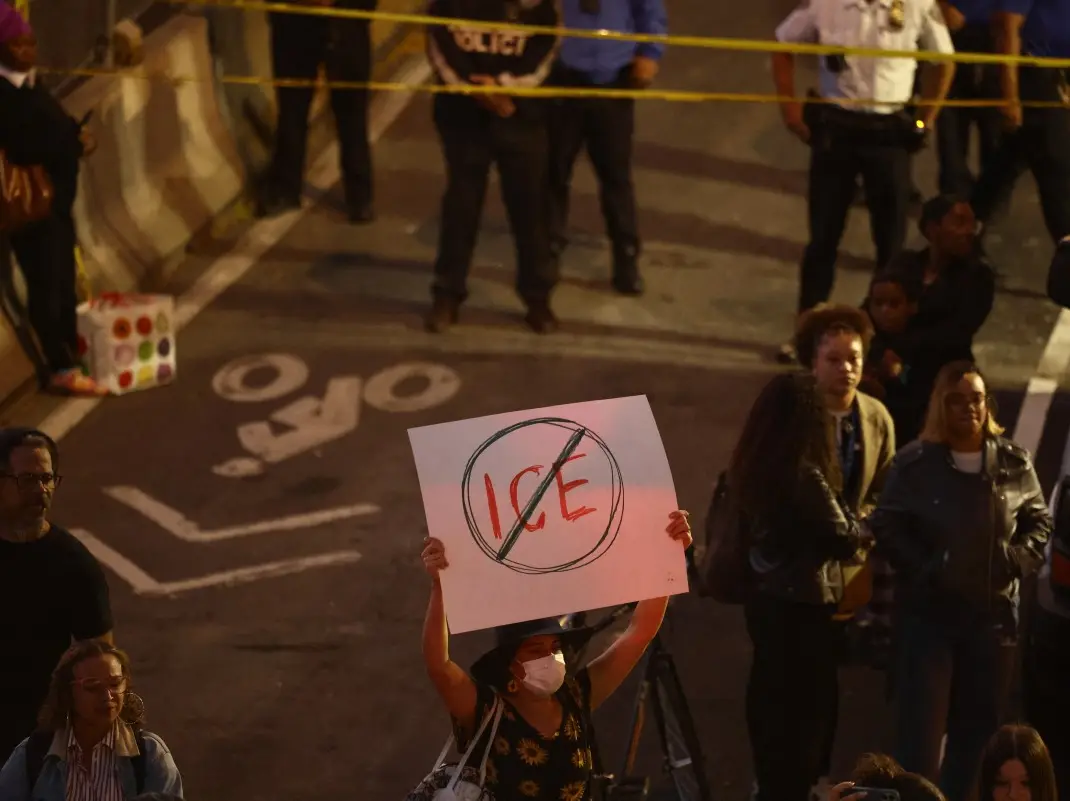
New York ICE shooting sparks protests as Mamdani to call on Trump to halt ICE operations
&imwidth=180&imheight=135&format=webp&quality=medium)
All 22 Indian seafarers safe in attack on Panama-flagged tanker off UAE coast
&imwidth=180&imheight=135&format=webp&quality=medium)
Ryan Reynolds’ private messages reveal his blunt views on Justin Baldoni from Blake Lively’s legal case
&im=FitAndFill=(700,400)&imwidth=180&imheight=135&format=webp&quality=medium)
Rakul Preet Singh birthday special: 7 times the Ramayana actress served glamorous looks

Kamal Haasan slams Elon Musk over Starlink delay row: 'Indian people, will decide our own future - not Western'
&im=FitAndFill=(700,400)&imwidth=180&imheight=135&format=webp&quality=medium)
Food shortages, suicide attempts and more: USS Abraham Lincoln returns to US after 321 day deployment — What happened aboard the US carrier?
&imwidth=180&imheight=135&format=webp&quality=medium)
OpenAI shuts down Russian, Iranian influence operations using ChatGPT to spread propaganda
&imwidth=180&imheight=135&format=webp&quality=medium)
SC questions closure of 57 Delhi Metro stations, asks Centre to resume services in regulated manner
&imwidth=180&imheight=135&format=webp&quality=medium)
'Even Indira Gandhi didn't do this': Abhijeet Dipke, Saurav Das and Ashutosh Ranka detained from inside their flight | Watch video
&imwidth=180&imheight=135&format=webp&quality=medium)
‘We will end ICC’: US sanctions International court, threatens to cripple hours after Navi Pillay wins Nobel Peace Prize
&imwidth=180&imheight=135&format=webp&quality=medium)
US midterm elections 2026: What a blue wave or blue tsunami could mean for Trump
&imwidth=180&imheight=135&format=webp&quality=medium)
Trump honours Microsoft CEO Satya Nadella with top technology honour amid immigration scrutiny
Russian President Vladimir Putin attended US President Joe Biden's climate summit, but he is silent on a proposed one-on-one meeting.
Politicians love to call themselves allies of nature, but can they unite to deal with climate change?
The question arises as their track record is not impressive.
Also read | 'No nation can solve this crisis on their own,' says Biden as he opens virtual climate summit
Look at the Wuhan virus pandemic, thousands of people are dying every day.
It's been more than a year and we are still waiting for a coordinated global response.
We talk about a globalised world, but when the tragedy struck it was every country for itself.
From travel bans to now vaccines, every decision has been unilateral.The world has more than enough resources to crush this pandemic.
But there is neither a plan nor a joint approach. While Europe has extra vaccines, and Sub-Saharan Africa on the other hand has none.
When most of the world was staying at home, people in Yemen and Syria were fleeing from bombs.
Ideally, this should not have happened as, to avoid the virus there needs to be social distancing for individuals, not countries.
The Wuhan virus is a pressing issue, but climate change, on the other hand, is a long-term problem.
And we know how much politicians love the backburner.
If it's not on their calendar, it is not a pressing matter.
That's one reason why climate change is relegated to talking shops.
But why is climate action such a difficult issue?
A United Nations survey found that 64 per cent of people believe climate change is a global emergency.
The number sounds impressive, 60 per cent of people also believe the earth is round.
Science is not a matter of opinion, it is based on facts.
But politicians have used climate change to rally their support base.
Donald Trumpdid that during his presidency and Brazil's Jair Bolsonaro continues to do it in Brazil.
Denying climate change has become a political strategy and scientists have not been able to bust these theories.
They say the bigger tsunamis and hurricanes are caused by climate change. But proving this link is difficult.
For instance, the oceans are rising, that's a fact, but it's not something you can see by going to the beach every day.
So the first challenge is to accept the problem. The second one is to accept responsibility.
Temperatures aren't rising themselves, so who triggered climate change in the first place?
Most of the pollution we see today is courtesy the West.
Even now, they make up more than half the global emissions. So it is a crisis that the West created, but now they want the whole world to solve it.
And this has created friction between the global north and south.
A lot of these people don't know where their next meal is coming from. Climate change is not their top priority and that should hardly be surprising.
If the choice is between fighting poverty and climate change, it is a no-brainer for the developing world.
So the solution lies in the developed world footing the bill.
They must transfer technology to developing nations, something which was the spirit of the 1992 Rio Declaration. It called for common, but differentiated responsibilities.
Is the West doing that? It isn't.Instead of transferring technology and money, it is outsourcing its pollution to the global south. And then telling countries to set up better targets. There is also no denying that our modern lifestyle is part of the problem and we prefer cars over walking or biking.
We pack most of our groceries in polythene, instead of paper. These may appear small, but imagine seven billion people doing the same every day.
Climate change is unlike any challenge humanity has faced because unlike pandemics and wars, here we have a warning.
We have time to prepare for the impending disaster, but we are not exactly making good use of it.
We're arguing and grandstanding, instead of acting.
We end this argument with this observation that with masks and vaccines, we can beat the Wuhan virus. But when the oceans rise, there is no fix.
When the air becomes unbreathable, masks will not work.
So it's time for world leaders to pull up their socks as we have had more than enough summits on climate change.
What we need now is concrete and legal action.