China may face COVID-19 disaster if harsh lockdowns lifted, experts predict

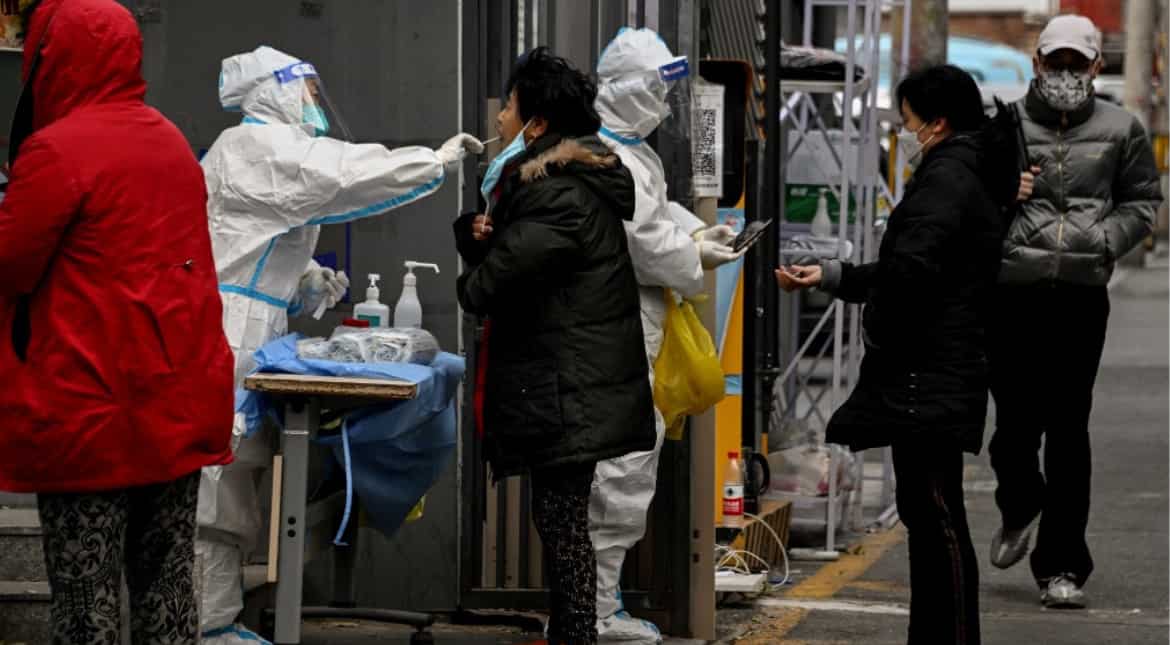
Experts warn China heading towards COVID-19 disaster
The Chinese authorities this week announced that the lockdowns are being lifted in at least seven districts due to protest against the zero-COVID strategy of the government.As per the experts, the zero-COVID strategy of China was a good approach when the pandemic had begun because it managedto keep the number of cases low.
But, in the last three years, the world has changed and health services are now fully prepared to provide Covid treatments and deal with outbreaks.
University of Southampton's epidemiologist Michael Head said, "We now have the tools to address COVID as a public health concern. We have vaccines, antiviral drugs and a huge amount of knowledge about how to treat people and manage outbreaks in the community.”
The experts stated that other nations have been successful in creating a strong protection shield from COVID in the population with the help of less stringent lockdowns that allowed mass vaccination drives and people's natural exposure to the virus.
"A small silver lining of the extensive spread of COVID in Europe is that we have a memory in our immune system. That's the theory, anyway," Head added.
However, since zero-COVID policies have been strongly pursued by China since the beginning of the pandemic, their population managed to get very little exposure to the virus, especially the omicron variant which is highly contagious.
China's ineffective vaccination programmes
Experts believe that China needs to rely on vaccination for its successful transition into the phase of living with COVID. However, the vaccination programme of the country has not been effective so far, especially in the administration of booster vaccines to old age people.
University of Nottingham's emeritus professor in epidemiology Keith Neal says, "Vaccines are great at giving you protection against severe illness, but they don't give you sterilising immunity. You need boosters to keep your immunity up.”
Neal further explained that sterilising immunity is when the virus is prevented by the immune system from infecting the host, which further stops the transmission. Sterilising immunity is not provided by current vaccines.
Till August 10, 2022, China's full vaccination rate was 85.6% and the rate of administered booster vaccination for adults aged 60 and above was only 67.8%, which is comparatively lower than in nations like Germany, where vaccination coverage was 91.2% and 85.9%, respectively.
"There was a vaccine campaign in China that prioritised young people to keep workers healthy. Older people are less vaccinated than in other countries. This is a problem, as the risk of death from COVID-19 increases significantly with age," added Neal.

ALSO READ|China unwilling to allow 'effective' foreign COVID vaccine despite the protests: US
Is China facing vaccine hesitancy?
According to observers, the perfect time to implement mass vaccination strategies was when people were leaving their homes only to get food. So what is the reason behind lower booster rates in China?
Experts believe that one reason can be vaccine hesitancy among adults. According to a study, vaccine hesitancy recorded among teachers is 32% in China. The study says that vaccine hesitancy is present due to concern among people about their personal safety.
"Chinese vaccines (Sinovac and Sinopharm) are not bad, perhaps similar to AstraZeneca's vaccine, but have lower effectiveness than mRNA vaccines like [those from] Pfizer and Moderna, especially when it comes to omicron," Head said.
He further addedthat distrust in the government and political affiliation are the reasons for vaccine hesitancy. The protests over zero-COVID strategies in China show that the trust of people in the authorities is at an all-time low.
"Health promotion is going to be key going forward to increase vaccine uptake. How to do this is a tricky thing to solve, especially if it comes from a government many distrust," he added.
WATCH|
)
Oxford United's new clothing line featured 'United 93' phase
)
Pentagon revives mandatory testosterone testing for male troops aged 30 and above
)
Mark Carney mimics Trump in hilarious moment over C$70 billion clean-energy investment; room erupts in laughter
)
Iran rebuilding nuclear facilities? New satellite images show Tehran may be rapidly restoring bombed Parchin base
)
It's a girl! Deepika Padukone and Ranveer Singh welcome their second child
)
FACT CHECK: Why did PM Modi ask Xi ‘is it okay’ at BRICS Summit? New video reveals...
)
Putin: European leaders using war rhetoric to save falling ratings
)
China may have gained access to US's classified F-35 jets; parts meant for repairs diverted to Hong Kong, sparking Pentagon inquiry
)
Cochin shipyard starts building Indian Navy's next-gen missile vessels
)
Claude led 26% of Anthropic's AI R&D work
)
Brigitte Bardot’s private collection set for Paris auction; key items and prices revealed
)
Why Ranveer Singh’s Dhurandhar missed India’s Oscar entry; FFI jury member reveals what happened
)
How did an Australian river with 500 crocodiles pass the Olympic test? Here's how
)
‘Will go to any extent’: Pakistan vows to defend Saudi Arabia amid Houthi attacks
&im=FitAndFill=(700,400))
Ananya Panday to Sharvari: 5 actresses serving major princess vibes
66 years of the Indus Waters Treaty: How India and Pakistan settled a bitter river dispute
)
The Verdict | When precision fails: US commits war crime in Minab school strike, UN finds
Russia attacks Ukraine with 174 drones, kills 8; 2 vessels hit in Black Sea
)
Trump signs Russia sanctions bill into law, targets Moscow’s energy sector
)
Pak: A series of counter terrorism operations in Khyber Pakhtunkhwa
)
Ajit Agarkar’s future as chief selector to be decided at right time, says BCCI secretary
)
Flying cars in UAE: Ras Al Khaimah signs deal with Chinese company to test new transport
)
Reacher star Alan Ritchson opens up about alleged blackmail, suicide attempt during difficult period
)
Africa is splitting, and a lot sooner than estimated, giving way to a new ocean
)
Trump bans CNN, MS NOW and Politico from White House over ‘FAKE NEWS’
)
Trump 2.0: Dark days ahead for America’s ‘imperial presidency’
)
New brain discovery could aid neurological disease studies
)
Drone strikes cooling tower at Russia's Kursk Nuclear Plant, IAEA confirms
&im=FitAndFill=(700,400))
How many F-35s does Britain, Japan and Israel have?
)
Tirupati Laddu ghee adulterated with chemicals, says ED, supplier arrested
)
IIT Bombay student dies by suicide, was caught seeking AI help during exams
)
Trump extends H-1B visa's $100,000 fee until September 2027: What it means for Indians?
)
Russia holds first parliamentary elections since the beginning of the Ukraine war
&im=FitAndFill=(700,400))
Meet top 5 Indian batters with fastest T20I centuries
)
Extreme warming in Indian Ocean added 695 billion tons of ice to Antarctica ice sheet
)
)
Will China become a cooking pot for the new variant?
Due to low booster administration in people belonging to at-risk groups and weak natural immunity, experts say that easing lockdowns at local levels can turn out disastrous for China, in the wake of population-level protection against the contagious omicron variant remaining low.
"Omicron has an R0 of 10, meaning it's highly infectious. Without sterilising immunity, you haven't got a cat in hell's chance of stopping it," Neal explained.
Both experts believe that Chinese regions may have to face severe outbreaks of Covid. According to them, there will be a high rise in the number of Covid cases among those with low immunity along the long-term impact of the pandemic.
Along with immediate concern regarding public health, there is also a risk of the development of new COVID variants and subvariants in an uncontrolled outbreak
"Uncontrolled outbreak in China would increase the risk of the emergence of new variants. China and the world will be keeping an eye on this," Head stated.
Will outbreaks in China affect other nations?
Experts believe that travel restrictions in China can keep other countries from risk if there are any outbreaks. "There isn't a lot of travel in and out of China — it's like a giant island. So if new variants do appear, they're likely to stay contained," Neal said.
Eventually, what will happen to people contained in China will depend on the Chinese Communist Party's political decisions.
"China has a political problem here. They wedded themselves to zero-COVID. They wedded themselves to 'we have the best system in the world to look after you.' They wedded themselves to less effective Chinese vaccines," he added.
Will China adopt less stringent lockdown measures and buy Western vaccines remains to be seen.