

&imwidth=800&imheight=600&format=webp&quality=medium "How Benjamin Franklin's private writings reveal a proto-modern psychology?")
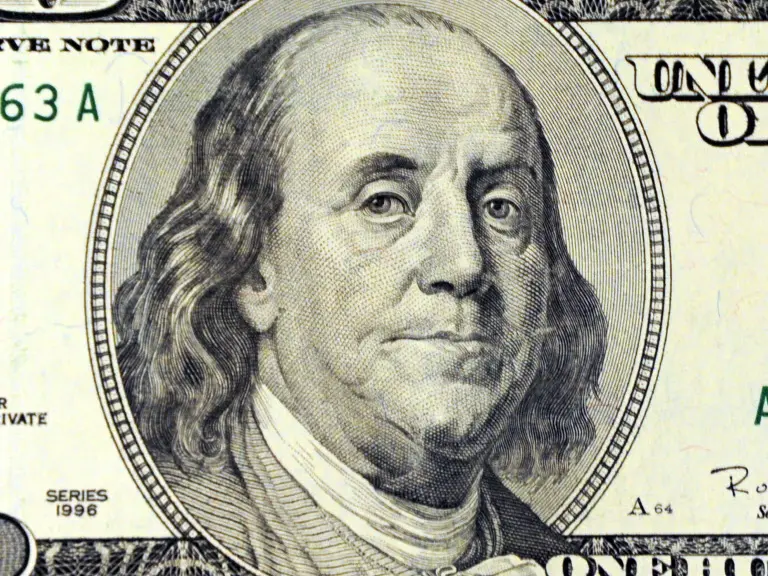
Long before Cognitive Behavioural Therapy and self-help books, Benjamin Franklin was experimenting on himself. He developed elaborate programs to modify his own behaviour, noting his impulses, failures, and triumphs in letters no one intended to read. This is consequential because not until two centuries later that this became a discipline in modern psychology.
Benjamin Franklin, also known as “The First American", was a printer and publisher, author, inventor, scientist, and diplomat. He was one of the most influential of the Founding Fathers of America and helped draft the “Declaration of Independence” in 1776. Among all his achievements, some of the least known were his private letters.
What were Franklin's private writings?
Franklin was a prolific writer, many believing he wrote more than 8,000 letters, which still survive. Some of them were about scientific experiments, observations about society and politics, personal reflection, habit tracking, moral conditioning and philosophical advice. Some letters also involved communication with a secret society group, “Freemasonry”, a fraternal, intellectual, and moral organisation, which till today embroils in conspiracy theories.
Benjamin Franklin treated the self as a malleable subject which can be reshaped and disciplined through systematic observation. His “bold and arduous Project of arriving at moral Perfection” can be found in Part II of his Autobiography, which is clearly written as a model that others would do well to imitate. His other private writings, such as personal letters, habit and virtue tracking, notebooks and drafts, have traces of modern behavioural psychology.
Also Read: Jallikattu explained: history, Supreme Court ban and how the bull-taming sport is played in 2026
Trending Stories
&imwidth=180&imheight=135&format=webp&quality=medium)
'My name has always been Ilhan Omar': Congresswoman hits back at Trump, calls him a 'creep'
&imwidth=180&imheight=135&format=webp&quality=medium)
Gravitas | US attack could trigger WW III: Russian planes in Tehran, Israeli jets, US warships in action
&imwidth=180&imheight=135&format=webp&quality=medium)
Viral video shows cross falling on Colombia priest, no official confirmation | WATCH
&imwidth=180&imheight=135&format=webp&quality=medium)
US Navy, Marine Corps boards defy Trump's transgender military ban, vote to retain troops
&imwidth=180&imheight=135&format=webp&quality=medium)
Will the US attack Iran this weekend? Trump's envoy says, 'absolutely'
&imwidth=180&imheight=135&format=webp&quality=medium)
Fauzi teaser out: Prabhas takes on the British Empire in patriotic avatar | Watch
&imwidth=180&imheight=135&format=webp&quality=medium)
India-China face-off continues near Arunachal’s Taksing, reveals ITBP chief in first official confirmation of tensions
&imwidth=180&imheight=135&format=webp&quality=medium)
Nairobi building collapse: Several feared trapped after 16-storey structure crumbles; rescue operation underway
&imwidth=180&imheight=135&format=webp&quality=medium)
Pakistan airline PIA unveils new crew uniforms, faces online criticism
&imwidth=180&imheight=135&format=webp&quality=medium)
Did Neha Bora call for Bangladesh-like GenZ protest, 'anarchy' in India? WION Fact-checks viral claim
&imwidth=180&imheight=135&format=webp&quality=medium)
Scientists make digital nose that can sniff and send scents over the internet
&imwidth=180&imheight=135&format=webp&quality=medium)
'Already tired of his 9-to-5': Baby born with a moustache becomes internet sensation, video goes viral | Watch
&imwidth=180&imheight=135&format=webp&quality=medium)
Horrific video shows the moment 18-year-old fell to her death from Mexico amusement park ride
&imwidth=180&imheight=135&format=webp&quality=medium)
'Black triangle' UFO flying at 1,800mph spotted over sensitive US site: Latest Trump admin UFO file dump
&imwidth=180&imheight=135&format=webp&quality=medium)
IND-W vs ZIM-W, 1st ODI: Rawal, Charani star in India’s nine-wicket win over Zimbabwe
&imwidth=180&imheight=135&format=webp&quality=medium)
Massive 7.2 magnitude quake off Vanuatu triggers tsunami warning for coasts within 300 km
&imwidth=180&imheight=135&format=webp&quality=medium)
Google Fitbit Air’s new health guardian feature tracks trends: How it works
&imwidth=180&imheight=135&format=webp&quality=medium)
US midterms 2026: Trump revises Canada tariffs as Susan Collins faces tight re-election race in Maine
&imwidth=180&imheight=135&format=webp&quality=medium)
US midterms 2026: Viral video claims Lindsey Graham paid underage men for sex; clip released weeks before his sister's Senate race
&imwidth=180&imheight=135&format=webp&quality=medium)
IND vs NZ 2nd T20I: Shreyas Iyer on brink of breaking Rohit Sharma’s record
&imwidth=180&imheight=135&format=webp&quality=medium)
AI deepfakes are spreading online: Why is removing them so difficult?
&imwidth=180&imheight=135&format=webp&quality=medium)
China's dancing robot turns violent bodyguard, lifts cars and fights intruders - Watch
&imwidth=180&imheight=135&format=webp&quality=medium)
Global cybersecurity alert: PHP flaws trigger website shutdowns as hack attempts surge into millions
&imwidth=180&imheight=135&format=webp&quality=medium)
'You’re a horrible little reporter, aren’t you?': Trump snaps at NBC reporter questioning his support for Ramaswamy's campaign ad
&imwidth=180&imheight=135&format=webp&quality=medium)
Chemical warehouse explosion in Mexico: Several injured in multiple blasts, 1,000 evacuated in León
&imwidth=180&imheight=135&format=webp&quality=medium)
US charges two former FBI officials with lying to Congress about Hunter Biden probes. 'Politically motivated' Trump grievance or something else?
&im=FitAndFill=(700,400)&imwidth=180&imheight=135&format=webp&quality=medium)
How smart robots and AI assemble vehicles in 20 hours
&im=FitAndFill=(700,400)&imwidth=180&imheight=135&format=webp&quality=medium)
New Friday OTT releases (October 23, 2026): Gajab Raat, Dorothy, Chaar Yaar- Watch these 6 new movies and TV shows on Netflix, Prime Video and more
&imwidth=180&imheight=135&format=webp&quality=medium)
Anthropic security chief issues grim cyberattack warning: ‘It’s going to get a lot worse’
&imwidth=180&imheight=135&format=webp&quality=medium)
Tu Hai Meri Kiran film review: Sonakshi Sinha and Zaheer Iqbal's thriller gets tangled in its own twists
&imwidth=180&imheight=135&format=webp&quality=medium)
First Lady Melania Trump secures ceasefire between Russia, Ukraine in Oleshky: White House
&imwidth=180&imheight=135&format=webp&quality=medium)
Negotiators from Ukraine, Russia, United States to meet in Abu Dhabi: Zelensky
&imwidth=180&imheight=135&format=webp&quality=medium)
Emmanuel Macron calls Paris suburb shooting a 'racist terrorist attack' after one killed, several injured
Franklin's Private writings and project of moral perfection
Franklin put together a list of 13 virtues: temperance, silence, order, resolution, frugality, industry, sincerity, justice, moderation, cleanliness, tranquillity, chastity and humility. He then focused on each and repeated the cycle four times a year. He maintained a visual ledger, where he would record "daily integrity report," marking black spots in the grid whenever he failed.
Franklin came up with a phenomenon that is now used to manage the cognitive dissonance effect. Cognitive dissonance is the effect when we encounter two mutually exclusive and opposing beliefs, and the discomfort that arises from it. He devised a simple effect that is now known as the Benjamin Franklin effect- “When someone does not like you, ask them for a favour? If they help you, then their brain will rationalise that they must have liked you or why else they would have helped". These are some methods nowadays used in CBT in modern psychology.
He is also credited with the discovery of the placebo effect or the blind trial. From his private notes and personal letter, it was found that patients' improvements came from themselves rather than external sources, just by the power of suggestion. Something that is the foundation of clinical psychology. In his personal correspondence with family and friends, he mentions identity as a public construct. He would deliberately soften his tone to practice "modest persuasion," and not to trigger defensiveness in others.
He was not perfect; he himself owned slaves and engaged in the slave trade. But in later life, he became a vocal advocate of the abolition of slavery. Which shows a pattern of always evolving; in essence, his writing presents a legacy. Through self-actualisation, systematic self-observation, reflection, and structured improvement, he tried to achieve moral perfection. When he sat down, during the last twenty years of his life, to write his autobiography (a work written in four different spurts), he crafted an account of himself and his life which seems intended to serve as a model for every American, then and now: He addressed his audience as “Dear Son”.

