

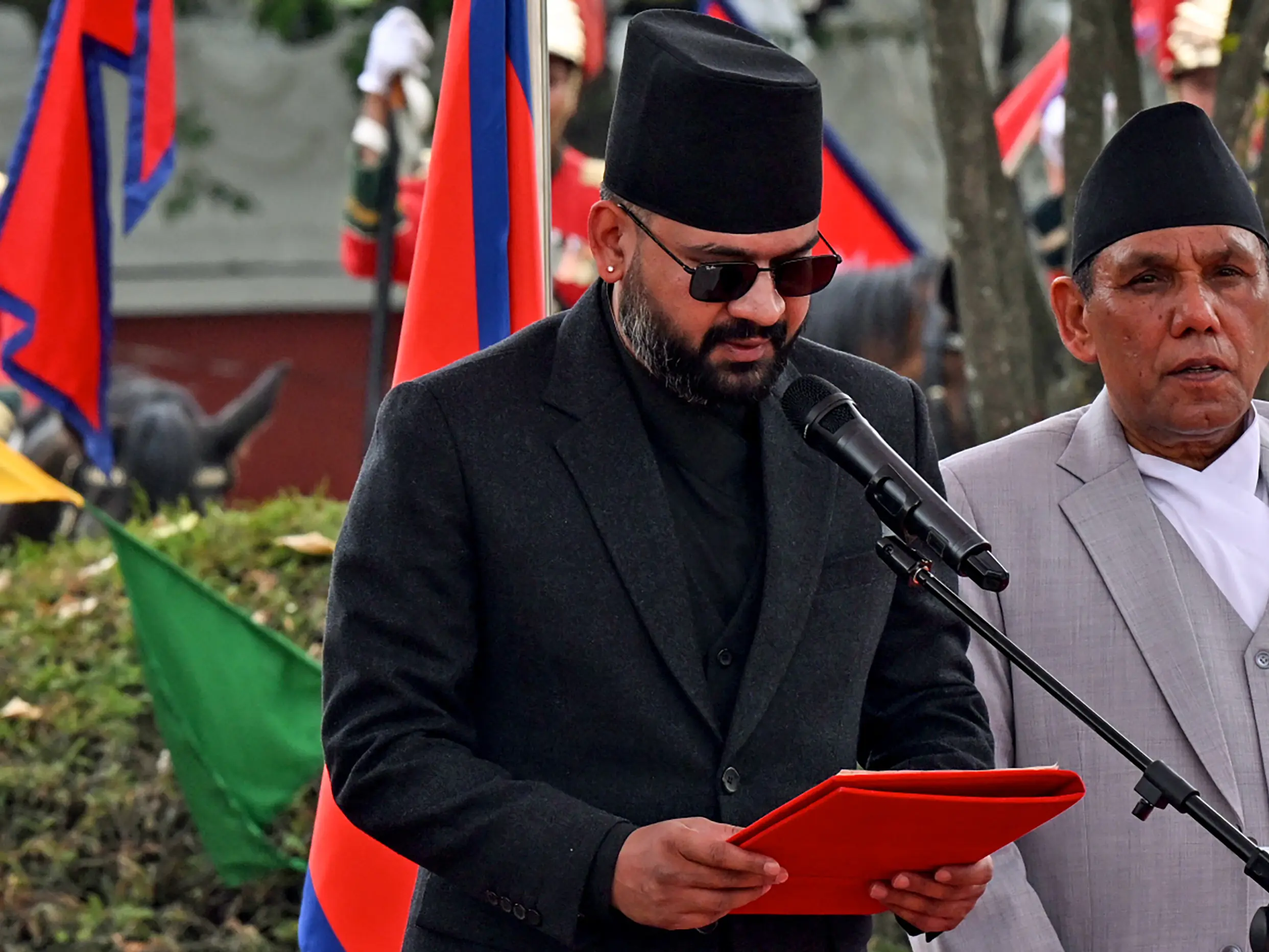
&imwidth=800&imheight=600&format=webp&quality=medium "Balen Shah's diplomatic U-turn? Nepal PM to hold one-on-one meetings with India, China envoys")
Nepal Prime Minister Balen Shah, who has maintained a strict protocol of meeting only his counterparts while refusing to sit for one-on-one meetings with foreign envoys, is set to break his self-imposed rule and meet the envoys from both India and China this week, The Kathmandu Post reported, citing aides and diplomatic sources.
The decision comes shortly after his government, which came to power following Gen Z protests, completed 100 days in office. During this period, Shah repeatedly refused to meet foreign envoys individually and instead preferred joint meetings with ambassadors on April 9 and May 29.
According to The Kathmandu Post, the dates for the meetings with the diplomats from New Delhi and Beijing have yet to be announced, with Nepal's Ministry of Foreign Affairs working to make arrangements. However, to underscore that New Delhi and Beijing are equally important to Nepal, Shah is scheduled to meet Indian Ambassador Naveen Srivastava and Chinese Ambassador Zhang Maoming on the same day.
Also Read: India’s EAM Jaishankar voices ‘strong concern’ over seafarer safety in talks with Russian FM Lavrov
Shah not only avoided meetings with Nepal's neighbours but also turned down requests from the US Embassy in Kathmandu to meet US Assistant Secretary of State for South and Central Asian Affairs Samir Paul Kapur and US President Donald Trump's special envoy for South and Central Asia, Sergio Gor.
The move marked a departure from Nepal's traditional diplomatic engagement. In the past, newly elected prime ministers would meet foreign ambassadors individually at the Prime Minister's Office or their official residence within days of assuming office.
Trending Stories
The Nepali Prime Minister has also walked back on his policy of avoiding meetings with domestic stakeholders. He recently held engagements with members of the business community, including traders, contractors, industrialists and exporters.
These decisions came after his government witnessed two rounds of protests in its first 100 days in office. One protest centred on the enforcement of customs duties at the Indo-Nepal border, while the other erupted after a ride-share driver's suicide sparked anger over police action.
