

&imwidth=800&imheight=600&format=webp&quality=medium "Jallikattu explained: history, Supreme Court ban and how the bull-taming sport is played in 2026")
Jallikattu is a bull-taming sport that has been practised in Tamil Nadu since 400 BC. It is organised during the Pongal Harvest festival in mid-January. It is the most intense cultural ritual of the South Indian state and symbolises bravery, valour, and the deep-rooted agrarian relationship between farmers and their cattle. It is a part of the pride and cultural heritage of rural Tamil Nadu, and it draws massive crowds each year.
How is Jallikattu played?
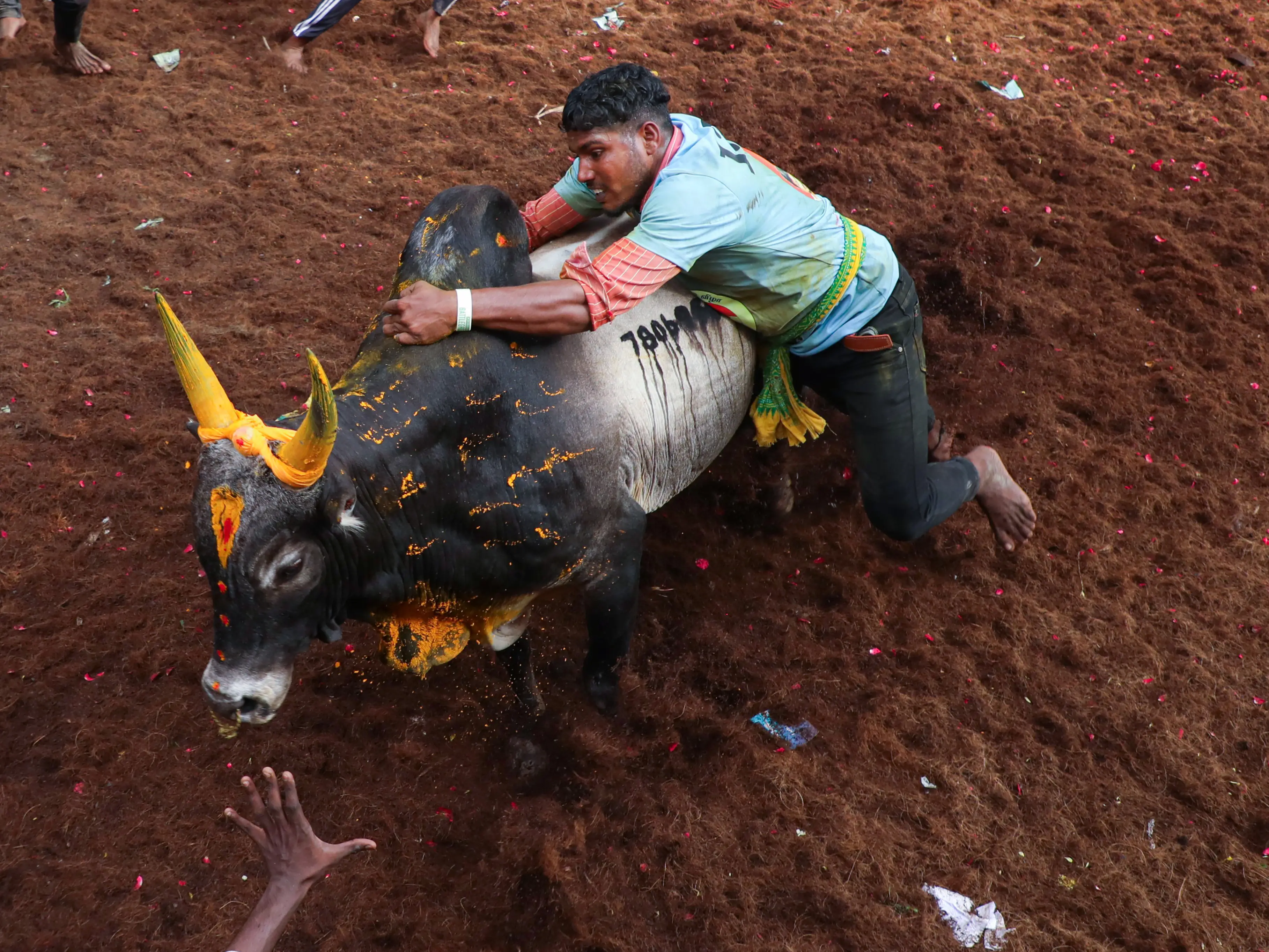
The sport is practised by releasing a bull through a narrow door (vadi vasal) to an arena where the participant tries to hold on to the hump of the bull for some distance or time while the bull tries to escape. The distance and time vary depending on the competition. Tamers or participants are not allowed to touch any other part of the bull, like the neck, the horn or the tail. Historically, the bull used to have a red flag or gold coins tied to its horn, which the tamer would retrieve to complete the sport.
Why was it banned?
The Supreme Court in 2014 banned the sport after concerns from activists from the Animal Welfare Board of India (AWBI) and People for the Ethical Treatment of Animals (PETA) about animal cruelty and danger to human life. During the sport, participants and even the observers were at risk. Sometimes, bulls are provoked with alcohol, sticks, knives, sickles and throwing chilli powder in the eyes. In the four years leading to the ban, almost 17 people died, and 1000 others were injured in the sport. The Supreme Court held that “use of bulls in such events severely harmed the animals and constituted an offence under the Prevention of Cruelty to Animals Act.” But following massive protests against the ban, the government passed an amendment to the act in 2017, which was held by a constitutional bench in 2023, allowing the sport to continue under strict regulation.
How is the Jallikattu being practised in 2026?
The Tamil Nadu government has issued a Standard Operating Procedure (SOP) for the safe practice of the sport. The most prominent events in the Madurai district at Avaniyapuram, Alanganallur, and Palamedu are state-organised. The world-famous festival in Avaniyapuram village features 1,100 bulls and 900 bull-tamers. Bulls are medically screened by 19 teams of veterinary assistant surgeons who examine bulls for foreign objects and fitness. Once the certificate of fitness is obtained, the bull can enter the arena. Around 12 ambulances, along with the nearby hospital's veterinary units, were on alert for emergencies. The first event of 2026 started on January 3, and it is likely to continue till mid-February.

