America's largest reservoir Lake Mead is 73% empty. NASA shares stark pictures

Lake mead levels
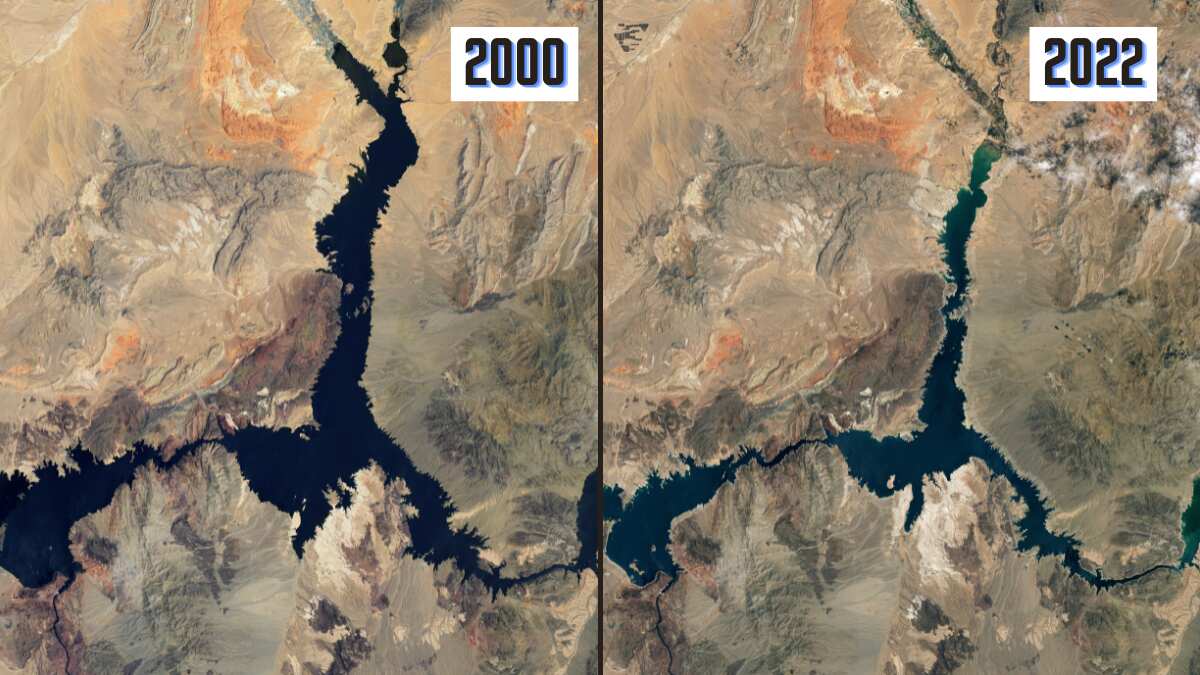
The depth of the damage the continuing drought is wreaking on America's greatest reservoir, Lake Mead can be seen in recent shocking photographs released by NASA. Newly released satellite images that were taken by NASA's Earth Observatory show the dramatic decline in the water levels. As of July 18th, Lake Mead stands at its lowest level of just 27 per cent of its full capacity. This is the result of a 22 years long downward trend. The reservoir's water levels are the lowest they've been since April 1937, a time when the reservoir which has a maximum storage capacity of 9.3 trillion gallons (36 trillion litres) was still being filled for the first time.
Watch |WION Climate Tracker | Lake Mead at risk due to drought | Water levels plunge to dangerous lows

Water from Lake Mead is used by millions; Farmers, a few communities living on tribal lands in Arizona, Nevada, California, and northern Mexico.
Michael Carlowicz, of NASA's Earth Observatory, called the shocking state of Mead a "stark illustration of climate change and a long-term drought that may be the worst in the US West in 12 centuries."
Also read |Capitalism at its best: Shop sells 'corpse water' after bodies of mafia victims found in lake Mead
)
Asian Games 2026: India face Afghanistan in quarterfinal on Sep 28; Pakistan clash with Hong Kong
)
Myanmar training camp case: US national, 6 Ukrainians allowed to meet their families abroad
)
Bigg Boss 20: Salman Khan schools Rhiti Tiwari over Qazi Touqeer clash, compares her to Dolly Bindra
)
Mushtaq Khan dies at 56: When Welcome actor opened up about his salary for iconic role Ballu
)
LPU students go on rampage, vandalise campus amid widespread protest: What's happening
)
'FIRST LOOK from inside Noah’s Ark': Researchers share video from inside mysterious mound in Turkey
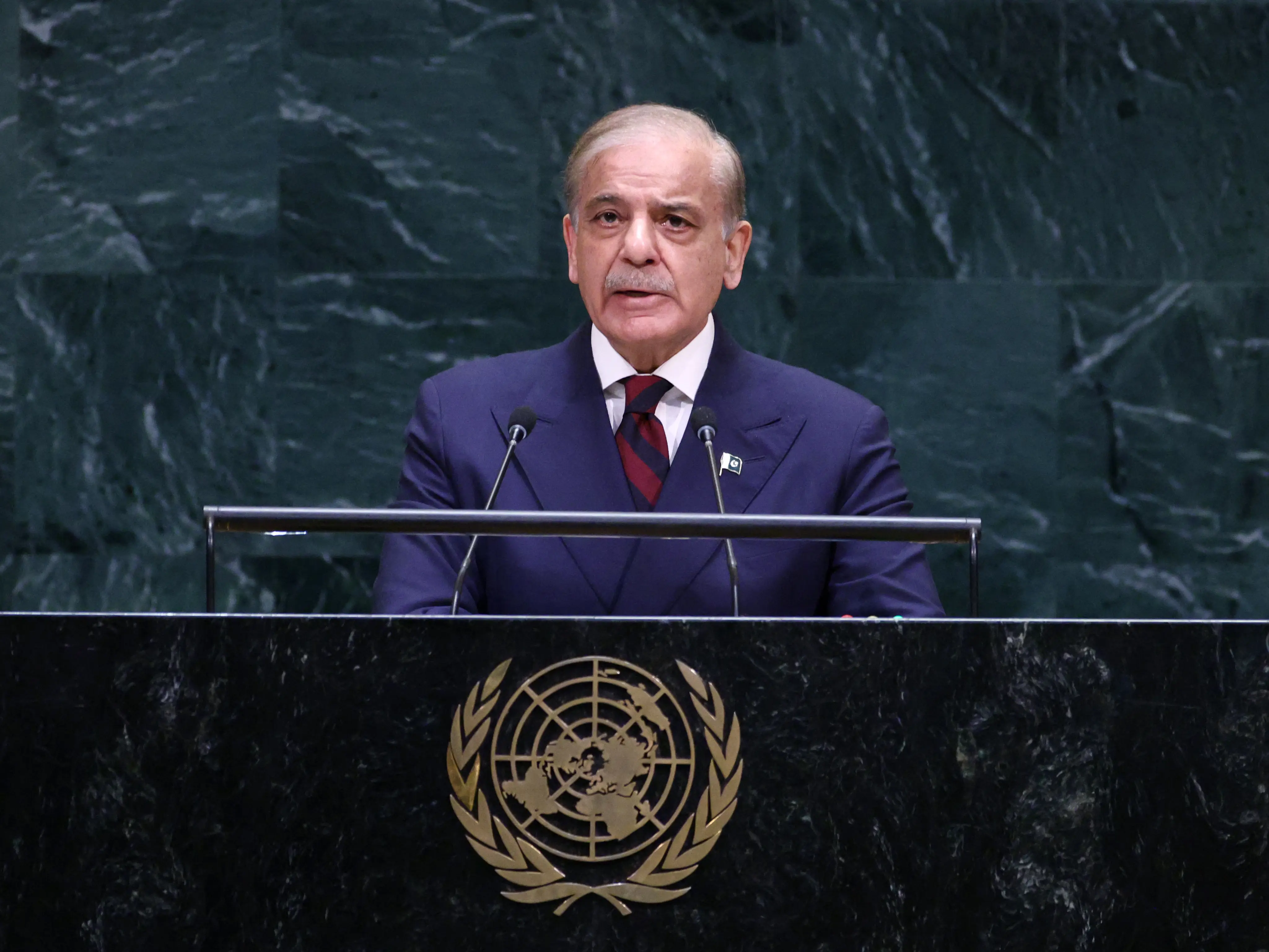)
‘Attack on Mecca a red line for Pakistan’: Shehbaz Sharif warns Houthis at UN
)
Pakistan deploys over 20,000 security personnel as PTI vows march for Imran Khan's release
)
OpenAI AI Agents hacked 4 websites before Hugging Face, researchers reveal
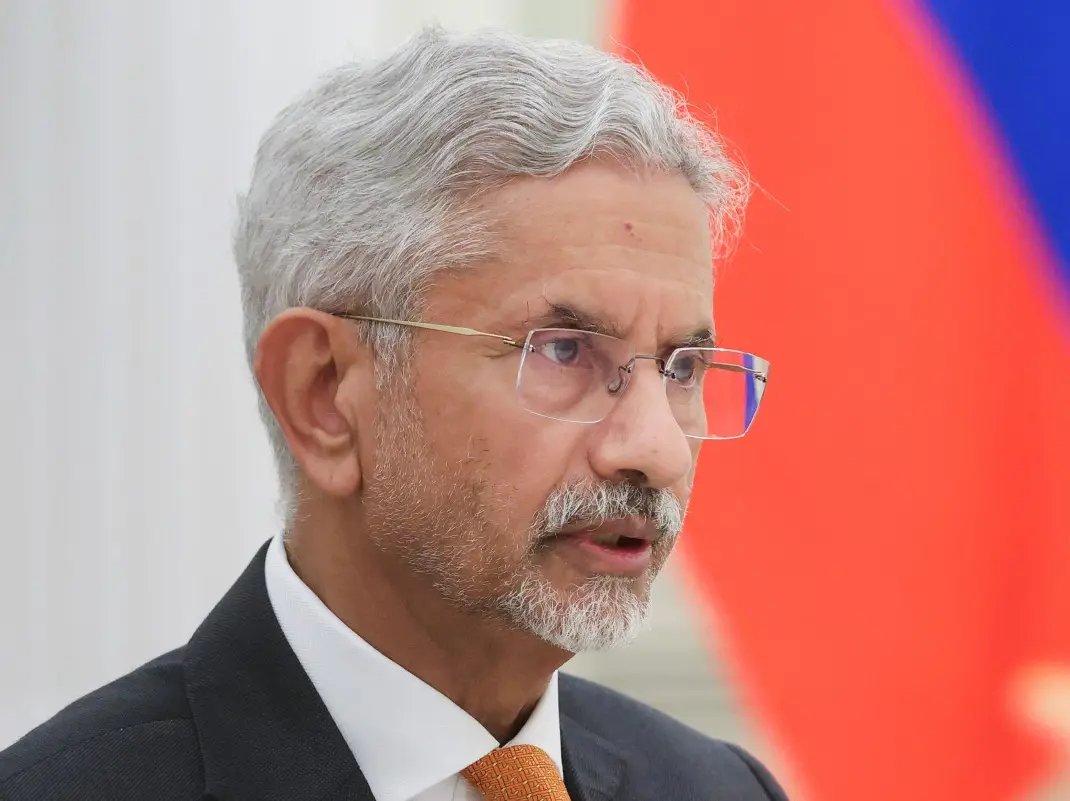)
'A terrorist country is asking me that question?': Jaishankar hits back at Pakistani journalist at UN; flags attacks on commercial shipping
)
Trump-Xi summit wrap: Big pageantry, Iran talks, few major developments and more meetings planned
)
Did Hitler kill his niece Geli Raubal? Newly found records reopen a 95-year-old mystery
)
Hawaii braces for Hurricane Nolo: NOAA warns of flash flooding and mudslides
)
'What kind of confession is this?': Pakistan PM Shehbaz Sharif’s 'terrorists would be roaming New York' remark goes viral, raises alarm online. Watch
)
US-Iran war: Trump rejects Iran's Hormuz proposal, reports suggest talks expected next week
)
Bollywood x K-pop crossover! LE SSERAFIM’s Kazuha charms fans with Shah Rukh Khan’s ‘Chammak Challo’ steps
)
Gaza's war turned environmental damage into second crisis
)
‘Serial practitioner of terrorism’: Jaishankar calls out Pakistan’s ‘state-sponsored’ terror at UNGA
)
‘It is all possible’: Putin weighs next steps on Ukraine talks, rules out Europe conflict
)
Prince Harry offers rare glimpse into Archie and Lilibet’s life after UK move
)
Nigeria Navy moves to boost oil security, tackle crude theft and infrastructure threats
)
Donald Trump shares image of Xi's arrival in Washington, carries signs of AI
)
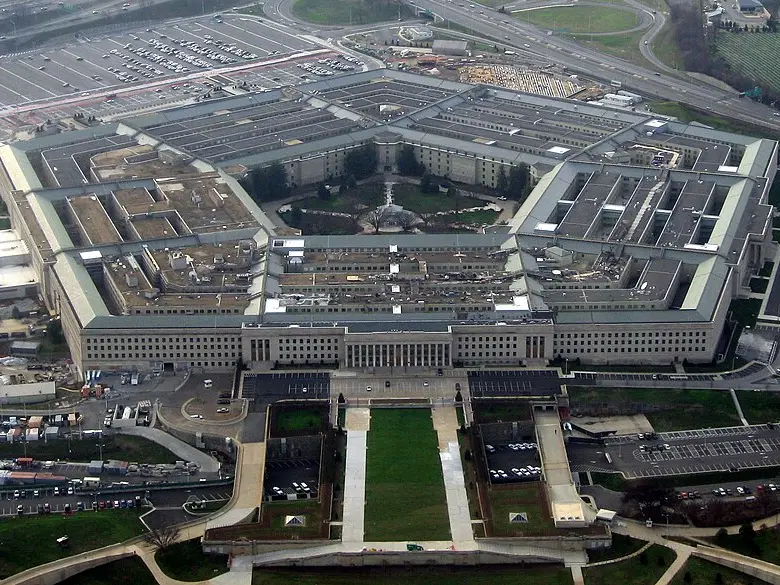
Pentagon quietly adds 37 wounded troops to Iran war tally without explaining when or how
)
US court backs Pentagon's decision to exclude Anthropic over Claude AI restrictions
)
US Supreme Court backs Trump administration's use of SAVE database to check voter citizenship
)
‘Could kill billions...’: Bill Gates backs calls to slow AI development amid fears of catastrophe
)
'Countries far from conflict are penalised': Jaishankar calls for Gulf peace, seafarer safety at UN
)
WATCH | As Shehbaz Sharif claims Pakistan’s ‘victory’ during 2025 conflict, Indian diplomat R Srinivas laughs at UN
)
Outrage erupts after 3-year-old is married to 60-year-old man in Pakistan, link to her sister's murder being probed
&im=FitAndFill=(700,400))
New Friday OTT releases (September 25, 2026): Don’t Be Shy, Hunkkaar: The Roar, Mango Pachcha- 6 movies and TV shows on Netflix, Prime Video and more
)
Global community 'absent' in Gulf crisis: Saudi at UN calls for freedom of navigation, pre war status for Hormuz
)
Farhan, who went viral for AK47 celebration vs India in Asia Cup, hopes to lead Pakistan beyond Asian Games
)
‘I rejected it’: Trump confirms turning down Iran’s proposal to reopen Hormuz, claims Tehran is losing ‘badly’
)
Russia will achieve Ukraine war aims; Europe doing everything to block peace talks: Lavrov at UN
The majority of the water in this enormous reservoir originates in the Rocky Mountain range's snowmelt, which flows via Lake Powell, the Grand Canyon, and Lake Mead before entering the reservoir.

Image courtesy: NASA's Earth Observatory
In addition to being an important supply of drinking water and irrigation for the Southwest, Lake Mead is a popular boating destination and national recreation area.
The US National Park Service reported that five of the six boat ramps/launches are currently closed.On its website, it said that "Declining water levels due to climate change and 20 years of ongoing drought have reshaped the park’s shorelines."
It added that “As Lake Mead continues to recede, extending launch ramps becomes more difficult and more expensive due to the topography and projected decline in water levels.”
The summers of 1983 and 1999 marked the last time the lake was close to capacity.
(With inputs from agencies)
Watch WION LIVE HERE:
You can now write for wionews.com and be a part of the community. Share your stories and opinions with us here.

