$1.3 trillion vanished from chip stocks in days and demand never fell

&imwidth=600&imheight=450&format=webp&quality=medium "$1.3 trillion vanished from chip stocks in days and demand never fell")
$1.3 trillion vanished from chip stocks in days and demand never fell
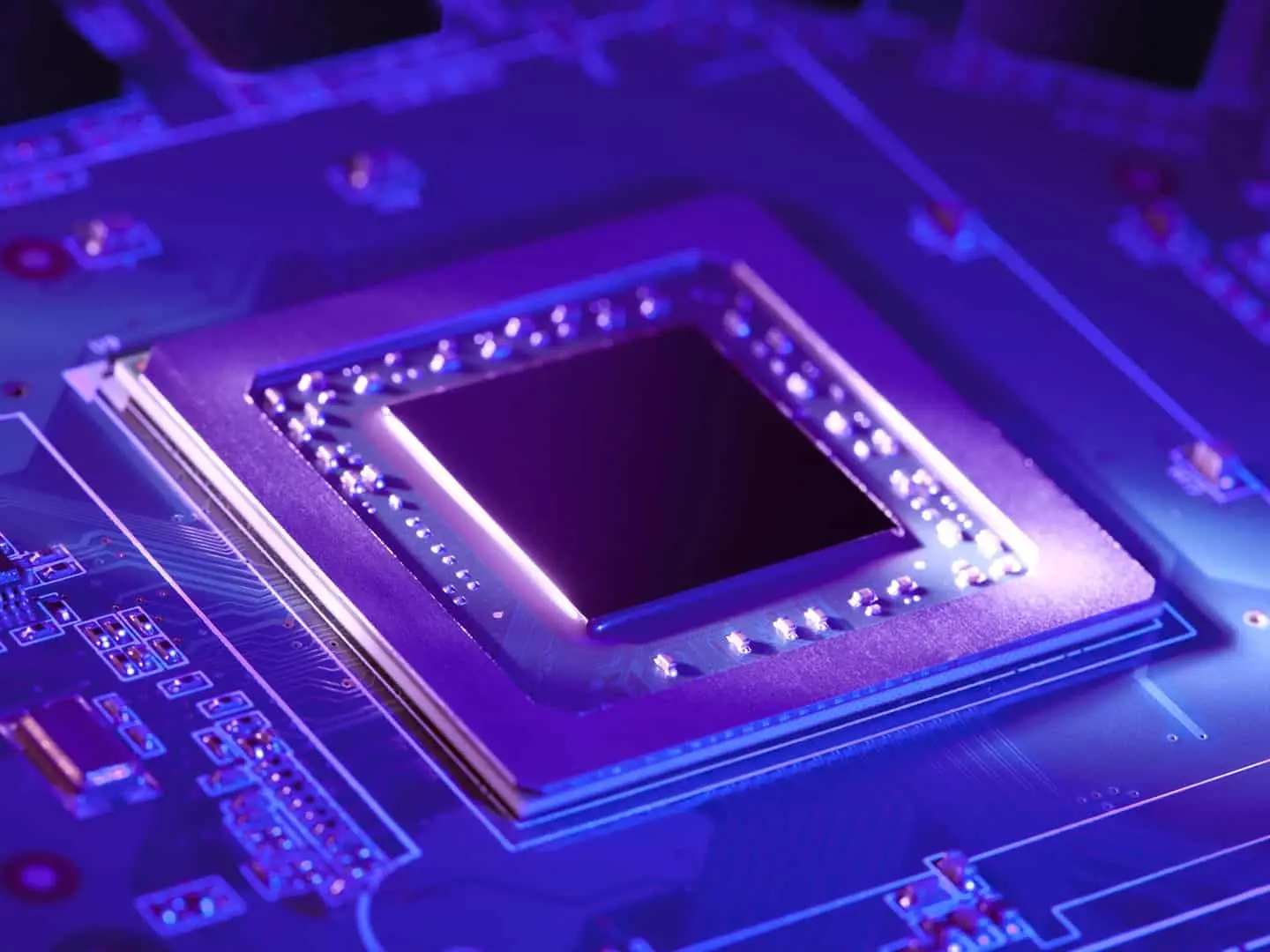
More than $1.3 trillion in market value was erased from the world's largest semiconductor companies in a handful of trading sessions. Nvidia lost roughly $238 billion, SK Hynix $176 billion, Samsung $173 billion, TSMC $119 billion and Micron $113 billion. Demand for AI chips did not fall — investors simply stopped believing the spending will earn its money back.
The largest semiconductor companies in the world lost more than $1.3 trillion in market value in a matter of trading sessions. Not one of them reported falling demand.
The Damage
Nvidia alone shed roughly $238 billion. SK Hynix lost about $176 billion, Samsung Electronics around $173 billion, TSMC approximately $119 billion, and Micron some $113 billion. Across the sector, the total erased exceeded $1.3 trillion.
These are not companies in trouble on any operating measure. Samsung's semiconductor division saw profits grow more than 250-fold, even as its smartphone unit posted its first-ever operating loss. Samsung has warned that a severe global AI chip shortage could persist into 2028 — a supply constraint, not a demand one. TSMC and SK Hynix are both running near capacity, with the industry raising prices as demand outstrips supply across mature process nodes and advanced packaging alike.
The selloff had nothing to do with whether anyone wants AI chips. It had to do with whether the money being spent on them will ever come back.
The Question Investors Started Asking
Trending Stories
)
)
)
)
)
)
&im=FitAndFill=(700,400))
)
)
)
)
)
)
)
)
)
)
)
)
)
)
)
)
)
)
)
)
)
)
)
)
)
&im=FitAndFill=(700,400))
)
&im=FitAndFill=(700,400))
)
)
)
)
)
)
For three years, capital expenditure announcements from the hyperscalers were read as bullish signals: more spending meant more chips sold, and the chipmakers rose accordingly. That reflex has broken.
The numbers now being committed are large enough to force a different question. OpenAI has raised projected compute spending to roughly $750 billion through 2030. Meta has guided to as much as $145 billion in capital expenditure this year. Alphabet has guided to $195–205 billion. Meta's most recent quarter showed free cash flow collapsing 91 per cent to $784 million as AI capex passed $31 billion in three months; Alphabet's showed free cash flow at negative $5.9 billion.
Those figures describe an industry spending faster than it earns, funded increasingly by outside capital. Nvidia is reportedly in talks to guarantee some $250 billion in financing for OpenAI's Ohio campus — necessary because OpenAI, unprofitable, cannot secure an investment-grade credit rating alone. Meta has moved a $14 billion data centre off its own balance sheet, handing 80 per cent ownership to BlackRock-managed funds and leasing the facility back.
The question the market began pricing is simple: if the buyers of AI chips are financing those purchases through vendor guarantees, asset managers and debt, what happens to chip revenue when that financing tightens?
The Second Threat: Custom Silicon
Running underneath the returns question is a competitive one. A wave of custom AI chips began shipping from major technology companies in late June and early July — processors designed in-house by the same hyperscalers that are Nvidia's largest customers.
On July 8, Cerebras, the startup known for manufacturing some of the largest chips ever built, announced a partnership with OpenAI to develop a processor designed specifically to challenge conventional GPU architectures. Qualcomm has since completed a $3.92 billion acquisition of Modular, whose software allows AI models to run across chips from different vendors without rewriting code — an attack on the CUDA software lock-in that has protected Nvidia's position more effectively than any hardware advantage.
Nvidia's near-monopoly on AI compute looks more contested than at any point in the past three years.
What It Does Not Mean
It is worth being clear about what this selloff is not. It is not evidence that AI demand is weakening — every available supply indicator points the other way, with shortages forecast to persist for two more years. It is not a verdict that AI will fail to produce value.
It is a repricing of expectations. For three years the market granted AI infrastructure spending unlimited patience. This month, it started asking for a timeline. The technology did not change between those two positions. Only the willingness to wait did.
