'We built this country together': UAE Envoy Alshaali reassures Indians amid West Asia crisis

&imwidth=600&imheight=450&format=webp&quality=medium "'We built this country together': UAE Envoy Alshaali reassures Indians amid West Asia crisis")
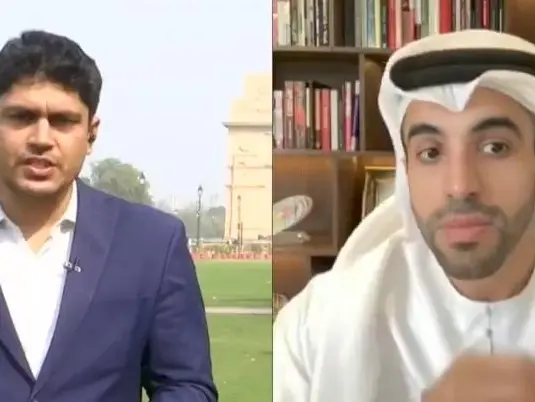
UAE Envoy Alshaali reassures Indians amid West Asia crisis Photograph: (WION)
The ambassador pointed to the swift personal engagement between leaders, noting Prime Minister Narendra Modi's immediate phone call to UAE President Sheikh Mohamed bin Zayed Al Nahyan after the attacks
The United Arab Emirates has reassured the millions of Indians living in the Gulf state amid the ongoing war in West Asia. Speaking to WION's Sidhant Sibal, UAE Ambassador to India, Abdulnasser Jamal Alshaali, emphasised the deep, longstanding ties between the two nations and the safety of the Indian diaspora. "The critical message is that Indians are safe in the UAE, and we will do our utmost to ensure that safety is maintained," Ambassador Alshaali said. He highlighted the intertwined lives of Indians and Emiratis, describing the relationship as far more than transactional. “Indians and Emiratis, they don't just simply work alongside each other in the UAE. We have built this country together,” he added.
The ambassador pointed to the swift personal engagement between leaders, noting Prime Minister Narendra Modi's immediate phone call to UAE President Sheikh Mohamed bin Zayed Al Nahyan after the attacks. He stressed the UAE's measured approach to the crisis. "UAE has approached the situation with strategic clarity and without reactive rhetoric, preventing further escalation remains our utmost priority"
Full interview
Sidhant Sibal: What is the UAE's assessment of the evolving dynamics in West Asia and its diplomatic efforts toward de-escalation and peace?
Dr. Abdulnasser Jamal Alshaali: As UAE has been under attack, His Highness Sheikh Mohammed bin Zayed Al Nahyan, the President of the UAE, has personally held more than 70 calls with world leaders to pursue de-escalation. His Highness, our Deputy Prime Minister and Minister of Foreign Affairs, has received more than 80 calls from foreign ministers who expressed full solidarity with the UAE. A total of more than 100 countries and international organizations have condemned these attacks, and if anything, this reflects the depth of international support for UAE's position. To be extremely clear, the UAE has approached the situation with strategic clarity and without reactive rhetoric, preventing further escalation remains our utmost priority, and every effort continues to be made to reduce risks and avoid miscalculation. Our experience in the region has shown that military solutions only complicate matters and that UAE's priority has been, and will always be, to contain this conflict and to pursue diplomatic solutions.
Sidhant Sibal: What measures is the UAE implementing to ensure the safety, welfare, and support of foreign nationals, particularly the large Indian community?
Dr. Abdulnasser Jamal Alshaali: I don't know if you've been following my post on social media, but they've been active in posting videos from expats from UAE, Indians and non Indians, who have been talking about their experience here. Indians and Emiratis, they don't just simply work alongside each other in the UAE. We have built this country together, and Indian doctors have treated Emirati patients, and Indian engineers have designed Emirati infrastructure, and Indian teachers have educated Emirati children. This is not a transactional relationship. It is a shared life. When that shared life came under attack. The response of UAE leadership was instinctive, not procedural. His Highness, President visited a hospital to meet civilians, among them, an Indian national, is a symbol of this.
The words of His Highness were the words of someone who has watched Indians, Emirates build something together for decades, and who carries that personally. Every Indian resident and visitor is our responsibility. I want to reassure the Indian community that the UAE air defense systems have intercepted the vast majority of incoming threats, at a success rate of 93 plus percent. Essential services including energy, water, telecommunications, healthcare, transport and supply chains continue to operate normally. The UAE strategic food reserves cover four to six months of demand and market monitoring is in place to prevent unjustified price increases. The critical message is that Indians are safe in the UAE, and we will do our utmost to ensure that safety is maintained.
Trending Stories
&im=FitAndFill=(700,400))
)
)
)
)
&im=FitAndFill=(700,400))
)
)
)
)
)
)
)
)
)
)
)
&im=FitAndFill=(700,400))
)
)
)
)
)
&im=FitAndFill=(700,400))
)
)
)
)
)
&im=FitAndFill=(700,400))
)
)
)
Sidhant Sibal: What is the status and future of UAE-India bilateral engagement, and what was discussed in the PM Modi and UAE President talks?
Dr. Abdulnasser Jamal Alshaali: As you know the UAE India relationship is deep, resilient. You have been with us through different engagements, and you're very familiar with different aspects of the relationship as well. Prime Minister Modi did not wait to be briefed. He called, and His Highness President, received that call as it was intended from a genuine brother, partner and friend. The call was not a diplomatic formality. The Indian government has been actively engaged, through its embassy, through diplomatic channels and at the highest political level. India is not a bystander here. It's a partner. It's a strategic partner. It is home to over 4 million Indians.
They are not a diaspora in the distant sense of the word. They are our neighbours. They are our colleagues, they are our friends, and Indians have raised children here. They have buried their parents here, and they have called this country home for decades. When His Highness, the President says they are all our responsibility, he's speaking about people he knows, not an abstract population beyond our people to people ties. The Trade pact between our 2 countries, continues to provide a strong institutional foundation. The UAE's backing in the financial sector is highly resilient, and UAE's commitment to being a stable, open and globally connected economy has not changed well.
Disclaimer: WION takes utmost care to accurately and responsibly report ongoing conflicts in West Asia involving Israel, Iran, US, Gulf nations and non-state actors like Hezbollah, Hamas, Houthis, Islamic State, and others. Claims and counterclaims, disinformation and misinformation are being made online and offline. Given this context, WION cannot independently verify the authenticity of all statements, social media posts, photos and videos.
