&imwidth=800&imheight=600&format=webp&quality=medium "'War with US, Israel will only end when...': Iranian FM lays out conditions for halting strikes")
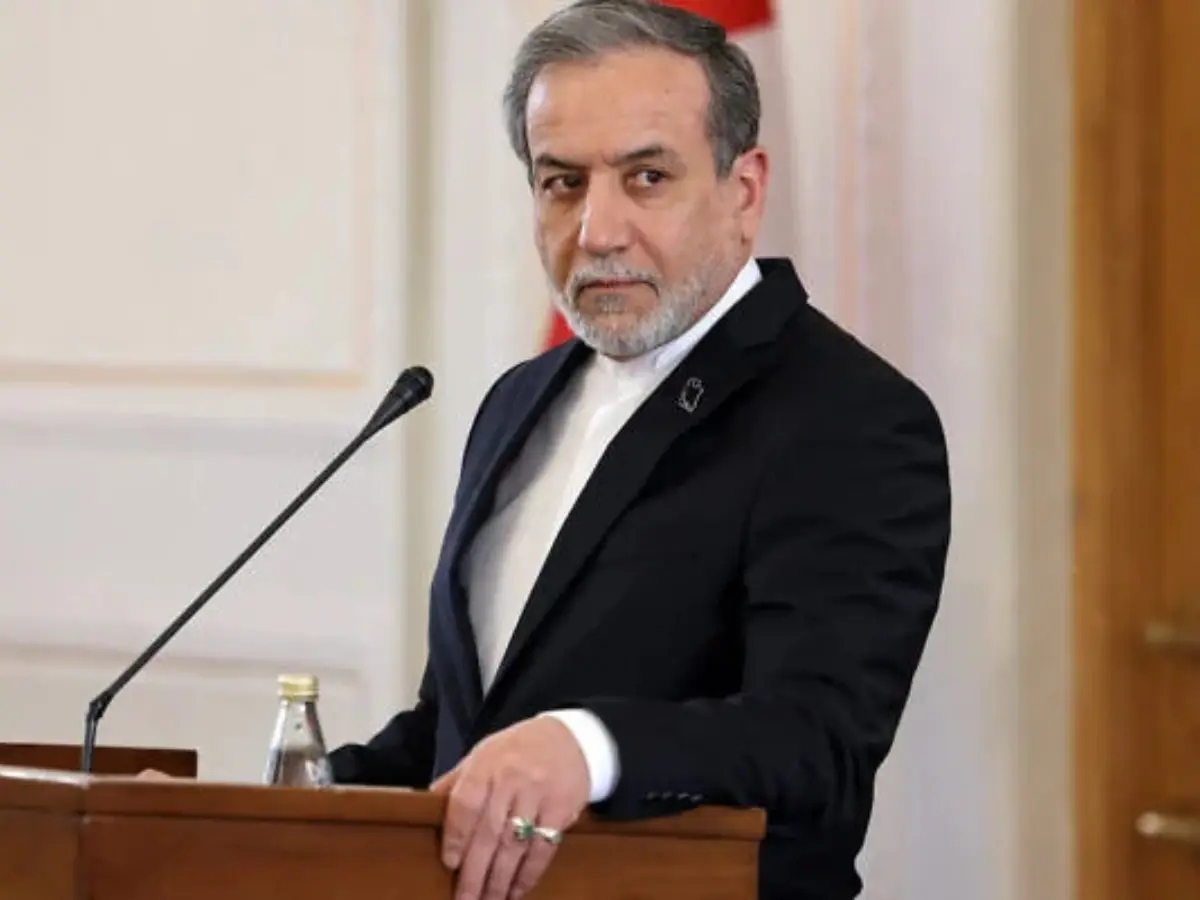
After both the United States and Iranian leadership publicly dismissed the possibility of a ceasefire, signalling further escalation in the West Asia conflict, Iran's Foreign Minister Abbas Araghchi laid out conditions for ending the war, stating that Tehran needs to be certain it will not restart and that reparations will be paid for the damage caused.
"This war will end when we are certain it will not be repeated and that reparations will be paid. We experienced this last year: Israel attacked, then the United States... they regrouped and attacked us again," Araghchi told Arabic-language news outlet Al-Araby Al-Jadeed, referring to Iran's war with Israel and the US in June 2025.
Araghchi said that Iran has ample evidence that United States military bases in West Asia have been used to target the Islamic Republic during the ongoing conflict.

"We have ample evidence of this: satellite imagery and electronic surveillance demonstrate that US bases in this region are being used for attacks," Araghchi said in an interview published on Sunday.
Earlier in the day, Araghchi described Tehran's strikes on targets across the region as "defensive actions" and clarified that Iran's strikes on US bases in Gulf nations should not be considered attacks on those countries.
"Iran's defensive actions are exclusively targeted at the military bases and facilities of the aggressors in the region and should in no way be construed as an attack by Iran on the countries of the region," he said in a statement.
Trending Stories
)
Why asking questions could be more important than memorising answers
)
BRICS Summit 2026: Iran's Pezeshkian praises PM Modi at BRICS
)
Osama Bin Laden ‘planned’ to target India, CIA reveals dozens of declassified documents
)
PM Modi and China's Xi offered to help resolve Russia-Ukraine war: Kremlin
)
BRICS Summit 2026: Global leaders of BRICS nations attend main open session
)
'Iran won't surrender': Pezeshkian sends blunt message to US while attending BRICS Summit in India
)
Why dehydration is the hidden cause of travel fatigue on long flights
)
Top 5 places to visit in Goa beyond its famous beaches
)
'He is popular...': Malaysian PM Anwar Ibrahim's praise for PM Modi during bilateral meeting | WATCH
)
BRICS Summit 2026: 30+ countries seek BRICS membership
)
Frustrated man demolishes his kitchen after thousands flock to see Mother Mary his wife spotted on the wall
)
BRICS Summit 2026: PM Modi, Xi reach key consensus on ties, China to assume BRICS chairmanship in 2027
)
BRICS Summit 2026: Consensus on joint declaration, diplomatic win for India
)
Trump says Canada eager to reach a deal, it could come ‘fairly soon’ if Ottawa treats US farmers better
)
‘Partners, not rivals’: Xi outlines four point plan for stronger India-China ties
&im=FitAndFill=(700,400))
Why Chinese PL-15 air-to-air missiles use dual-pulse motors compared to European interceptors
)
Could staying indoors all day affect your health?
)
BRICS Summit 2026: PM Modi addresses Day 2 of 18th BRICS summit
)
Who is the smiling man beside Modi, Putin and Xi at BRICS Summit 2026?
)
800 million years old - Scientists discover 'fingerprints' of supercontinent Gondwana in ancient rocks
)
Why going digital does not always mean becoming more efficient
&im=FitAndFill=(700,400))
Why do air defence missiles explode near their target instead of hitting it?
)
From severe mobility problems to recovery: Madhuri the elephant’s journey of wildlife care
)
BRICS Summit day 1: New Delhi declaration adopted with full consensus, big diplomatic win for India
)
Did Iran President Pezeshkian touch feet of Hindu spiritual leader at Delhi event as shown in viral video?
)
9-year-old Chennai prodigy clears Cambridge IGCSE grade 10 exams
)
Why does your body need time to adjust after a long journey?
)
BRICS Summit 2026: PM Modi to hold bilateral with leaders of seven countries
)
Ramanathaswamy temple takes centre stage as PM Modi welcomes world leaders at BRICS
)
Houthis launch cross-border strike on Saudi Arabia as Yemen war escalates
)
BRICS Summit 2026: Chinese president Xi Jinping departs from New Delhi after attending BRICS summit
)
Why does your skin need protection from UV rays?
)
How does the loss of forests affect the way wildlife lives and moves?
)
IND vs AFG, 1st T20I: When and where to watch live streaming in India?
)
Why do wild animals need quiet places to survive?
)
Bigg Boss 20: Qazi Touqeer gets a special ‘rockstar’ moment from Salman Khan
)
Humans may lose control of AI: Anthropic CEO calls for slowdown, Altman, Musk back him
Also Read: 'Avoid action that could widen the war': Araghchi says Iran targeted US assets in regional strikes
He also urged other countries and regional neighbours to refrain from any action that could widen the scope of the war with the United States and Israel after President Donald Trump called on multiple countries, including China, France, Japan, South Korea, the UK, and others, to send warships to the area "so that the Strait of Hormuz will no longer be a threat by a nation that has totally decapitated."
On Friday, the US military launched a massive attack on Kharg Island, Iran's critical oil export hub, to push Tehran to reopen the Strait of Hormuz.
The war in West Asia entered its third week after joint US-Israeli strikes on February 28 targeted the top leadership of Iran, assassinating Supreme Leader Ayatollah Ali Khamenei on the opening day of the military campaign.
In retaliation, Iran launched missile and drone attacks on US bases across the region. It also announced the effective closure of the Strait of Hormuz, which accounts for nearly 20 per cent of global oil shipping. This led to a sharp rise in energy prices, with crude crossing $100 per barrel.
US President Donald Trump is facing mounting domestic and international pressure as the conflict in West Asia triggered a global energy shock. With the Strait of Hormuz effectively closed to commercial traffic and crude oil prices surging by more than 40% since the start of the war, the administration is racing to implement emergency measures to stabilise the market.
(Disclaimer: WION takes utmost care to accurately and responsibly report ongoing conflicts in West Asia involving Israel, Iran, US, Gulf nations and non-state actors like Hezbollah, Hamas, Houthis, Islamic State, and others. Claims and counterclaims, disinformation and misinformation are being made online and offline. Given this context, WION cannot independently verify the authenticity of all statements, social media posts, photos and videos.)