'Gas prices in America could drop to $3 by late September', says US Treasury Secretary Scott Bessent

&imwidth=600&imheight=450&format=webp&quality=medium "'Gas prices in America could drop to $3 by late September', says US Treasury Secretary Scott Bessent")
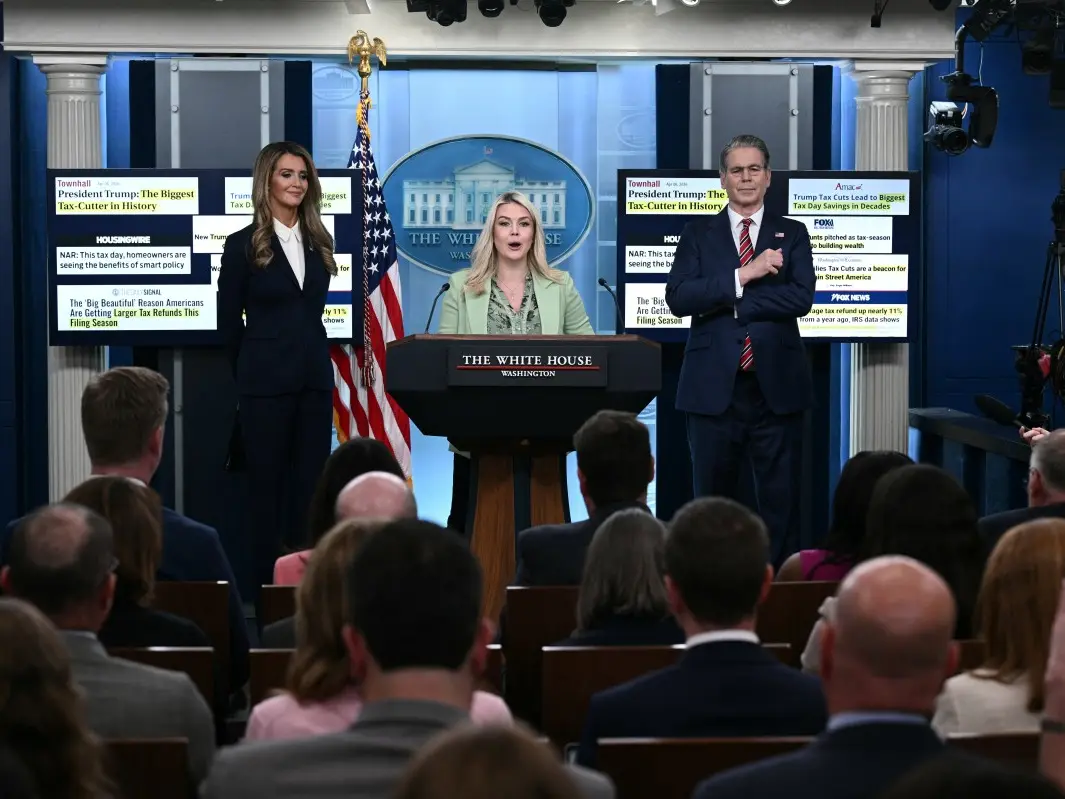
White House Press Secretary Karoline Leavitt speaks during a press briefing with US Treasury Secretary Scott Bessent and Administrator of the Small Business Administration Kelly Loeffler in the Brady Briefing Room at the White House in Washington, DC, on April 15, 2026. Photograph: (AFP)
Scott Bessent says US gas could drop to $3 by late summer if the Strait of Hormuz reopens, as oil supply recovers amid Iran conflict and global talks
US Treasury Secretary Scott Bessent said on Wednesday (April 15) that gas prices in the United States could fall to around $3 per gallon between late June and late September, depending on developments in global energy supply. “It’s bank week here in DC, so I’ve been meeting with a lot of my Middle Eastern counterparts, the finance ministers, and they all say when the straits are open, they can start pumping again within one week,” Bessent told reporters during a press briefing.
He emphasised that the timeline hinges on negotiations surrounding the reopening of the Strait of Hormuz, a critical route for global oil shipments. “I’m optimistic that sometime between June 20 and September 20, we can have $3 gas again,” Bessent said. Gas prices are currently averaging $4.11, according to The Hill. Prices surged following the escalation of the Iran war, during which Iran shut down the Strait of Hormuz, a passage that handles roughly 20% of the world’s oil supply.
Meanwhile, Donald Trump recently weighed in on future energy costs, suggesting uncertainty ahead of the 2026 midterm elections. “I hope so,” Trump answered. “I mean, I think so. It could be, it could be, or the same, or maybe a little bit higher. But, it should be around the same.” During the briefing, White House Press Secretary Karoline Leavitt and Bessent were also questioned about potential tariffs on China.
Leavitt said Chinese President Xi Jinping had assured Trump that China is not supplying weapons to Iran amid the conflict. Bessent added that the Treasury Department has warned two Chinese banks they could face secondary sanctions if Iranian funds are found in their accounts, though he did not name the institutions.
Trending Stories
)
)
)
)
)
)
)
)
)
)
)
)
)
)
)
)
)
)
&im=FitAndFill=(700,400))
)
)
)
&im=FitAndFill=(700,400))
)
&im=FitAndFill=(700,400))
&im=FitAndFill=(700,400))
)
Disclaimer: WION takes utmost care to accurately and responsibly report ongoing conflicts in West Asia involving Israel, Iran, the US, Gulf nations, and non-state actors like Hezbollah, Hamas, Houthis, Islamic State, and others. Claims and counterclaims, disinformation and misinformation are being made online and offline. Given this context, WION cannot independently verify the authenticity of all statements, social media posts, photos, and videos.

