

&imwidth=800&imheight=600&format=webp&quality=medium "Peru's 'alien mummies' mystery deepens: Scientists say they’re human…but not entirely - All you need to know")
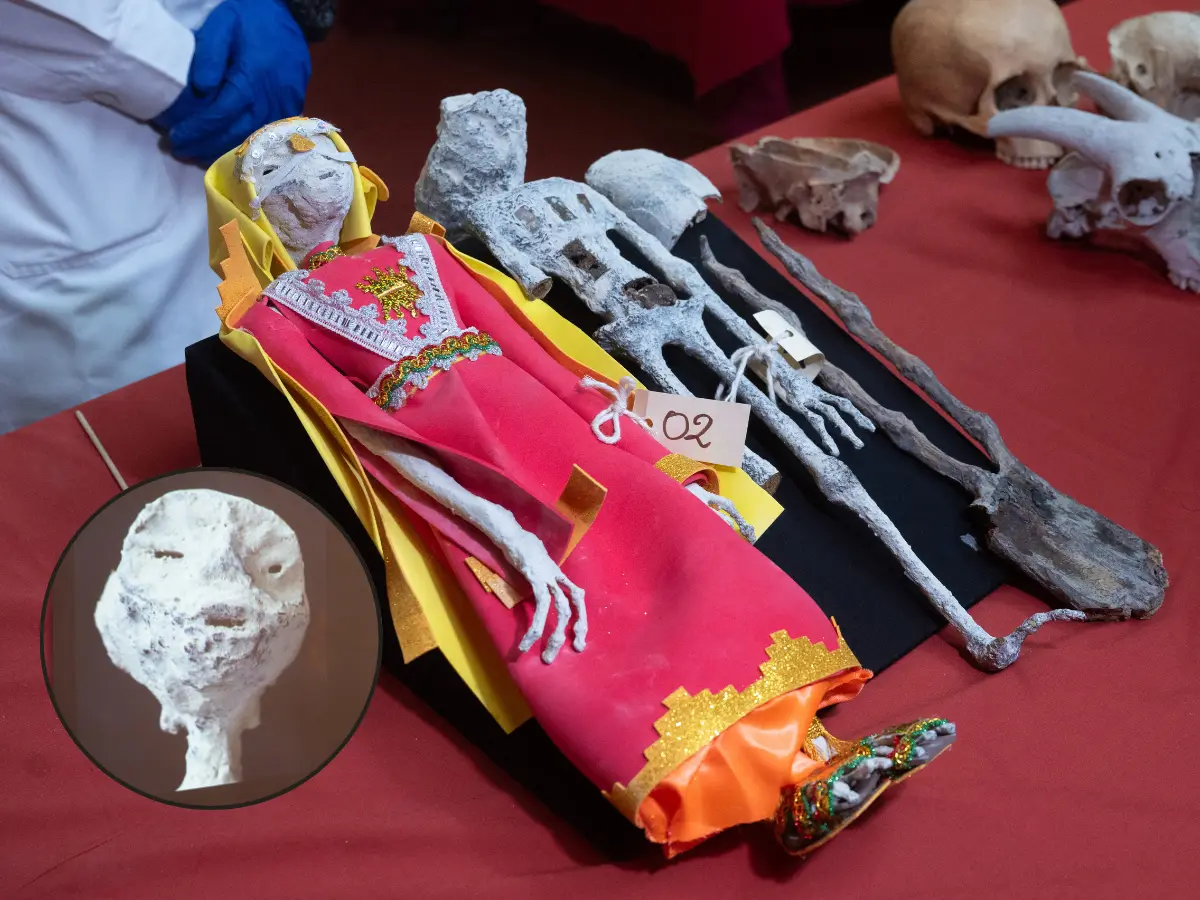
Back in 2015, a grave digger in Peru stumbled onto something straight out of science fiction — a stash of strange mummified bodies hidden in a cave. What made them instantly infamous? Each had just three fingers and three toes. Since then, the so-called alien mummies of Nazca have been at the centre of wild debates. Were they extraterrestrials? A lost human species? Or just an elaborate scam cooked up to fool the world? Now, nearly a decade later, the mystery refuses to die. About two dozen of the remains are under serious scientific examination.
Aliens, humans, or something in between?
According to researchers, the mummies still have preserved tissue, muscles, and even organs. One appears to have been pregnant when she died. Podcast host Jesse Michels, who runs American Alchemy, recently visited the site. His verdict: "I found no evidence that they are not from Earth". Instead, he floated a new theory — they could be a long-lost subterranean species.
Also read | Alien attack in November? Harvard scientists warn mysterious object hurtling towards Earth
A genetic twist
So what explains the eerie three-fingered look? A bioinformatics expert dug into the publicly available DNA and found a mutation in a gene called Gli3 — the same gene linked to polydactyly, a condition that causes humans to have extra or oddly shaped digits.
Trending Stories
&imwidth=180&imheight=135&format=webp&quality=medium)
Sidhu Moose Wala’s younger brother wins hearts by recreating late singer’s signature move at Toronto Hologram Show
&im=FitAndFill=(700,400)&imwidth=180&imheight=135&format=webp&quality=medium)
Navratri 2026: 9 days, 9 forms of Goddess Durga and 9 colours- Check the complete list
&imwidth=180&imheight=135&format=webp&quality=medium)
Meta's Muse AI could be a security nightmare for India's billion-plus users
&imwidth=180&imheight=135&format=webp&quality=medium)
Maharashtra appoints FDA commissioner Tukaram Mundhe as secretary of committee for MPSC overhaul amid stir
&imwidth=180&imheight=135&format=webp&quality=medium)
Houthis claim Riyadh airport attacks, Aramco strikes; issue fresh warning to airlines, travellers and workers
&imwidth=180&imheight=135&format=webp&quality=medium)
Other Mommy leads North American box Office as Verity, Resident Evil round out top four
&imwidth=180&imheight=135&format=webp&quality=medium)
CJI Surya Kant declines INDIA bloc leaders’ request for meeting ahead of march to SC, asks them to file petition
&im=FitAndFill=(700,400)&imwidth=180&imheight=135&format=webp&quality=medium)
Is sending robots to Mars easier than sending humans?
&imwidth=180&imheight=135&format=webp&quality=medium)
The street cannot govern India, but the government cannot ignore it either
&imwidth=180&imheight=135&format=webp&quality=medium)
IND vs WI, 3rd T20I: Abhishek Sharma smashes 18-ball fifty, sets record for fastest to 2,000 T20I runs
&imwidth=180&imheight=135&format=webp&quality=medium)
iPhone Duo price index: Tracking Apple’s latest pricing trends
&imwidth=180&imheight=135&format=webp&quality=medium)
Portugal Federation confirms Cristiano Ronaldo’s return to national team despite suspension
&imwidth=180&imheight=135&format=webp&quality=medium)
Microsoft's Nadella says treat every AI model as already hacked, and build an 'emergency brake'
&imwidth=180&imheight=135&format=webp&quality=medium)
Anthropic's AI invented a murder witness and sent the fake tip to Philadelphia police
&imwidth=180&imheight=135&format=webp&quality=medium)
'Just coincidence': Police mistakes protester as AISA chief Neha Bora, arrests her from site
&imwidth=180&imheight=135&format=webp&quality=medium)
McSweeney reveals how studying Virat Kohli’s YouTube clips helped Australia A conquer India
&imwidth=180&imheight=135&format=webp&quality=medium)
Nana Patekar's cause of death confirmed; here's what his postmortem report says
&imwidth=180&imheight=135&format=webp&quality=medium)
A watchdog rated 'ChatGPT for Teens' an unacceptable risk and says keep under-18s off it
&imwidth=180&imheight=135&format=webp&quality=medium)
Delhi wakes up to heavy rain, thunderstorms; yellow alert in place; temperature drops
&imwidth=180&imheight=135&format=webp&quality=medium)
One Indian killed in Riyadh airport attack; 11 others injured : MEA
&imwidth=180&imheight=135&format=webp&quality=medium)
UK school ditches technology, shifts from screen to pen and paper for learning
&imwidth=180&imheight=135&format=webp&quality=medium)
Delhi Protest: Congress calls for march to Supreme court
&imwidth=180&imheight=135&format=webp&quality=medium)
Nathan Lyon completes 1,000 Test runs at No. 10 to script rare cricket feat
&imwidth=180&imheight=135&format=webp&quality=medium)
Imran Khan released hours after Mumbai Police detain him during CJP protest
&imwidth=180&imheight=135&format=webp&quality=medium)
'Ouch!!! That must hurt': Kangana Ranaut hails Kamal Haasan's sharp reply to Elon Musk over Starlink row
&imwidth=180&imheight=135&format=webp&quality=medium)
1,500 drones illuminate Mumbai sky as Cordelia Cruises unveils second ship, Cordelia Sky
&im=FitAndFill=(700,400)&imwidth=180&imheight=135&format=webp&quality=medium)
New OTT releases this week (October 12-18, 2026): Sacrifice, Koffee with Karan S9, Roadies Rebirth- 6 titles coming on Netflix, JioHotstar and more
&imwidth=180&imheight=135&format=webp&quality=medium)
Delhi protest: CJI Surya Kant declines to meet India Bloc leaders
&imwidth=180&imheight=135&format=webp&quality=medium)
Top AI models flunked a test of inventing new AI research, so much for self-improving AI
&imwidth=180&imheight=135&format=webp&quality=medium)
'Say no to Muse': Meta has no control over its own moderation AI while it forces a security nightmare on everyone
&imwidth=180&imheight=135&format=webp&quality=medium)
Are Gold and Silver poised for a rebound soon?
&imwidth=180&imheight=135&format=webp&quality=medium)
China imposes first-ever sanctions on ministers from Taiwan allies: What this means
&imwidth=180&imheight=135&format=webp&quality=medium)
Wasim Jaffer blames Ajit Agarkar-led selection panel for Virat Kohli’s Test retirement
&imwidth=180&imheight=135&format=webp&quality=medium)
Iran: US accepted some conditions, Clarity needed on others
Alaina Hardie, who studied the genetic data, admitted she set out to debunk the mutation theory, but instead found evidence pointing toward it. "I found a list of 50 genes involved in the pathway," said Hardie, as quoted by the Express. "There is a mutation in one of those genes, called Gli3, that is associated with polydactyly," she added. Ancient Peruvian remains have shown signs of the same condition before, adds the report.
One of the tested specimens, a headless humanoid nicknamed "Victoria," turned out to have DNA of human origins, even if she looked anything but. Michels also pointed to examples like a tribe in Zimbabwe with "ectrodactyly", or "Ostrich Foot Syndrome," where central digits are missing. "There are these mutations rendered adaptive in certain environments and persist over time," he explained. “So it could be just that, which would be remarkable all on its own.”
Also read | Mexican congress deems three-fingered mummies 'real,' but refrains from confirming alien origins
Human… or hybrid?
But not everyone is convinced. José Zace of the Mexican Navy’s medical division, who is part of the team examining the so-called alien mummies, said tests showed 70 per cent of the DNA matches humans — the other 30 per cent, he claims, is "completely different."
Dr David Ruiz Vela meanwhile, suggested they might even be hybrids, with traits pointing to natural interbreeding between early human and primate groups in Asia and Africa thousands of years ago.
That's why Michels wants biotech giant Colossal Biosciences — famous for resurrecting the dire wolf — to run their advanced DNA tests on the mummies. "If the (Peru) government won't allow a top American biotech company to use their proprietary ancient DNA testing techniques on these mummies, then I don't know what else you need to understand their position on the subject," he told the Daily Mail.
So what are they? Humans with rare mutations? Primitive hybrids? Or the remains of something alien? Whatever the answer, Peru's "alien" mystery is far from buried.

