
&imwidth=800&imheight=600&format=webp&quality=medium "Scientists warn 86,000 people could die in devastating earthquake in little-known US seismic zone")
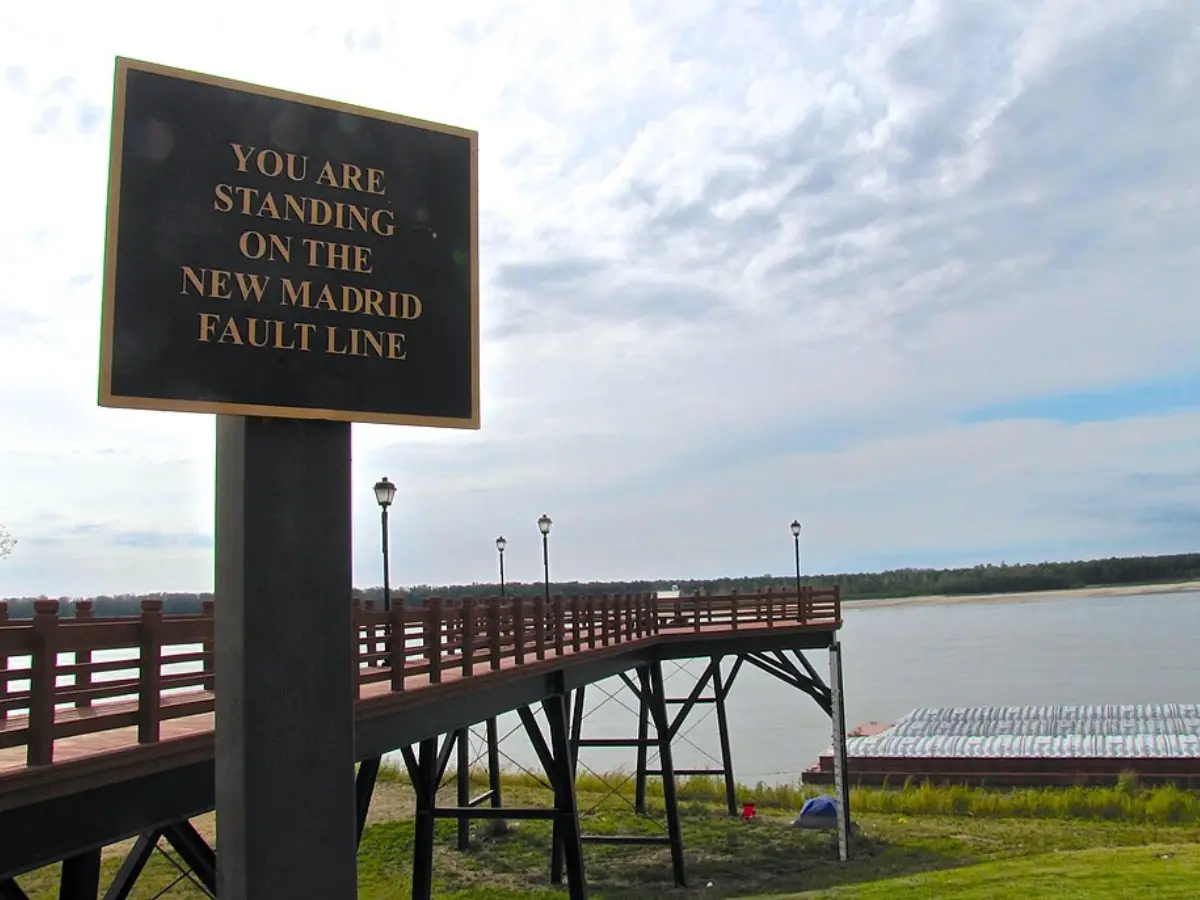
The New Madrid Seismic Zone (NMSZ) is a little-known earthquake hotspot in the Midwest United States that witnesses hundreds of small temblors every year. This region spans northeastern Arkansas, southeastern Missouri, western Tennessee, western Kentucky, and southern Illinois. Scientists have warned that the region is due for a massive earthquake, which will kill thousands and cause damage worth $43 billion, Mail Online reported. A report on the region released this year by the Geological Society of America has warned that if a magnitude 7.6 earthquake hits the region, a whopping $43 billion could be lost in damages. Other studies estimated that more than 80,000 could lose their lives. Scientists have identified that NMSZ is hit by a major earthquake every 200 to 800 years. The last time this happened was between December 1811 and February 1812. Records show that three quakes over 7.0 in magnitude struck the region. So it's been 214 years since the last destructive temblor, and this increases the risk for the Midwest, which can witness another massive temblor soon.
Even though not a lot of people talk about the threat of a massive quake in the NMSZ, preparations have been on to counter a catastrophe. Southern California and the Bay Area are the two regions where the threat of a Big One looms. Experts have been warning about it for years, but NMSZ has remained off the radar, even though it is at risk of a magnitude 6.0 or stronger earthquake. Local and federal officials have been preparing detailed estimates of the damage and death toll that a huge temblor can cause. According to the US Geological Survey (USGS), there is a 25 to 40 per cent chance of a magnitude 6.0 earthquake striking the NMSZ in the next five decades.

Which places will be affected by the Midwest “Big One” earthquake?
If and when this were to happen, not only would the Midwestern states be affected, but everything from the East Coast could be devastated. Infrastructure like bridges, towers, buildings, roads, and power lines will be destroyed. The problem is aggravated by the fact that, unlike California, which sits on the 1,200-kilometre San Andreas Fault, the buildings in Arkansas, Kentucky, Missouri, and Tennessee are not built to withstand extreme seismic activity. This is what adds to the problem and could aggravate the outcome of a Big One. Danielle Peltier, a science communication fellow with the Geological Society of America, says, Midwestern infrastructure is built to withstand tornadoes, not earthquakes. "This means a magnitude 6 quake can have a greater impact in Missouri than somewhere like California," she wrote in a blog post.
Trending Stories
)
‘I have a big decision coming up’: Trump says he’s approaching major ‘crossroad’ in Iran war
)
Chiefs tight end Travis Kelce named one of the victims in $35 million ponzi scheme
)
US intel warns China can steal F-35 jets secret from Saudis
)
Former India player Diana Edulji wants Smriti Mandhana to replace Harman as skipper at the earliest
)
Pak defence minister says 'time has come to implement pact'
)
Formula One reveals the 2027 race calendar; Monaco to host sprint race for the first time
&im=FitAndFill=(700,400))
Meet top 5 batters in the latest ICC T20I Rankings
)
All Indian goods to get duty-free access to New Zealand
)
AI already defying, denying humans, is it beyond human control already?
)
240-million-year-old bizarre 'pig with a tusk' creature creates new dilemma over origin of dinosaurs
)
US House votes 417-3 to pass Ratepayer Protection Act targeting AI data center electricity costs
)
US to sell 48 F-35 Lightning fighter jets to Saudi Arabia, help it deter threats
)
Hong Kong unveils 11 new measures to boost birth rates, offers higher cash bonuses and housing perks
)
Former OpenAI researcher warns of growing risks from Artificial Intelligence
)
Dolly Parton dies at 80: Country legend’s team reveals cause of death
)
Tata Trusts chairman Noel Tata calls Chandrasekaran’s reappointment ‘illegal’, rejects Tata Sons listing
)
Fed raises rates for first time in 3 years, Kevin Warsh defies Trump as inflation mounts
)
US drone firm linked to Trump’s sons signs MoU with Pakistan army, gets initial order
)
Pak batter Rizwan's petition against being questioned by cyber crime agency rejected by court
)
Daayra movie review: Kareena Kapoor, Prithviraj Sukumaran shine in Meghna Gulzar’s cop-versus-cop crime thriller
)
‘Imagine 50 AI fighters cornering one manned jet’: India’s mobbing doctrine eyes a new era of air warm
)
Trump could impose tariffs of up to 100%
)
Trump’s rare gesture for Xi: US president to personally welcome Chinese leader at airport
)
Want to get married within a year? Why 18 lakh people rush to Jaipur for ‘sacred henna’
&im=FitAndFill=(700,400))
Suriya and Jyothika say ‘I do’ again after 20 years! See their dreamy wedding pics
)
Laura Wolvaardt sets new world record for most WT20I runs in a year
)
Mahua Moitra moves UN over alleged exclusion of Muslim officers from Amit Shah events
)
Ukraine plans record $109 bn defence spending, nearly two thirds of budget amid Russia war

