NASA satellite captures 76-sq-km iceberg floating away from Greenland glacier

&imwidth=600&imheight=450&format=webp&quality=medium "NASA satellite captures 76-sq-km iceberg floating away from Greenland glacier")
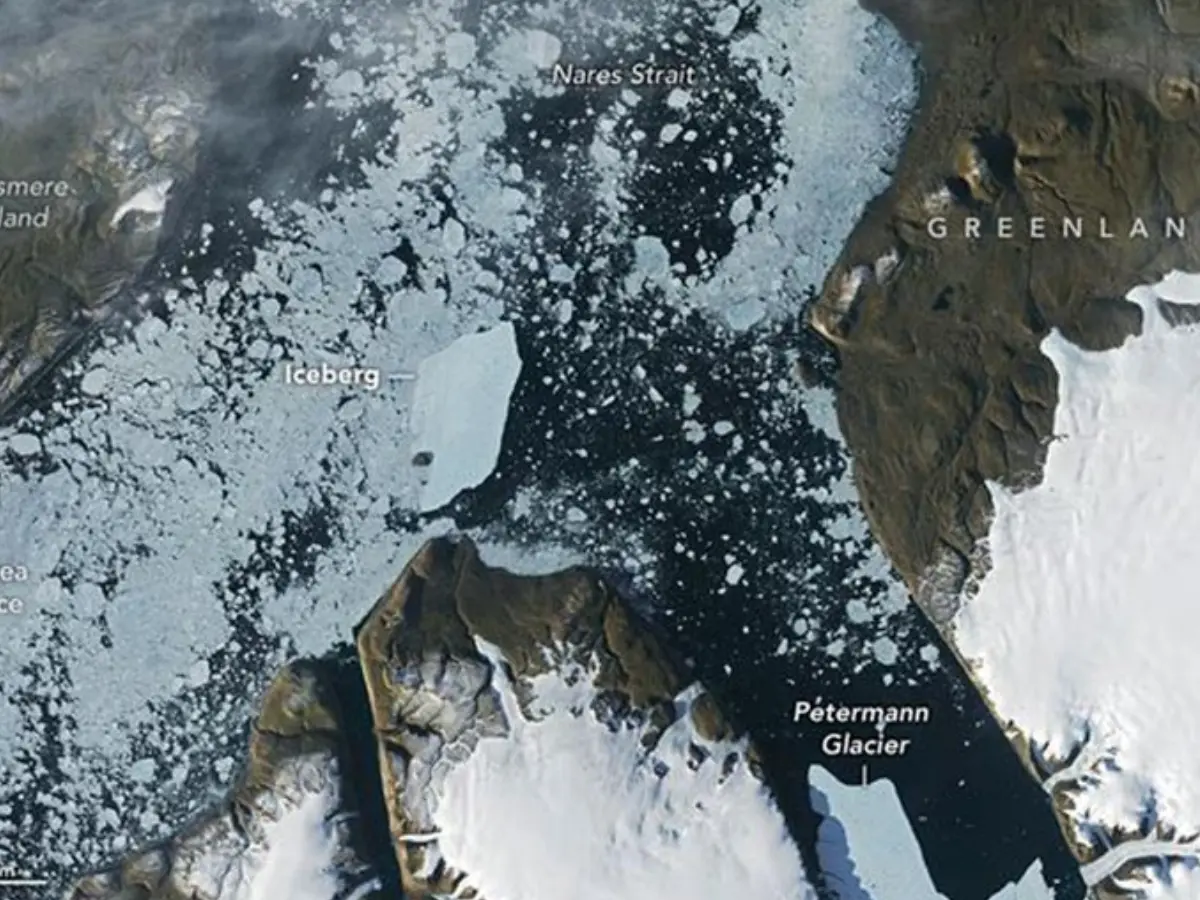
This NASA photo taken by Landsat satellites shows the iceberg drifting away from the Petermann Glacier. Photograph: (NASA Earth Observatory, Lauren Dauphin)
An iceberg calved from the Petermann Glacier in Greenland and kept moving towards a fjord where it collided with an island. While almost every other ice island broke apart after this encounter, surprisingly, the new iceberg remained intact and continued its journey.
A scientist has flagged an occurrence that happened this summer when a huge iceberg separated from Petermann Glacier on Greenland’s northwest coast, collided with Joe Island, but made it out of it without any major damage. Adam Garbo, a doctoral student in glaciology at the University of Ottawa, was scanning through images from the European Space Agency’s Sentinel-1 mission when he came across this calving event.
A team of international researchers has been using remote sensing techniques to monitor Petermann Glacier and its floating ice tongue. They noticed that the tabular iceberg, or ice island, was a little over 76 square kilometres when it broke apart from the glacier. It was the largest iceberg to break from Petermann since 2012, when a 130 square kilometre iceberg broke off from it.
As they watched Petermann, they monitored several major rifts that could cut off from its ice tongue. However, they were surprised to see that the calving happened from a different fracture and was much smaller than what they were waiting for. They were still waiting for 94 square kilometres and 84 square kilometres of ice islands to break off from bigger fractures.
Satellites captured it clashing into Joe Island
NASA USGS Landsat satellites showed the iceberg moving down Petermann Fjord toward Nares Strait. It travelled nearly three kilometres each day for a week. It then slammed into a small rocky outcrop called Joe Island, an event which was captured by the OLI (Operational Land Imager) aboard Landsat 9 on August 23 and 24.
Trending Stories
)
)
)
)
)
)
)
)
)
)
)
)
)
)
)
)
)
)
&im=FitAndFill=(700,400))
)
)
)
&im=FitAndFill=(700,400))
)
&im=FitAndFill=(700,400))
&im=FitAndFill=(700,400))
)
Joe Island is located near the entrance to Petermann Fjord, and many of the ice islands that collide with it break up since they are generally thinner and more fragile. However, this new island came out largely intact. "We were certainly watching closely as it interacted with Joe Island and were impressed that it survived the interaction without further fragmentation," Garbo said.
Scientists estimate that the ice island was less than 490 feet thick during its first calving and is now moving southwest through Nares Strait. It is expected to continue its journey for weeks before running aground. It will likely break into fragments, release freshwater into the ocean and also pose a danger to ships.

