From math prodigy to Unabomber: Who was Ted Kaczynski and how did the FBI catch him after 18 years?

&imwidth=600&imheight=450&format=webp&quality=medium "From math prodigy to Unabomber: Who was Ted Kaczynski and how did the FBI catch him after 18 years?")
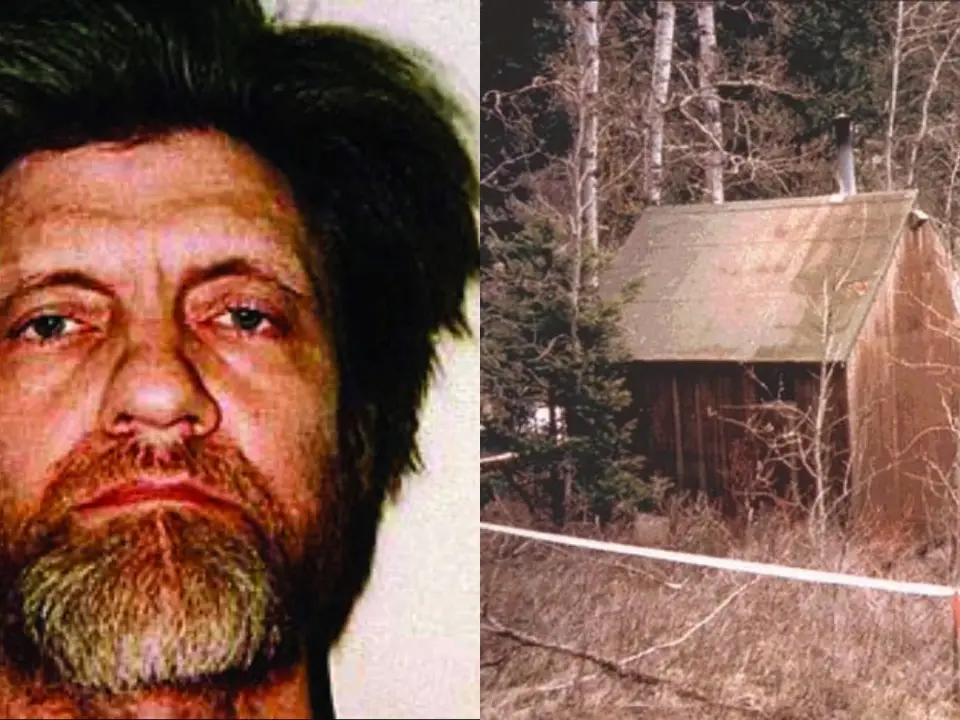
Ted Kaczynski (left) and the house that he lived in (right) Photograph: (AFP/X (@FBI))
Ted Kaczynski, the Unabomber, carried out a nearly two-decade bombing campaign before his 1996 arrest and later life imprisonment
Ted Kaczynski went from being a teenage mathematics prodigy to becoming one of the most notorious criminals in American history. Known as the ‘Unabomber’, he carried out a bombing campaign that stretched across nearly two decades. Netflix’s Unabomber has once again brought his life, ideology and deadly attacks into the spotlight. Between 1978 and 1995, Kaczynski was linked to 16 bombings across the United States. The attacks killed three people and injured 23 others.
His campaign began in May 1978, when a package containing a homemade bomb was discovered at the University of Illinois at Chicago. The device exploded when it was handled, injuring a campus security officer. Over the years, Kaczynski targeted universities, an aircraft and individuals he believed were connected to technology, industry and the modern industrial system. Among those killed were Hugh Scrutton, Thomas Mosser and Gilbert Murray, as per The Time.
Who was Ted Kaczynski?
Born in Chicago in 1942, Kaczynski showed exceptional mathematical ability from a young age. He entered Harvard University at just 16 and later attended the University of Michigan, where he earned both a master’s degree and a doctorate in mathematics.
At 25, Kaczynski became a mathematics professor at the University of California, Berkeley. He resigned from the university in 1969 and eventually moved to a remote cabin near Lincoln, Montana.
The cabin had no electricity or running water. Kaczynski increasingly withdrew from mainstream society, spending his time reading, hunting and growing plants. At the same time, he developed a deep opposition to modern technology and industrial society. In 1978, he started the bombing campaign that would eventually make him the target of one of the FBI’s longest and most complex investigations. His first known bombing involved a homemade device sent to a professor at Northwestern University. The package was opened by a campus security officer, and the resulting explosion caused minor injuries.
Trending Stories
)
)
)
)
)
)
)
)
)
)
)
)
)
)
)
)
)
)
)
)
)
)
)
)
)
)
)
)
)
)
)
)
)
)
&im=FitAndFill=(700,400))
)
)
)
)
In November 1979, Kaczynski placed another device aboard an American Airlines flight. The bomb caused smoke-related injuries and forced the aircraft to make an emergency landing. Over the following years, his targets included universities, airlines and individuals whom he associated with technology and the modern industrial system.
Why was he called the Unabomber?
The FBI initially assigned the case the identifier UNABOM, an abbreviation for ‘University and Airline Bombing’. Before Kaczynski’s identity was established, the media adopted the name 'Unabomber'. The investigation eventually connected 16 attacks to the case between 1978 and 1995. Three people were killed and 23 others were injured. Despite an extensive investigation, Kaczynski’s identity remained unknown for years.
That changed in 1995, when he sent a lengthy manifesto titled ‘Industrial Society and Its Future’ to The Washington Post and The New York Times and demanded that it be published. The approximately 35,000-word document outlined his opposition to modern technological society and examined themes including human freedom, autonomy and the consequences of industrialisation. The FBI supported publishing the manifesto in the hope that someone who knew Kaczynski would recognize his writing. That breakthrough came from his brother David’s wife, Linda Patrik.
After reading the manifesto, Patrik noticed similarities between its arguments and language and writing she had previously encountered from Kaczynski. She shared her concerns with David, who initially found it difficult to believe that his brother could be responsible for the bombings. David later compared the manifesto with an essay Kaczynski had written years earlier. The similarities in language and ideas convinced him to contact the FBI. The writings provided investigators with a critical lead. After years of investigation, authorities now had a direct connection between the manifesto and Kaczynski's earlier writings, helping them identify him as the person behind the Unabomber case.
How was Ted Kaczynski caught?
On April 3, 1996, almost 18 years after the first known attack, federal agents surrounded Kaczynski’s isolated cabin near Lincoln, Montana, and arrested him. A search of the property uncovered extensive evidence. Investigators found bomb-making materials, a typewriter, coded diary entries, approximately 40,000 pages of handwritten notes and a completed bomb. The evidence helped establish the connection between Kaczynski and the Unabomber attacks.
Kaczynski ultimately pleaded guilty and received a sentence of life imprisonment without the possibility of parole. He remained in prison until his death in 2023 at the age of 81. While incarcerated, Kaczynski was diagnosed with paranoid schizophrenia by a psychiatrist who interviewed him. He rejected the suggestion that he was mentally incapable of understanding his actions. In a 1999 interview with TIME, he said he was certain he was sane.
His case remains one of the most extensively examined criminal investigations in modern American history, particularly because of the combination of his academic background, years of isolation, anti-technology writings and the unusual role his manifesto played in helping investigators identify him.

