Aug 12 solar eclipse: 'Eerie shadow' will cover two NASA pilots and totality will last 42 seconds more than usual

&imwidth=600&imheight=450&format=webp&quality=medium "Aug 12 solar eclipse: 'Eerie shadow' will cover two NASA pilots and totality will last 42 seconds more than usual")
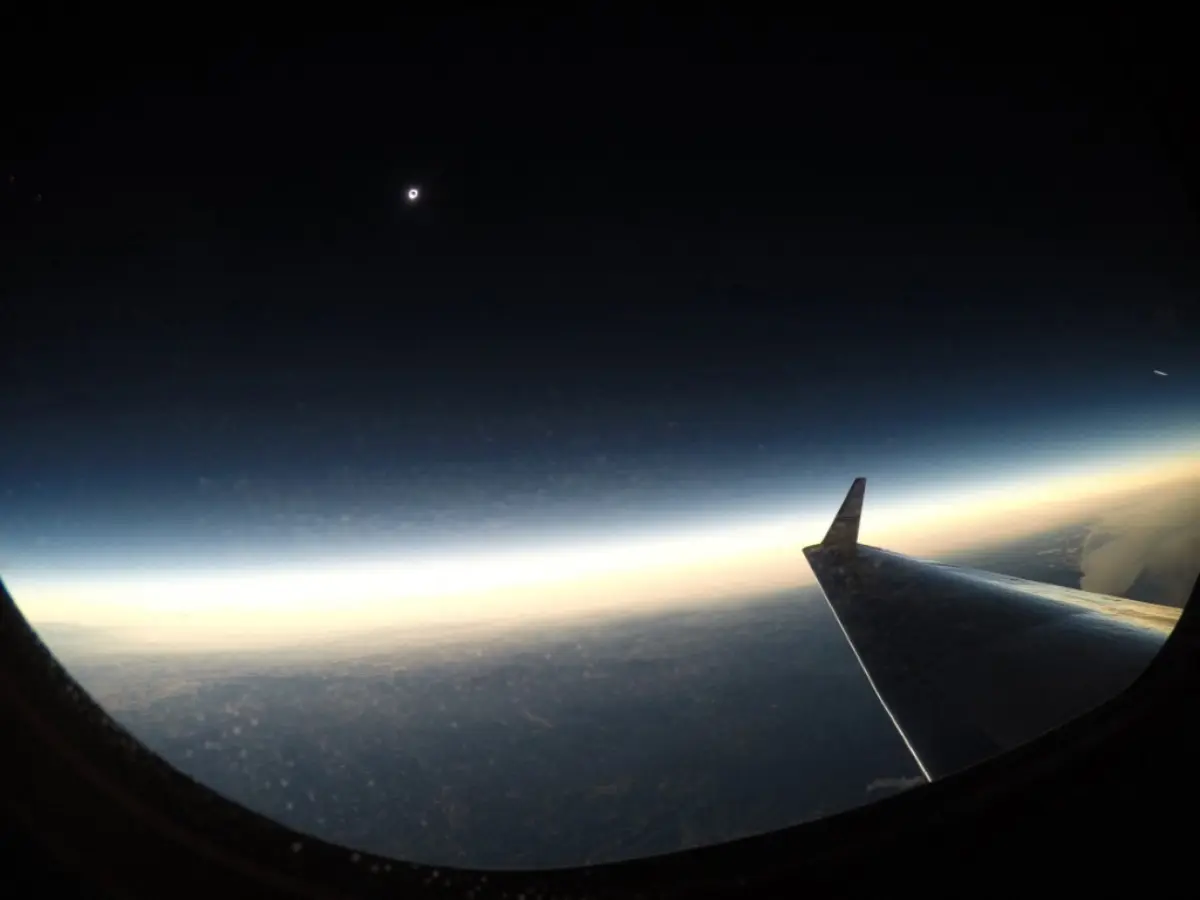
Total Solar Eclipse seen from a NASA aircraft in 2017. Photograph: (AFP)
Total Solar Eclipse 2026: For two NASA pilots, the eclipse on August 12 will last nearly three minutes in totality. The eclipse chasers will be covered by a weird and eerie shadow, with the aircraft going dark suddenly, instantly cooling the interiors.
The totality of the August 12 Solar Eclipse will last for nearly three minutes for two people. For parts of the Earth witnessing totality, the entire duration will be 2 minutes 18 seconds. Two NASA aviators are set to chase the eclipse as they get on a research plane from Keflavik Airport in Iceland on Wednesday. They will fly north towards Greenland, then head south on a curving course 64km off the Icelandic coast.
While flying at 50,000ft, the moon's shadow will start racing from behind, crossing the ocean at a speed of more than 3,200km/hr. When the majority of the sun is covered by the moon, the shadow will cover it.
As their plane cruises at a speed of 740 km/hr along the path of the eclipse, they will be covered in darkness for nearly 3 minutes, as compared to 2 minutes 18 seconds on the ground. This will give them more time to study the sun in its eclipsed state.
Describing the moment this happens in the air, Cary Klemm, a sensor equipment operator at Nasa’s Johnson Space Center in Houston, told The Guardian, that in the aircraft, it’s very bright, with no clouds above. "Then all of a sudden, you’re hit with this slam of shadow," said Klemm, who has previously flown eclipse missions. He says you are surrounded by "a weird, eerie shadow", the temperature drops, and you feel the "need for more light from the instruments."
Also Read: Total solar eclipse August 12: Date, time, path and where to watch Live - Full visibility guide
Aircraft used for chasing the eclipse
Trending Stories
)
)
)
)
)
)
)
)
)
)
)
)
)
)
)
)
)
)
)
)
)
)
)
)
)
)
)
)
)
)
)
)
)
)
&im=FitAndFill=(700,400))
)
)
)
)
The plane being used for the mission is a WB-57, which has four cameras. They will take several photos of the sun every second in different wavelengths of light. What they are expecting to capture are large, looping ribbons of plasma called prominences and magnetic explosions called nanoflares. A total solar eclipse is the only time when such features from the Sun can be viewed.
Each nanoflare releases energy equivalent to thousands of atomic bombs. Observing them helps understand the reason why the corona, or outer atmosphere, measures more than 1,000,000C, while the surface is only 6,000C.
The Total Solar Eclipse will cover the Arctic, Greenland, Iceland, and parts of Spain and Portugal. It will be the first total solar eclipse to be visible from mainland Europe since 1999.

