

&imwidth=800&imheight=600&format=webp&quality=medium "How technology and changing lifestyles are influencing design of future homes")
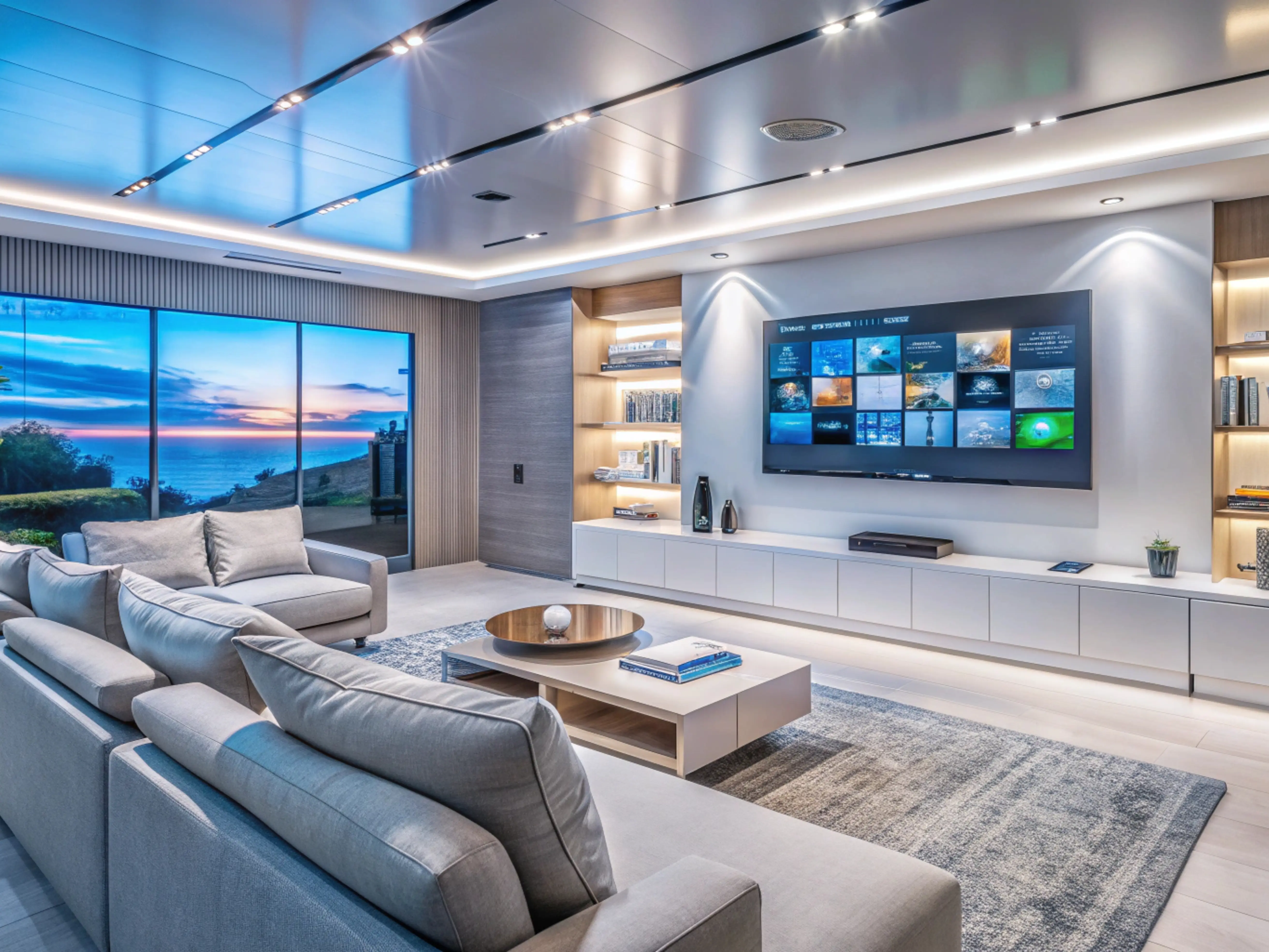
Indian homes are undergoing a quiet transformation, based on people's new lifestyles and changing technology that works best when it isn’t noticed. The future home is being redesigned around these two forces simultaneously: lifestyle shifts and invisible technology, making it not just a place to live but an increasingly smart, flexible, experience-led space. At the moment, homes are being transformed into responsive, sustainable, and multi-functional spaces rather than static living areas.
With the advent of new technology, future homes are being shaped by multiple converging trends. Seamless smart integration now lets Apple, Google and Amazon systems communicate through open standards like Matter, with devices blending invisibly into walls. AI-powered automation studies occupant habits to auto-adjust heating and lighting while cutting costs.
Hybrid work has driven demand for flexible, multi-functional layouts and quiet zones. Wellness-focused design features circadian lighting and touchless biometric entry. Sustainability efforts merge solar panels, battery storage and EV charging with eco-friendly materials. Finally, architects increasingly rely on big data, BIM and VR previews to design homes tailored to real living patterns.
Wellness and sustainability take centre stage
Gaurav Mittal, Director & Co-founder, Golden Abodes, stated that the future home is being redesigned around two forces at once. The first is how people actually live now, and the second is how much technology can quietly do without being noticed. Both changes are theoretical.
"The wellness real estate market alone reached $876 billion in valuation, expanding at roughly 15% annually, nearly double the pace of the broader wellness economy, signalling that health considerations are being written into architecture rather than left as an afterthought. Goa's coastal residential market illustrates this shift clearly, moving from seasonal vacation villas toward primary, high-performance homes. Lifestyle change is the more visible driver. With most high-income professionals working hybrid or remote schedules, homes are being asked to hold multiple identities in a single day. It is a home office by morning and a socialising or family space by evening. Demand for flexible, reconfigurable layouts has risen sharply. Now there are requests for acoustic partitions and dual-purpose rooms, which is up roughly 30 to 40% year over year. In a market like Goa, for example, this plays out through professionals relocating from Mumbai, Delhi, and Bengaluru who now expect homes to function as dual-purpose residences rather than weekend retreats, driving the same demand for acoustic separation and integrated work pods," Mittal told WION.
Trending Stories
&imwidth=180&imheight=135&format=webp&quality=medium)
US troop deaths in Iran war on rise? Pentagon reveals latest toll
&imwidth=180&imheight=135&format=webp&quality=medium)
Lula campaign accuses Meta of election interference after social media content blocked
&imwidth=180&imheight=135&format=webp&quality=medium)
100,000 strikes in 3 years: How October 7 redefined Israel's war
&imwidth=180&imheight=135&format=webp&quality=medium)
PM Modi inaugurates Rs 4,900 crore Chennai Metro Phase II stretch, takes ride with CM Vijay: VIDEO
&imwidth=180&imheight=135&format=webp&quality=medium)
‘Your people don’t even let us near it’: IAF chief’s blunt response on US F-35; India yet to decide on Russia’s Su-57
&imwidth=180&imheight=135&format=webp&quality=medium)
Saudi Arabia's King Khalid International Airport attack kills 12, injures 309; India calls it 'unacceptable'
&imwidth=180&imheight=135&format=webp&quality=medium)
‘Never-ending flow of cheap labour’: JD Vance hits back at Indian-origin Congresswoman over US green card curbs for major tech companies
&imwidth=180&imheight=135&format=webp&quality=medium)
HYBE’s Weverse Con India sets ticket sale date for March 2027 festival
&imwidth=180&imheight=135&format=webp&quality=medium)
Messi scores twice in Inter Miami return following final match for Argentina
&imwidth=180&imheight=135&format=webp&quality=medium)
CJP's Abhijeet Dipke, Ashutosh Ranka, Saurav Das released 22 hours after flight detention
&imwidth=180&imheight=135&format=webp&quality=medium)
'Unwarranted interference': India slams UN human rights office over remarks on Delhi protests
&imwidth=180&imheight=135&format=webp&quality=medium)
'Jantar Mantar not the story of India': BJP's Sambit Patra claims 'anarchists' tried to hold Delhi captive
&imwidth=180&imheight=135&format=webp&quality=medium)
3rd T20I Preview: Another run-fest on cards as India face West Indies in Indore
&imwidth=180&imheight=135&format=webp&quality=medium)
Nicolas Cage refuses AI waiver for Spider-Noir, hints at Amazon exit and True Detective role
&imwidth=180&imheight=135&format=webp&quality=medium)
Riyadh airport hit in missile attack, dozens injured; 5 in intensive care
&imwidth=180&imheight=135&format=webp&quality=medium)
At least 109 migrants, including 15 children dead as boat sinks off Djibouti, 116 go missing
&imwidth=180&imheight=135&format=webp&quality=medium)
'Spent Rs 2,000 cr to elect Trump': Elon Musk bought US President's loyalty by writing the biggest political cheque in human history
&imwidth=180&imheight=135&format=webp&quality=medium)
Powerful 7.7 magnitude earthquake strikes Panama, tsunami warning issued
&imwidth=180&imheight=135&format=webp&quality=medium)
US mid-term elections: What are PACs - Unique American System that lets corporates shape voting
&imwidth=180&imheight=135&format=webp&quality=medium)
Imran Khan released hours after Mumbai Police detain him during CJP protest
&imwidth=180&imheight=135&format=webp&quality=medium)
Nathan Lyon completes 1,000 Test runs at No. 10 to script rare cricket feat
&imwidth=180&imheight=135&format=webp&quality=medium)
Nepal flash floods swallow homes and bridges a month after devastating disaster
&imwidth=180&imheight=135&format=webp&quality=medium)
Sehwag sees reflection of himself in Sooryavanshi: ‘His thinking is similar to mine’
&imwidth=180&imheight=135&format=webp&quality=medium)
'Ouch!!! That must hurt': Kangana Ranaut hails Kamal Haasan's sharp reply to Elon Musk over Starlink row
&imwidth=180&imheight=135&format=webp&quality=medium)
Barry Manilow cuts short Las Vegas comeback show, cancels next concert over Bronchitis
&imwidth=180&imheight=135&format=webp&quality=medium)
Hamas used double agents, deceived Israel to carry out October 7 massacre
&imwidth=180&imheight=135&format=webp&quality=medium)
Bigg Boss 20: Who is Manish Goel? Meet the new wild card contestant on Salman Khan’s show
&imwidth=180&imheight=135&format=webp&quality=medium)
Portugal Federation confirms Cristiano Ronaldo’s return to national team despite suspension
&imwidth=180&imheight=135&format=webp&quality=medium)
Kim Kardashian brings glamour to Singapore Grand Prix while supporting boyfriend Lewis Hamilton
&imwidth=180&imheight=135&format=webp&quality=medium)
Ganesh Dust To Stardust trailer: Ganesh Acharya directs a tale of dreams and sacrifice | Watch
&imwidth=180&imheight=135&format=webp&quality=medium)
‘Time for Ukraine to get a new president’: Trump lashes out at Zelensky over Russia strikes
&imwidth=180&imheight=135&format=webp&quality=medium)
BTS’ RM raises privacy concerns over drones, lasers outside hotel amid Lima concert, urges fan respect
&imwidth=180&imheight=135&format=webp&quality=medium)
Thai queen becomes first reigning monarch to fly jet solothailand #queen #wion
&im=FitAndFill=(700,400)&imwidth=180&imheight=135&format=webp&quality=medium)
Food shortages, suicide attempts and more: USS Abraham Lincoln returns to US after 321 day deployment — What happened aboard the US carrier?
&imwidth=180&imheight=135&format=webp&quality=medium)
Rahul Gandhi calls Modi, Shah ‘cowards’ amid CJP protest crackdown in Delhi
&imwidth=180&imheight=135&format=webp&quality=medium)
‘Had he known, would have been here’: CJP Chief Abhijeet Dipke denied news of grandmother's death, family claims
&imwidth=180&imheight=135&format=webp&quality=medium)
Delhi Police arrest 4 men seen in viral video allegedly assaulting women protesters during CJP protest
&imwidth=180&imheight=135&format=webp&quality=medium)
Where are Abhijeet Dipke, Ashutosh Ranka, Saurav Das? CJP gives big update after flight detention
&imwidth=180&imheight=135&format=webp&quality=medium)
Putin conveys Iran’s proposal to Trump, offers to take Tehran’s enriched uranium
&im=FitAndFill=(700,400)&imwidth=180&imheight=135&format=webp&quality=medium)
Amitabh Bachchan turns 84: A look at Big B’s iconic dialogues that continue to win hearts
"Technology's role has changed just as much. India's smart home market, valued at $6.71 billion, is expected to more than triple to $24.1 billion by 2031, a growth rate above 29% annually. The more telling shift is in how that technology shows up. Circadian lighting has been known to give measurable gains in sleep quality. Hospital-grade filtration is cutting indoor particulate levels by over 85%. In humid climates, this translates into concealed multi-stage air and climate systems. These are built behind natural stone, timber, and lime-wash plaster, engineering that prioritises durability without visible hardware," Mittal added.
Mittal further added that energy systems also follow the same structure, adding that homes combining rooftop solar systems along with battery storage are making nearly 60-75% self-sufficient during peak cooling months. "This is a resilience metric now standard across coastal developments facing monsoon-driven grid instability. The future home is not defined by visible technology. It is defined by architecture that responds to how people live without asking them to manage it," he also said.
Keshav Agarwal, Associate Director, Srijan Realty, also expressed similar views, noting that a home has become more than a living place. It provides people more relaxation as it gets smarter and more flexible. "Changing lifestyles and rapid technological advancements are redefining what people expect from their homes. A home is no longer just a place to live; it is increasingly becoming a smart, flexible and experience-led space that adapts to the way people work, relax and spend their time. As consumers place greater emphasis on convenience, wellness, connectivity and sustainability, these priorities are increasingly influencing the way homes are designed," he said.
"Future homes will need to be more adaptable, with spaces that can seamlessly serve multiple purposes, from work-from home setups and fitness areas to entertainment and family spaces. Technology will play an important role in enabling this flexibility through automation, connected infrastructure, and energy-efficient systems, while design will focus on making these features intuitive and unobtrusive. At the same time, sustainability and wellness will become integral to residential design, with greater focus on natural light and ventilation, water and energy efficiency, and the use of sustainable materials. At Srijan Realty, we believe the future of residential development lies in bringing technology and people- centric design together. The most successful homes will not necessarily be the ones with the most technology, but those where technology works seamlessly in the background to make everyday living more comfortable, efficient, and human-centric," Agarwal added.
Similarly, Samujjal Ghosh, Asst. Director, NK Realtors, said, "For decades, homes have largely been designed around a relatively predictable way of life. That predictability is disappearing. The home is no longer simply the place where life happens. Increasingly, it is expected to help make life happen better. In urban India, work, family and personal life are becoming increasingly fluid. A room may need to be an office in the morning, a living space by evening and a private retreat at night. Technology is making this transition seamless, while changing aspirations are placing greater emphasis on convenience, wellbeing, privacy and flexibility."
"At NK Realtors, we believe this is more than a design evolution - it is a fundamental shift in what consumers will consider a valuable home. The question is no longer simply how much space a home offers, but how intelligently that space can adapt to the life unfolding within it. Technology will be an important enabler, but it should never become the reason for the home. The reason is people. And that is why this matters to the real estate industry. Homes are long-term investments. The ones that endure will be those that anticipate change rather than merely reflect the present. The home of the future, therefore, may not be the one with the most technology. It may simply be the one that understands life- best, " he added.
Ramji Subramaniam, Managing Director, Sowparnika Projects, said, "The modern Indian middle class is rewriting aspirational living. Today, their dream home is not about grand spaces or spectacle; rather, it is smart, practical, sustainable, and connected. Luxury for them lies not in size, but in design that optimises space and enhances value. Unlike the earlier generations, this new middle class is not chasing luxury at an early age. Instead, they are prioritising homes that offer better amenities, smart features, and efficient design. In turn, developers are increasingly designing homes that ensure every square foot counts, offering value for money. Compact homes now offer intelligent layouts that deliver more functionality per square foot, demonstrating that better design means better living. Biophilic elements, open layouts, and multifunctional areas bring convenience to daily life."
"At the same time, the new middle-class dream home is also climate-conscious. Features like solar panels, smart lighting, low-flow fixtures, rainwater harvesting, and green building materials like recycled steel and bamboo are now becoming standard. Projects such as Rhythm Of Rain showcase how integrated sustainability measures can preserve resources while redefining comfort. Its centralised RO system, for instance, can reduce water wastage to around 30%, compared to nearly 70% from individual systems. From reusing construction materials to minimising energy loads, every detail reflects a more responsible way of living," he added
"Technology remains the quiet enabler of this transformation. Once seen as a luxury, smart home systems for energy efficiency, safety, and security are now integral to mid-income housing. In addition to technology and sustainability, there is a renewed emphasis on community living. Shared amenities and social spaces nurture connection in an urban world that is increasingly isolated. It is about belonging to a larger, supportive ecosystem. Simultaneously, connectivity also means accessibility to workplaces, hospitals, schools, and transport hubs. It is integral to desirability. The new Indian middle-class homebuyers are today choosing smarter, not settling for less. They are confident, conscious, and connected. Their housing choices reflect these modern aspirations of ownership and comfort, without compromising responsible living," he also said.

