Groundbreaking AI tool predicts patients' chances of death. Can it replace doctors?

AI
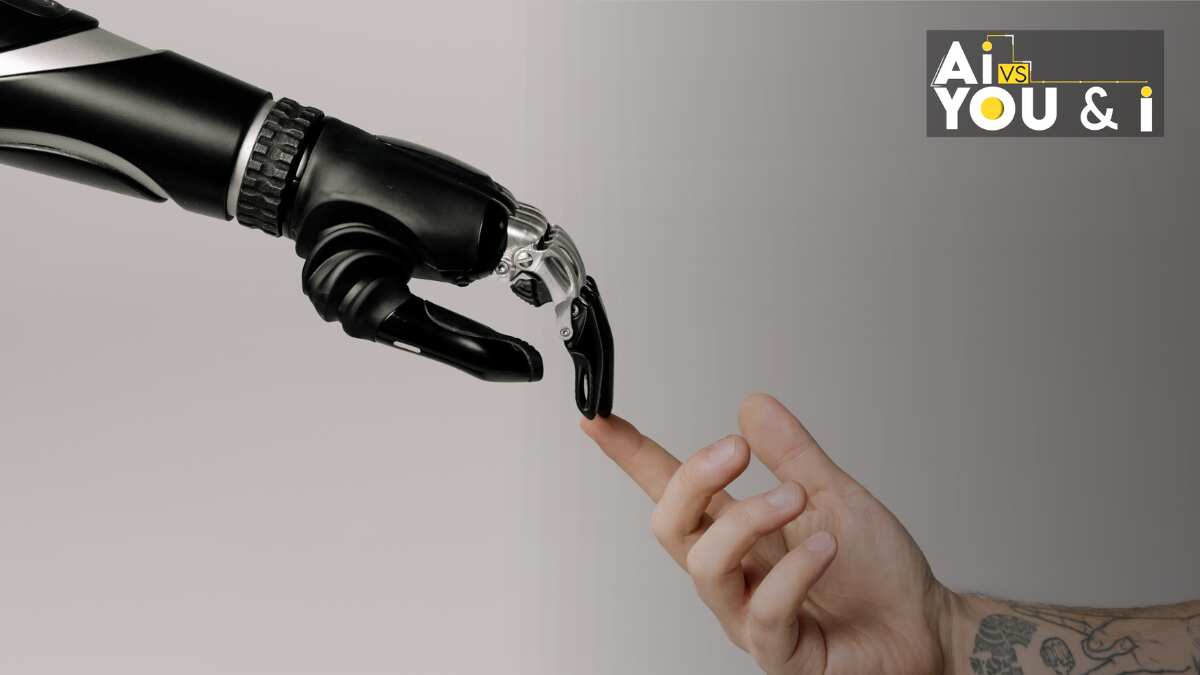
Doctors are held in high regard across the globe. Their hard work and drive to save the patients arethe source of awe, and in some cultures, they are even revered as 'living' gods. However, not even they can predict a patient's chances of death. However, a new Artificial Intelligence (AI) tool developed by a team at the NYU Grossman School of Medicine claims to hold the capability to do just that.
As per a report by the news agency AFP, the AI-based tool has shown promising results in reading physicians' notes and accurately predicting patients' risk of death, readmission to the hospital, and other important outcomes related to their care.
NYUTron

The software, known as NYUTron, is currently being used by NYU's affiliated hospitals in New York. The team behind this amazing tool hopes that one day it will become a standard component of healthcare practices.
A study published in the journal Nature highlights the predictive capabilities of this AI tool.
&imwidth=180&imheight=135&format=webp&quality=medium)
'Nidal Hasan's firing-squad execution to be livestreamed', says Pentagon; first US military execution since 1961
&imwidth=180&imheight=135&format=webp&quality=medium)
Trump's naked 23-karat gold statue unveiled near European Parliament
&imwidth=180&imheight=135&format=webp&quality=medium)
Musk doubles down on Starlink India licence allegations; Rahul Gandhi says ‘wait till...’
&imwidth=180&imheight=135&format=webp&quality=medium)
Thai Actors Fourth Nattawat, Gemini Norawit face racism accusations from Indian fans over viral Bollywood act
&imwidth=180&imheight=135&format=webp&quality=medium)
Nigeria govt rolls out 30-day NNPC petrol discount, insists it is not a subsidy
&imwidth=180&imheight=135&format=webp&quality=medium)
Captain Smit Machchhar on feet again, walks 10 steps as recovery continues after Flydubai flight attack
&imwidth=180&imheight=135&format=webp&quality=medium)
‘Battlespace has expanded’: Wg Cdr Priti Ojha (Retd) reflects on changing face of air power on IAF Day
&imwidth=180&imheight=135&format=webp&quality=medium)
24-year-old Sri Lankan man sentenced to death for blasphemy in Saudi Arabia
&imwidth=180&imheight=135&format=webp&quality=medium)
A Love Other Than Yours: The temptation to cheat and what pushes people over the edge
&imwidth=180&imheight=135&format=webp&quality=medium)
Russia president Putin promises to 'do everything' to help settle Middle East conflict as US-Iran negotiations stall
&imwidth=180&imheight=135&format=webp&quality=medium)
BTS agency HYBE announces first-ever Weverse Con Festival in India
&imwidth=180&imheight=135&format=webp&quality=medium)
Trump has a new 'enemy': Anyone who calls it 'artificial intelligence'. Here's what we wants instead
&imwidth=180&imheight=135&format=webp&quality=medium)
Paxton in leaked audio says Trump hurting his election chances
&imwidth=180&imheight=135&format=webp&quality=medium)
India at UN: Pak allows terror groups to operate from its soil
&imwidth=180&imheight=135&format=webp&quality=medium)
Air India, Air India Express increase fuel surcharge on domestic, international flights amid rising ATF costs
&im=FitAndFill=(700,400)&imwidth=180&imheight=135&format=webp&quality=medium)
Nana Patekar’s upcoming big-screen films: From Shakti Shalini to Eetha
&imwidth=180&imheight=135&format=webp&quality=medium)
Nobel Peace Prize 2026: Trump to Carney, who are the top contenders? Why the ISS is a surprise contender
&imwidth=180&imheight=135&format=webp&quality=medium)
42 ex-judges write open letter, express concern over allegations against Election Commission
&im=FitAndFill=(700,400)&imwidth=180&imheight=135&format=webp&quality=medium)
US midterms 2026: 10 leaders and candidates to watch in the battle for Congress
&im=FitAndFill=(700,400)&imwidth=180&imheight=135&format=webp&quality=medium)
From Kramatorsk buses to Yandex fire: Russia-Ukraine war in the last 48 hours
&imwidth=180&imheight=135&format=webp&quality=medium)
Pakistan denies reports of PAF jets being used in attacks against Iran-backed Houthis in Yemen
&imwidth=180&imheight=135&format=webp&quality=medium)
New York ICE shooting sparks protests as Mamdani to call on Trump to halt ICE operations
&imwidth=180&imheight=135&format=webp&quality=medium)
Atlantic hurricane Isaias could make landfall as a strong Category 2 storm, tornado warnings issued
&imwidth=180&imheight=135&format=webp&quality=medium)
Nana Patekar's #MeToo controversy: From Tanushree Dutta’s allegations to court ruling
&imwidth=180&imheight=135&format=webp&quality=medium)
Who is Nana Patekar's wife Neelakanti? The bank officer who earned Rs 2,500 when he earned Rs 50
&imwidth=180&imheight=135&format=webp&quality=medium)
France student protests: Over 500 arrested, govt promises 3,000 substitute teachers
&imwidth=180&imheight=135&format=webp&quality=medium)
French students light European bonfire, protests erupt in Belgium, Italy & Greece | Gravitas
&imwidth=180&imheight=135&format=webp&quality=medium)
Arizona congressional candidate claims she was sexually assaulted while repairing signs
&imwidth=180&imheight=135&format=webp&quality=medium)
New Cold War: Why is China buying more gold? Explained
&imwidth=180&imheight=135&format=webp&quality=medium)
'Understood consequences of a few mistakes': Ishan Kishan reflects on journey back to India team
&imwidth=180&imheight=135&format=webp&quality=medium)
Sri Lankan Tamil worker gets death sentence in Saudi Arabia over blasphemy, calls for pardon intensify
&imwidth=180&imheight=135&format=webp&quality=medium)
Zendaya gives The Odyssey white lace jacket a stylish twist at Paris Fashion Week 2026
&imwidth=180&imheight=135&format=webp&quality=medium)
SC asks Centre to frame mechanism against unethical pharma marketing practices
&imwidth=180&imheight=135&format=webp&quality=medium)
US suspends Microsoft, Infosys, Tata, Wipro from green card programme over alleged H-1B abuse
&imwidth=180&imheight=135&format=webp&quality=medium)
Trump honours Microsoft CEO Satya Nadella with top technology honour amid immigration scrutiny
&imwidth=180&imheight=135&format=webp&quality=medium)
Flydubai flight attack: Indian pilot Smit Machchhar to receive Israel's highest civilian bravery award for saving 174 lives
Talking to AFP, lead author Eric Oermann, a neurosurgeon and computer scientist at NYU, explained that while predictive models in medicine have existed for some time, they are not widely used due to the challenges of organising and formatting the required data.
However, the team realised that physicians consistently write detailed notes about their clinical observations and patient interactions. This, as per the team, can be a valuable source of data for building predictive models.
"One thing that's common in medicine everywhere, is physicians write notes about what they've seen in clinic, what they've discussed with patients," said Oermann.
"So our basic insight was, can we start with medical notes as our source of data, and then build predictive models on top of it?"
How did they achieve this feat?
NYUTron is basically a large language model. To train it, researchers used millions of clinical notes from the health records of 387,000 patients treated at NYU Langone hospitals between January 2011 and May 2020.
These notes encompassed various types of records written by doctors, including progress notes, radiology reports, and discharge instructions, resulting in a massive corpus of 4.1 billion words.
Also read |AI to pick suitable organs for transplants; help surgeons perform 300 more operations a year
Using this data, the software made predictions which were then evaluated against real outcomes retrospectively.
One of the significant challenges the software faced was interpreting the diverse natural language used by physicians, which often includes unique abbreviations and variations.
The results?
Overall, NYUTron exhibited impressive performance, correctly identifying 95 per cent of patients who died in the hospital before discharge and predicting 80 per cent of patients who would be readmitted within 30 days.
Furthermore, NYUTron accurately estimated the actual length of stay for 79 per cent of patients, correctly identified 87 per cent of cases where insurance coverage was denied, and accurately recognized 89 per cent of cases where patients had additional conditions accompanying their primary disease.
It surpassed the predictions made by most doctors and outperformed non-AI computer models currently in use.
Can artificial intelligencereplace doctors?
Interestingly, no. The tool was outperformed by the most experienced physician in the study, who achieved results exceeding the model's predictions.
As per Oermann, "the most senior physician who's actually a very famous physician, he had superhuman performance, better than the model."
Oermann emphasised that AI can never replace the physician-patient relationship. Instead, AI tools like NYUTron aim to "provide more information for physicians seamlessly at the point of care so they can make more informed decisions."He remarked that "the sweet spot for technology and medicine isn't that it's going to always deliver necessarily superhuman results, but it's going to really bring up that baseline."
(With inputs from agencies)
WATCH WION LIVE HERE
You can now write for wionews.com and be a part of the community. Share your stories and opinions with us here.

