
&imwidth=800&imheight=600&format=webp&quality=medium "Apple after Steve Jobs: Key products launched under Tim Cook")
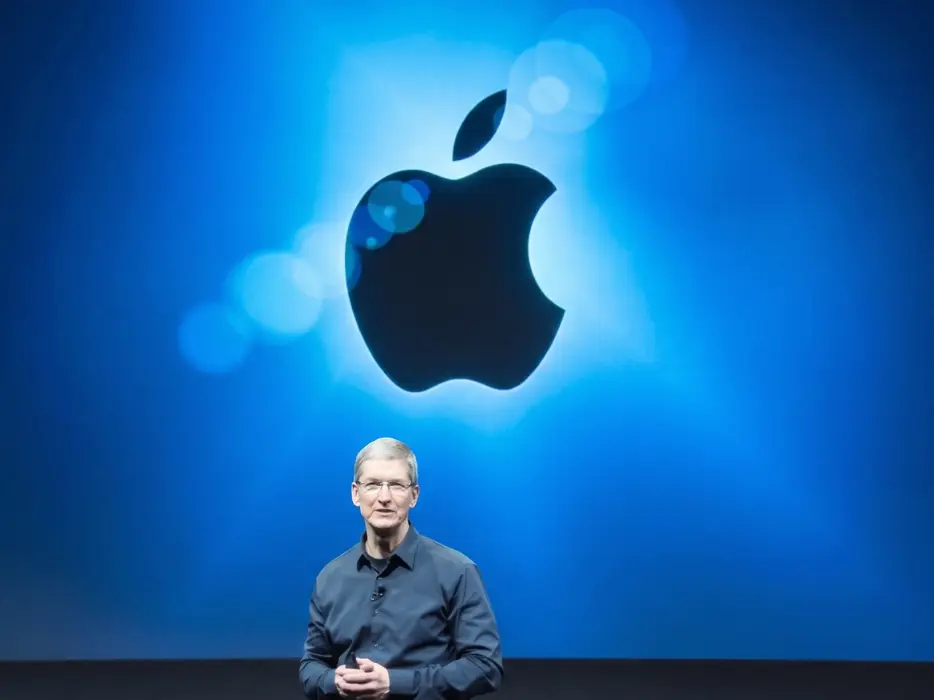
When Tim Cook became CEO of Apple in 2011, he took charge of a company already known for products like the iPhone and Mac. Over the next decade, Cook focused on expanding Apple’s ecosystem. Instead of relying on one flagship device, the company moved towards a connected system of devices, services and platforms.
Several key product launches and strategy changes defined Apple during his tenure.
Apple Watch and AirPods: Building the wearables business

One of the biggest shifts under Cook was Apple’s entry into wearables. The Apple Watch, launched in 2015, was the company’s first major new product category after the iPad. It started as a companion to the iPhone but gradually became focused on health and fitness.
Features such as ECG monitoring, blood oxygen tracking and fall detection helped it move into healthcare-related use.
A year later, Apple introduced AirPods in 2016. At that time, wireless earbuds were not widely used. Apple removed the headphone jack and introduced a fully wireless design.
Trending Stories
)
No Pandya as Auqib Nabi earns maiden ODI call-up; Mayank returns for WI T20Is| check full squads
)
Chiefs tight end Travis Kelce named one of the victims in $35 million ponzi scheme
)
Trump praises India’s Opium crackdown, hails anti-drug efforts
)
Sydney Sweeney defends provocative ad choice, the internet is still not impressed
)
Former India player Diana Edulji wants Smriti Mandhana to replace Harman as skipper at the earliest
)
Trump calls Canada-EU associate membership plan ‘laughable’ and threatens 'very serious tariffs'
)
Protests erupt over migrant housing plan in Piddington
)
Shahzad Bhatti Network declared terrorist organisation under UAPA: Govt order
)
Europe wants a common playbook for security threats, seeks security beyond NATO
)
Formula One reveals the 2027 race calendar; Monaco to host sprint race for the first time
)
All Indian goods to get duty-free access to New Zealand
)
Bigg Boss 20: Mahhi Vij reveals she lost Yuva role to Kareena Kapoor; 'didn’t work out in my favour'
)
Lionel Messi for 2026 Ballon d’Or over Mbappe and Yamal, says Diego Simeone
)
US House votes 417-3 to pass Ratepayer Protection Act targeting AI data center electricity costs
)
Hong Kong unveils 11 new measures to boost birth rates, offers higher cash bonuses and housing perks
)
Former OpenAI researcher warns of growing risks from Artificial Intelligence
)
Veteran actor Anant Nag honoured with Indian cinema’s highest award
)
AUS vs SA: Steve Smith still gets 'little flashbacks' from sandpaper gate
)
Pakistan naval vessel returns to harbour with 'severe damage' after collision with Indian warship in Arabian Sea
)
Fed raises rates for first time in 3 years, Kevin Warsh defies Trump as inflation mounts
)
Katrina Kaif’s postpartum weight is not the problem; your gaze is
)
Taiwan seeks deeper India ties as direct flights restart soon and chip projects advance
)
Daayra movie review: Kareena Kapoor, Prithviraj Sukumaran shine in Meghna Gulzar’s cop-versus-cop crime thriller
)
Saudi Vs Houthis: Yemeni military rebels clash with Houthis
)
Pak batter Rizwan's petition against being questioned by cyber crime agency rejected by court
)
US trade tariff: 100% tariff targets Russian buyers amid trade tensions
)
Pakistan: Imran Khan's sons Kasim & Sulaiman claim their father is 'tortured' in jail
&im=FitAndFill=(700,400))
New OTT releases this week (September 14-20, 2026): Lust Stories 3, Waiting Hai, Irumudi- 5 new titles coming on Netflix, Prime Video and more
)
Trump gets new power to hit India, China with up to 100% tariffs as US Senate clears Russia sanctions bill
)
Prime Minister Narendra Modi's birthday: Italian PM Meloni sends birthday wishes
)
‘Imagine 50 AI fighters cornering one manned jet’: India’s mobbing doctrine eyes a new era of air warm
)
Saudi vs Houthis: Riyadh claims to have shot Houthi drone targeting Mecca
)
US Treasury rallies global financial institutions for Op Economic Outcast to isolate Iran
)
India breaks silence on US Russia sanctions bill, 100% tariff threat: ‘Committed to energy security’ for 1.4 billion
)
Pakistan boycotts chess match against Israel at Olympiad
)
Want to get married within a year? Why 18 lakh people rush to Jaipur for ‘sacred henna’
&im=FitAndFill=(700,400))
Suriya and Jyothika say ‘I do’ again after 20 years! See their dreamy wedding pics
)
Abhishek Sharma rises to No. 2 in T20Is; ENG’s Robinson 3rd after record Pakistan Tests
)
The Early Spring season 2 is happening, but fans have one request - 'don't change the actors'
This move helped make wireless audio more common. Over time, features such as spatial audio and improved battery life were added.
iPhone X: A major design shift
In 2017, Apple launched the iPhone X, which marked a major change in smartphone design.
It removed the home button and introduced:
Edge-to-edge OLED display
Face ID facial recognition
Gesture-based navigation
This design later became standard across most smartphones in the industry.
After this, Apple also changed its strategy. Instead of launching one iPhone model each year, it introduced multiple variants such as standard, Pro and Pro Max models. This helped the company target different price segments.
Apple Silicon: A key technology transition
In 2020, Apple made a major shift by moving Macs from Intel processors to its own chips, starting with the M1. This transition allowed Apple to control both hardware and software more closely.
The result included:
Better battery life
Faster performance
Ability to run iPhone and iPad apps on Mac
This move also reduced Apple’s reliance on external chip suppliers and gave it more flexibility in product development.
AirTag and ecosystem expansion
In 2021, Apple launched AirTag, entering the item-tracking category. AirTag works with the Find My network to help users locate everyday objects like keys and bags. It uses Ultra Wideband technology for precise tracking. This product extended Apple’s ecosystem into daily use cases beyond traditional devices.
Vision Pro: Entry into spatial computing
In 2024, Apple introduced the Vision Pro, marking its entry into spatial computing. The headset allows users to interact with apps using:
Eye tracking
Hand gestures
Voice commands
Instead of a traditional screen, it offers a digital interface where apps can be placed in a three-dimensional space. Apple describes this as an “infinite canvas”, allowing users to work across multiple virtual screens.
How Tim Cook changed Apple’s strategy
Under Cook, Apple moved from a product-focused company to an ecosystem-driven business.
Key changes included:
Expanding into wearables
Introducing multiple device categories
Building in-house chip technology
Strengthening integration across devices
This approach helped Apple grow beyond the iPhone and create a connected experience across products.
What comes next?
As Tim Cook prepares to step down, his legacy will likely be defined by how he expanded Apple’s ecosystem rather than launching a single breakthrough product. From wearables to custom chips and spatial computing, his leadership focused on steady evolution. The next phase for Apple may depend on how these products continue to develop and how the company adapts to new technologies such as artificial intelligence.
