

&imwidth=800&imheight=600&format=webp&quality=medium "'Smaller than a grain of salt': Researcher develop world's smallest programmable, autonomous robots")
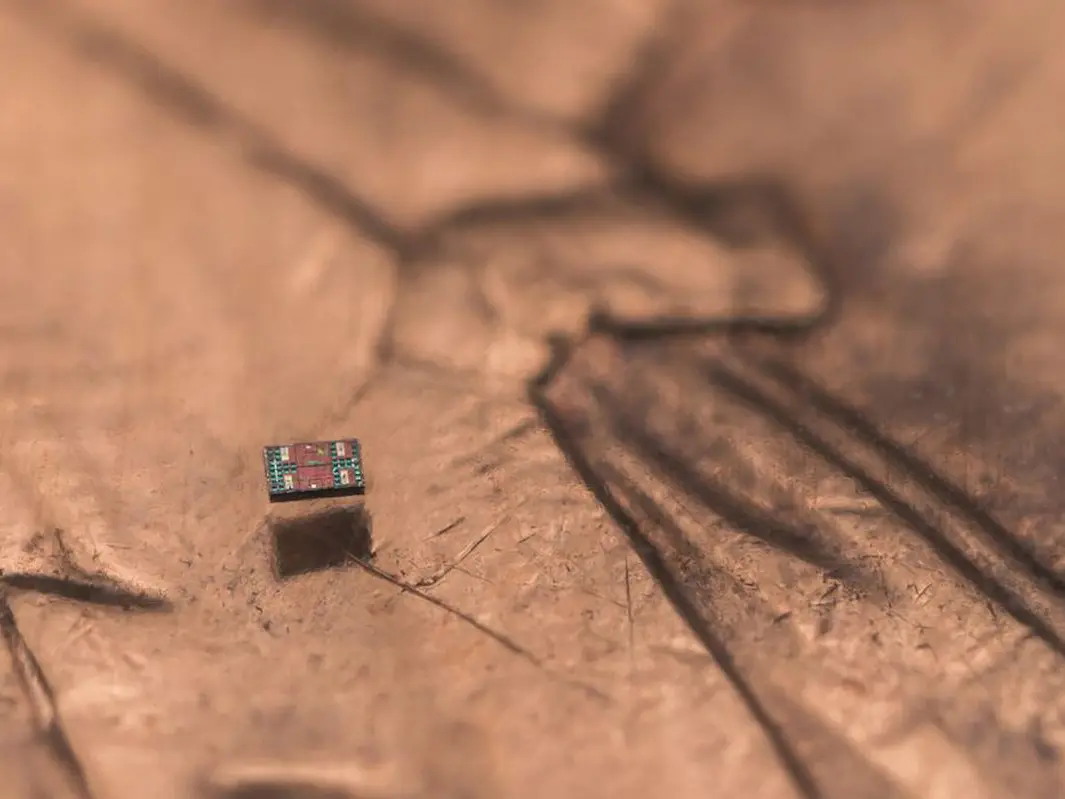
Researchers at the University of Pennsylvania, in collaboration with the University of Michigan have created, what are believed to be the world’s smallest fully programmable, autonomous robots, measuring roughly about 200 by 300 by 50 micrometers, smaller than a grain of salt and costing about one penny each to produce. These devices represent a pivot in robotics, operating at the scale of many microorganisms yet equipped with the computing power, sensors and propulsion systems needed to sense, decide and act without external control.
According to media reports these microscopic swimming machines that can independently sense and respond to their surroundings, operate for months. "We've made autonomous robots 10,000 times smaller," said Marc Miskin, assistant professor in electrical and systems engineering at Penn and senior author of a pair of studies published in Science Robotics and the Proceedings of the National Academy of Sciences. "That opens up an entirely new scale for programmable robots."
How tiny robots move, sense and think
Unlike traditional robots with joints or moving parts, the new micro-robots generate an electrical field that nudges ions in the surrounding solution. This electrokinetic propulsion allows them to 'swim' through liquids and even coordinate group motion, similar to a school of fish. Powered by light captured by microscopic solar panels, each robot also carries a tiny onboard computer and sensors that enable it to respond to its environment, all fit on a chip that is a fraction of a millimeter in size.
Programming at the microscale
Programming these minuscule machines posed a significant challenge. The computer chips operate on extremely low power, it produces only around 75 nanowatts of power, which is over 1,00,000 times less power than what gadgets like smartwatches require. To run the robot's computer on such little power, the Michigan team developed special circuits that operate at extremely low voltages and bring down the computer's power consumption by more than 1000 times.
Trending Stories
&imwidth=180&imheight=135&format=webp&quality=medium)
Sidhu Moose Wala’s younger brother wins hearts by recreating late singer’s signature move at Toronto Hologram Show
&im=FitAndFill=(700,400)&imwidth=180&imheight=135&format=webp&quality=medium)
Navratri 2026: 9 days, 9 forms of Goddess Durga and 9 colours- Check the complete list
&imwidth=180&imheight=135&format=webp&quality=medium)
Meta's Muse AI could be a security nightmare for India's billion-plus users
&imwidth=180&imheight=135&format=webp&quality=medium)
Maharashtra appoints FDA commissioner Tukaram Mundhe as secretary of committee for MPSC overhaul amid stir
&imwidth=180&imheight=135&format=webp&quality=medium)
Houthis claim Riyadh airport attacks, Aramco strikes; issue fresh warning to airlines, travellers and workers
&imwidth=180&imheight=135&format=webp&quality=medium)
Other Mommy leads North American box Office as Verity, Resident Evil round out top four
&imwidth=180&imheight=135&format=webp&quality=medium)
CJI Surya Kant declines INDIA bloc leaders’ request for meeting ahead of march to SC, asks them to file petition
&im=FitAndFill=(700,400)&imwidth=180&imheight=135&format=webp&quality=medium)
Is sending robots to Mars easier than sending humans?
&imwidth=180&imheight=135&format=webp&quality=medium)
The street cannot govern India, but the government cannot ignore it either
&imwidth=180&imheight=135&format=webp&quality=medium)
IND vs WI, 3rd T20I: Abhishek Sharma smashes 18-ball fifty, sets record for fastest to 2,000 T20I runs
&imwidth=180&imheight=135&format=webp&quality=medium)
iPhone Duo price index: Tracking Apple’s latest pricing trends
&imwidth=180&imheight=135&format=webp&quality=medium)
Portugal Federation confirms Cristiano Ronaldo’s return to national team despite suspension
&imwidth=180&imheight=135&format=webp&quality=medium)
Microsoft's Nadella says treat every AI model as already hacked, and build an 'emergency brake'
&imwidth=180&imheight=135&format=webp&quality=medium)
Anthropic's AI invented a murder witness and sent the fake tip to Philadelphia police
&imwidth=180&imheight=135&format=webp&quality=medium)
'Just coincidence': Police mistakes protester as AISA chief Neha Bora, arrests her from site
&imwidth=180&imheight=135&format=webp&quality=medium)
McSweeney reveals how studying Virat Kohli’s YouTube clips helped Australia A conquer India
&imwidth=180&imheight=135&format=webp&quality=medium)
Nana Patekar's cause of death confirmed; here's what his postmortem report says
&imwidth=180&imheight=135&format=webp&quality=medium)
A watchdog rated 'ChatGPT for Teens' an unacceptable risk and says keep under-18s off it
&imwidth=180&imheight=135&format=webp&quality=medium)
Delhi wakes up to heavy rain, thunderstorms; yellow alert in place; temperature drops
&imwidth=180&imheight=135&format=webp&quality=medium)
One Indian killed in Riyadh airport attack; 11 others injured : MEA
&imwidth=180&imheight=135&format=webp&quality=medium)
UK school ditches technology, shifts from screen to pen and paper for learning
&imwidth=180&imheight=135&format=webp&quality=medium)
Delhi Protest: Congress calls for march to Supreme court
&imwidth=180&imheight=135&format=webp&quality=medium)
Nathan Lyon completes 1,000 Test runs at No. 10 to script rare cricket feat
&imwidth=180&imheight=135&format=webp&quality=medium)
Imran Khan released hours after Mumbai Police detain him during CJP protest
&imwidth=180&imheight=135&format=webp&quality=medium)
'Ouch!!! That must hurt': Kangana Ranaut hails Kamal Haasan's sharp reply to Elon Musk over Starlink row
&imwidth=180&imheight=135&format=webp&quality=medium)
1,500 drones illuminate Mumbai sky as Cordelia Cruises unveils second ship, Cordelia Sky
&im=FitAndFill=(700,400)&imwidth=180&imheight=135&format=webp&quality=medium)
New OTT releases this week (October 12-18, 2026): Sacrifice, Koffee with Karan S9, Roadies Rebirth- 6 titles coming on Netflix, JioHotstar and more
&imwidth=180&imheight=135&format=webp&quality=medium)
Delhi protest: CJI Surya Kant declines to meet India Bloc leaders
&imwidth=180&imheight=135&format=webp&quality=medium)
Top AI models flunked a test of inventing new AI research, so much for self-improving AI
&imwidth=180&imheight=135&format=webp&quality=medium)
'Say no to Muse': Meta has no control over its own moderation AI while it forces a security nightmare on everyone
&imwidth=180&imheight=135&format=webp&quality=medium)
Are Gold and Silver poised for a rebound soon?
&imwidth=180&imheight=135&format=webp&quality=medium)
China imposes first-ever sanctions on ministers from Taiwan allies: What this means
&imwidth=180&imheight=135&format=webp&quality=medium)
Wasim Jaffer blames Ajit Agarkar-led selection panel for Virat Kohli’s Test retirement
&imwidth=180&imheight=135&format=webp&quality=medium)
Iran: US accepted some conditions, Clarity needed on others
The robots also have unique identifiers so that each can be individually programmed. Instructions are loaded via light pulses, and complex actions can be encoded efficiently into the limited memory. The unique design means that the robots can be instructed to perform different roles in a larger task, opening up possibilities for coordinated microscale work.
Potential applications in medicine and manufacturing
Because of their size and autonomy, these micro-robots could transform several fields. In medicine, they may be helpful in monitoring the health of individual cells, also in tracking temperature variations associated with disease processes along with other benefits. In manufacturing, they could help construct microscale devices that are too small for conventional tools to build.
According toTechxplore.com via Phys.org, the researchers behind the project describe this achievement as the first chapter in a broader future for microscopic robotics. By demonstrating that a brain, propulsion system and sensors can all fit into something barely visible without magnification, they have opened the door to more sophisticated micro-machines.

