

&imwidth=800&imheight=600&format=webp&quality=medium "A miracle in the Caribbean: How a country of just 156,000 people qualified for the FIFA World Cup 2026")
For generations, the FIFA World Cup has belonged to football's traditional powers. Brazil, Germany, Argentina, France, Italy and Spain have long dominated the game's biggest stage, while smaller countries have often been left dreaming from afar. That is why the story of Curacao is so remarkable.
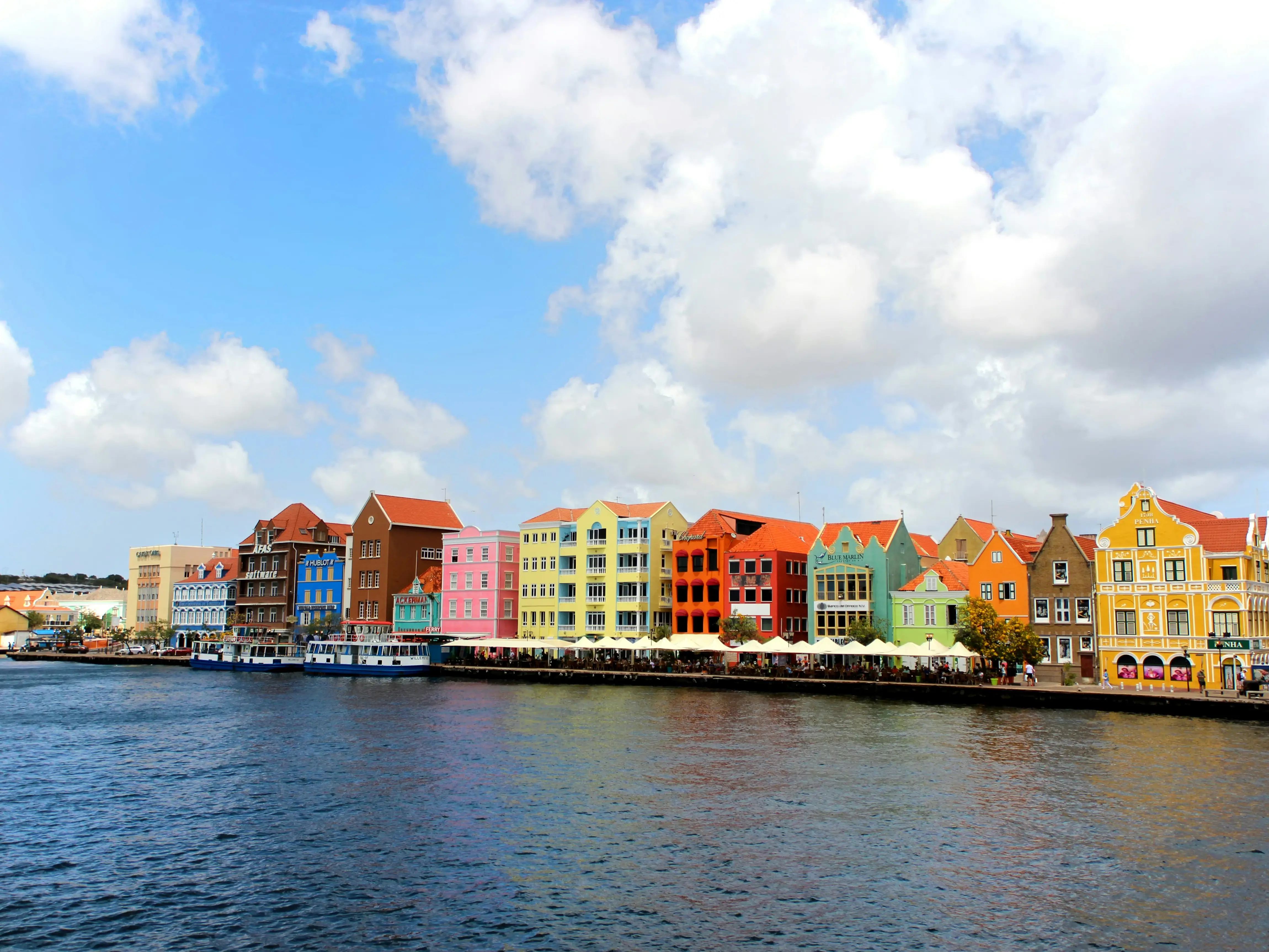
When the FIFA World Cup 2026 kicks off across North America, the tiny Caribbean island nation will take its place among the world's best. Home to just 156,000 people, Curacao has become the smallest nation by population ever to qualify for a FIFA World Cup, writing one of the most extraordinary underdog stories in football history. For many football fans around the world, Curacao remains relatively unknown. The island sits in the southern Caribbean Sea, just off the coast of Venezuela. Famous for its colourful Dutch colonial architecture, turquoise waters, and thriving tourism industry, it has rarely been associated with footballing success. Now, that has changed forever.
A dream that once seemed impossible
For decades, World Cup qualification felt like a distant fantasy. Curacao's footballing history is relatively young compared to many established football nations. After the dissolution of the Netherlands Antilles in 2010, Curacao inherited the footballing legacy of the former territory and began building its own national identity on the international stage. The challenges were obvious. A population smaller than many towns around the world meant a limited player pool. The island lacked the vast football infrastructure enjoyed by larger nations. Financial resources were modest, and competing against established teams in the CONCACAF region often felt like an uphill battle. Yet football has never been a game that obeys population statistics. What Curacao lacked in numbers, it made up for with ambition.
The Dutch connection
Trending Stories
&im=FitAndFill=(700,400)&imwidth=180&imheight=135&format=webp&quality=medium)
What is the real meaning behind Pete Hegseth's tattoos?
&imwidth=180&imheight=135&format=webp&quality=medium)
Kim Jong Un death rumours: State media shares photos to prove dictator is alive amid reports of brain haemorrhage
&imwidth=180&imheight=135&format=webp&quality=medium)
Two Indians among 28 arrested in California over alleged voter registration fraud, DOJ says
&imwidth=180&imheight=135&format=webp&quality=medium)
‘Nuclear-use decision should be taken by humans’: India flags AI risks at UN
&imwidth=180&imheight=135&format=webp&quality=medium)
Flying car race: Alef Aeronautics welcomes Tesla Roadster '11 years' later, but are the two models the same?
&imwidth=180&imheight=135&format=webp&quality=medium)
Dussehra 2025: Why is Ravana not burnt but worshipped in these places of India?
&imwidth=180&imheight=135&format=webp&quality=medium)
Shastri backs Shami comeback; lauds Bhuvi and warns Bumrah on format workload ahead of World Cup
&imwidth=180&imheight=135&format=webp&quality=medium)
Netanyahu rival Benny Gantz quits Israel election race, vows to push for unity government
&imwidth=180&imheight=135&format=webp&quality=medium)
US Midterm 2026: What do opinion polls and prediction markets say less than two weeks before voting
&imwidth=180&imheight=135&format=webp&quality=medium)
Mariah Carey wins $20 million legal battle over brother’s defamation lawsuit against her bestselling memoir
&imwidth=180&imheight=135&format=webp&quality=medium)
WATCH | Albania protesters set Supreme Court on fire as anti-Rama riots escalate
&imwidth=180&imheight=135&format=webp&quality=medium)
Indian Air Force turns to homegrown firefighting robot developed under iDEX programme
&imwidth=180&imheight=135&format=webp&quality=medium)
Pete Hegseth meets Benjamin Netanyahu during unannounced visit to Israel ahead of election
&im=FitAndFill=(700,400)&imwidth=180&imheight=135&format=webp&quality=medium)
Ghaziabad is world's fastest-growing city; Surat, Patna, Rajkot also feature on list
&imwidth=180&imheight=135&format=webp&quality=medium)
'It's a joy to see the makers bring it on such a grand scale': SS Rajamouli on Ramayana
&imwidth=180&imheight=135&format=webp&quality=medium)
Dark fantasy, violence, adult themes: BBFC data reveals animation's shift towards older audiences
&imwidth=180&imheight=135&format=webp&quality=medium)
Far-left parties, global networks among 54 groups linked to France protests, only 16 are youth outfits: Report
&imwidth=180&imheight=135&format=webp&quality=medium)
WATCH | Japan launches historic mission to collect samples from Mars' moon Phobos
&imwidth=180&imheight=135&format=webp&quality=medium)
India begins National Red List Assessment of 1,211 bird species to boost conservation
&imwidth=180&imheight=135&format=webp&quality=medium)
PCB omits Atherton, Hussain from tri-series commentary panel over Imran Khan interview row
&imwidth=180&imheight=135&format=webp&quality=medium)
Trump calls on New Mexico to become 'New America', claims 'home values and incomes would rise'
&im=FitAndFill=(700,400)&imwidth=180&imheight=135&format=webp&quality=medium)
Priyanka Chopra to Shilpa Shetty: 6 Bollywood actresses and their fitness secrets
&imwidth=180&imheight=135&format=webp&quality=medium)
Pujara says 'Samson and Vaibhav cannot be in Playing XI' for India on NZ tour
&imwidth=180&imheight=135&format=webp&quality=medium)
US midterms 2026: From Pooja Sethi to Vivek Ramaswamy, here are Indian-origin candidates to watch out for
&im=FitAndFill=(700,400)&imwidth=180&imheight=135&format=webp&quality=medium)
New OTT releases this week (October 19-25, 2026): Gajab Raat to Chaar Yaar-8 titles to watch during Dussehra week on Netflix, Prime Video and more
&imwidth=180&imheight=135&format=webp&quality=medium)
Baby orangutan rescued in India returns to Indonesia
&imwidth=180&imheight=135&format=webp&quality=medium)
India moves to buy 10,000 more AI chips for a national compute pool open to startups
&imwidth=180&imheight=135&format=webp&quality=medium)
Prince Harry, Meghan Markle never accepted Queen Elizabeth’s terms for royal exit: Report
&imwidth=180&imheight=135&format=webp&quality=medium)
'Whatever I can do to end this war': Trump floats China Summit with Putin and Xi, questions Zelensky's role in peace talks
&imwidth=180&imheight=135&format=webp&quality=medium)
'They are not even telling us' - Mysterious metallic object discovered in Minnesota field
&imwidth=180&imheight=135&format=webp&quality=medium)
'We feel like Mr India': Gujarat’s undercover SHE team guard garba nights at Navratri
&imwidth=180&imheight=135&format=webp&quality=medium)
Cattle-feed bran in biscuits, detergent in milk: FSSAI acts against 3 companies
&imwidth=180&imheight=135&format=webp&quality=medium)
Feds obtain DNA evidence that could prove Ilhan Omar married her brother: Report
&imwidth=180&imheight=135&format=webp&quality=medium)
Ramayana advance booking: Ranbir Kapoor, Yash's film cross $500K ahead of Diwali release
&imwidth=180&imheight=135&format=webp&quality=medium)
AUS vs SA: Boland grabs opportunity with both ends to help Australia dominate
One of the most important factors behind Curacao's rise has been its unique relationship with the Netherlands. As a constituent country within the Kingdom of the Netherlands, Curacao has long maintained strong cultural and historical ties with Europe. Over the years, thousands of people with Curaçaoan roots settled in the Netherlands, creating a footballing bridge between the island and one of Europe's most respected development systems.
The national team started actively recruiting players with Curacaoan heritage who had developed in Dutch academies. Many had trained at clubs renowned for producing elite footballers. They brought technical quality, tactical awareness, and professional experience that elevated the standard of the national team almost overnight. Instead of viewing its small population as a limitation, Curacao expanded its footballing reach far beyond its shores. The result was a squad capable of competing with nations many times its size.
Building a winning culture
Talent alone, however, does not qualify a team for a World Cup. Curacao's transformation was also driven by a growing sense of belief. For years, the national team had shown flashes of potential. There were appearances at regional tournaments and occasional victories over stronger opponents, but consistency remained elusive. That began to change as the federation invested in creating a more professional environment around the team. Training standards improved. Recruitment became more strategic. Players developed a stronger connection to the national project. Most importantly, the squad started believing that qualification was not merely a dream; it was a realistic objective. As momentum grew, so did expectations.
The Dick Advocaat effect
The appointment of veteran Dutch coach Dick Advocaat proved to be a turning point. Few managers possess a resume as extensive as Advocaat's. Having coached at World Cups, European Championships, and some of the biggest clubs in the world, he brought invaluable experience to a team entering uncharted territory. More than tactics, Advocaat brought clarity.
Players spoke about the structure, discipline, and confidence he instilled within the squad. Under his guidance, Curacao developed a clear identity: organised without the ball, fearless in possession, and capable of competing with stronger opponents.
The team no longer approached matches hoping to survive. It entered them expecting to compete.
Taking advantage of the opportunity
The expanded 48-team format for the 2026 World Cup created additional qualification opportunities across the globe. For smaller nations, it represented a chance to achieve something previously considered almost impossible. But opportunity alone guarantees nothing. Many teams entered qualifying believing they had a chance. Few managed to seize it. Curacao did.
Throughout the qualification campaign, the team displayed remarkable composure. There were no dramatic collapses, no panic under pressure, and no sense of being overwhelmed by the occasion. Match after match, they accumulated points, navigated difficult away fixtures, and demonstrated a maturity that belied their lack of World Cup experience. What stood out was not a single famous victory but the consistency of the campaign. Champions are often defined by spectacular moments. Qualifiers are often defined by avoiding bad ones. Curacao mastered the art of doing the basics exceptionally well.
More than just a football team
As the qualification moved closer, excitement swept across the island. In a nation of 156,000 people, footballers are not distant celebrities hidden behind layers of security. They are members of the community. Their families live on the island. Their stories are familiar. Every victory felt personal. Every step towards qualification carried the hopes of an entire nation. When the final whistle confirmed Curacao's place at the World Cup, celebrations erupted across the island. What had once seemed impossible was suddenly reality. The country was going to football's greatest stage.
The ultimate underdog story
The beauty of the World Cup lies in its ability to produce stories that transcend football. Curacao's qualification is not simply about tactics, coaching, or recruitment. It is about possibility. It is a reminder that football's biggest dreams are not reserved for the biggest countries. In a tournament that will feature global superpowers and squads worth hundreds of millions of dollars, Curacao will arrive with something many others cannot claim: the knowledge that simply reaching the World Cup is already one of the greatest achievements in the nation's sporting history.
And yet, no one on the island will be satisfied with merely showing up. The team that defied the odds to get there now has a chance to inspire the world. For a nation of just 156,000 people, the journey itself has already become a miracle. The next chapter will unfold on football's grandest stage.

